-
Glass Fused To Steel Tanks (719)
-
Stainless Steel Tanks (434)
-
Fusion Bonded Epoxy Tanks (592)
-
Galvanized Steel Tanks (321)
-
Aluminum Dome Roofs (1336)
-
Wastewater Storage Tanks (237)
-
Welded Steel Tanks (457)
-
Pressure Vessels (295)
-
Anaerobic Digester (202)
-
Industrial Water Tanks (349)
-
Glass Lined Steel Tanks (180)
-
Bolted Steel Tanks (389)
-
Sludge Storage Tank (115)
-
Biogas Storage Tank (173)
-
Leachate Storage Tanks (133)
-
Agricultural Water Storage Tanks (179)
-
Fire Water Tank (166)
-
Grain Storage Silos (146)
-
Biogas Projects (424)
-
Wastewater Treatment Projects (1420)
-
Double Membrane Roof (223)

|
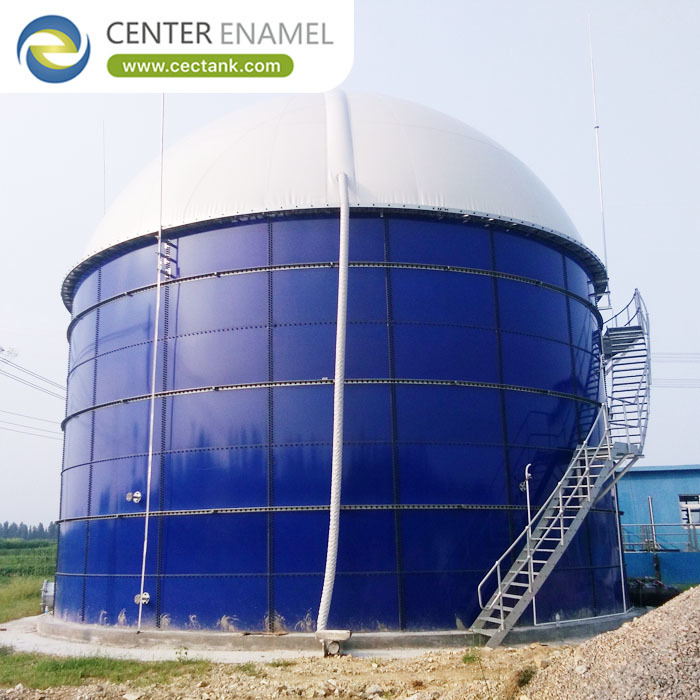
10000 m3 Biogas Storage Tanks Manufacturer: Sizing the Plant's Buffer
| Place of Origin: | China |
| Brand Name: | CEC TANKS |
| Certification: | ISO 9001:2008, AWWA D103 , OSHA , BSCI |
| Model Number: | W |
| Minimum Order Quantity: | 1set |
| Price: | $5000~$20000 one set |
| Packaging Details: | PE poly-foam between each two steel plates ; wooden pallet and wooden |
| Delivery Time: | 10-30 days after deposit received |
| Payment Terms: | L/C,T/T |
| Supply Ability: | 60 sets per month |
|
Detail Information |
|||
| Place of Origin | China | Brand Name | CEC TANKS |
|---|---|---|---|
| Certification | ISO 9001:2008, AWWA D103 , OSHA , BSCI | Model Number | W |
| Tank Body Color: | Dark Green / Can Be Customized | Corrosion Integrity: | Excellent |
| Steel Plates Thickness: | 3mm To 12mm , Depends On The Tank Structure | Chemical Resistance: | Excellent |
| Size Of Panel: | 2.4M * 1.2M | Easy To Clean: | Smooth, Glossy, Inert, Anti-adhesion |
| Highlight: | 10000 m3 biogas storage tanks,glass fused steel biogas tanks,biogas plant buffer storage tanks |
||
Product Description
10000 m3 Biogas Storage Tanks Manufacturer: Sizing the Plant's Buffer
A digester produces gas at a rate set by biology, and a combined heat and power unit or an upgrading plant consumes it at a rate set by the grid, the heat demand or the offtake contract. Those two rates never match for long. Storage is the component that absorbs the mismatch, and when it is undersized the symptoms are mistaken for process problems: the engine trips at night, the flare runs at weekends, or the upgrading plant ramps down during the very hours when the tariff is best. At ten thousand cubic metres the tank is no longer an accessory; it is the component that decides whether the plant is dispatchable or merely productive.
Shijiazhuang Zhengzhong Technology Co., Ltd. (Center Enamel) manufactures glass-fused-to-steel biogas storage and digestion vessels and has delivered single-tank capacities up to 32,000 cubic metres, with a record 21,094 cubic metre tank delivered in 2020. At the 10,000 cubic metre scale, the questions that matter are sizing logic, storage type, pressure envelope and the manufacturer's evidence that the geometry works.
1. How Much Biogas Storage Does a Plant Need?
Storage volume is derived from the mismatch between production and consumption, not from plant size alone. A plant feeding a base-load engine needs a different buffer from one feeding a grid-responsive CHP or a biomethane upgrading unit with a rigid offtake contract.
- Base-Load Operation: A continuously running CHP needs enough storage to ride through feed interruptions and maintenance windows, typically a few hours of production.
- Grid-Responsive Operation: Plants that shift generation into peak tariff windows need storage sized to hold the gas produced during the hours they deliberately do not generate, which is usually a substantially larger volume.
- Upgrading and Grid Injection: Where gas is upgraded to biomethane, a rigid injection contract can make storage the difference between continuous injection and curtailment during demand dips.
- Flare Minimisation: Enough buffer to absorb planned and unplanned consumption outages is frequently the cheapest way to reduce flaring, and flaring is increasingly reported and penalised.
- Mixing and Process Use: Some plants also draw gas for digester mixing or for pasteurisation, and that internal demand should be included in the buffer calculation.
2. Which Storage Type Suits 10000 Cubic Metres?
Three arrangements are common at this scale, and the choice is driven by pressure requirement, land availability, planning constraints and the visual and odour expectations of the surrounding area.
- Integrated Digester Roof Storage: Gas is stored under a double-membrane roof on the digester itself. This is the most compact option and suits plants where the digester volume already provides the necessary buffer.
- Separate Double-Membrane Holder: A dedicated holder on its own foundation decouples storage from digestion, allows independent maintenance, and makes the storage volume explicit and easy to expand later.
- Rigid Gas Holder with Aluminum Dome: A bolted steel vessel with a geodesic aluminum dome and an internal membrane provides a weather-protected, long-life gas store with a low visual profile.
- Pressure Envelope: Most low-pressure storage operates in the range of a few millibar to around 30 mbar. Operating pressure determines membrane specification, safety devices and the foundation loads.
- Safety Provisions: Pressure-vacuum relief, flame arrestors, condensate drainage at low points, and gas-tight construction are mandatory, and the system must fail safe in both overpressure and vacuum.
3. What Must a Manufacturer Prove at This Scale?
At ten thousand cubic metres, the engineering margin for error disappears. The geometry has to be verified against wind and seismic loads, the foundation tolerance becomes critical, and the manufacturer's reference record should include vessels of comparable scale rather than a long list of smaller tanks.
- Structural Verification: Shell, roof and nozzle loads should be checked by finite element analysis against the applicable code, with wind and seismic cases for the specific site rather than generic assumptions.
- Foundation Tolerance: Large-diameter bolted vessels are far less tolerant of differential settlement than welded tanks with a stiff ring beam. The foundation specification and survey tolerance are part of the design.
- Gas Tightness Evidence: Bolt grade, sealant specification, torque sequence and membrane attachment detail should all be documented, because at this scale even a small leak rate represents a large methane loss.
- Comparable References: Ask for vessels of similar diameter and volume that have been in service for several years, and ask for a contactable reference.
- Delivery and Erection Plan: At this scale the logistics plan and the erection sequence are part of the engineering deliverable, not an afterthought handed to the site team.
| Selection Criterion | Integrated Digester Roof | Separate Membrane Holder | Rigid Holder with Dome |
| Footprint efficiency | Highest, uses the digester itself | Additional footprint required | Additional footprint required |
| Maintenance independence | Storage and digestion are coupled | Holder can be serviced separately | Long-life rigid structure |
| Expansion flexibility | Limited by digester geometry | Additional holders can be added | Modular staged expansion |
| Visual and odour profile | Low profile, familiar on farms | Low profile, membrane visible | Clean appearance, weather protected |
| Typical pressure range | Low, a few mbar | Low to moderate mbar | Moderate, with rigid boundary |
Engineering Assurance and Project Support
Every tank delivered by Shijiazhuang Zhengzhong Technology Co., Ltd. (Center Enamel) is engineered against AWWA D103-09 and EN 1090 with finite element verification of shell, roof and nozzle loads, fused at 820-930°C under ISO 9001 and ISO 45001 control, holiday tested at 1500 V across one hundred percent of the surface, and assembled with Grade 8.8 bolts and manufacturer-certified sealant. Biogas storage vessels are engineered against AWWA D103-09 and EN 1090 with finite element verification of shell, roof and nozzle loads for site-specific wind and seismic cases, constructed from plates fused at 820-930 degrees Celsius and holiday tested at 1500 V, and supplied with membrane systems, pressure-vacuum relief, flame arrestors, condensate drainage and commissioning support.
Frequently Asked Questions (FAQ)
How much gas can a 10000 m3 storage tank actually hold?
The geometric volume is ten thousand cubic metres, but the usable buffer depends on the working pressure range. A low-pressure membrane holder uses a smaller fraction of its geometric volume than a higher-pressure rigid holder, so the usable buffer should be confirmed against the operating pressure envelope rather than assumed from tank size.
Can storage be added to an existing plant?
Yes, and this is one of the advantages of bolted construction. A separate holder or an additional vessel can be erected on a new foundation and tied into the existing gas system with a short shutdown, because there is no welding or hot work required on the live plant.
What happens to gas quality during storage?
Storage itself does not significantly change methane content, but condensate will form at low points and must be drained, and any hydrogen sulphide present remains in the gas. Condensate drainage and, where required, desulphurisation should be part of the gas system design.
Can the storage vessel be configured to our production profile?
Yes. Volume, pressure envelope, membrane or rigid construction, safety devices, condensate handling and instrumentation are all configured to the plant. Provide the hourly production and consumption profiles and the buffer will be sized to the actual mismatch.