-
Glass Fused To Steel Tanks (734)
-
Stainless Steel Tanks (434)
-
Fusion Bonded Epoxy Tanks (592)
-
Galvanized Steel Tanks (321)
-
Aluminum Dome Roofs (1336)
-
Wastewater Storage Tanks (237)
-
Welded Steel Tanks (457)
-
Pressure Vessels (295)
-
Anaerobic Digester (202)
-
Industrial Water Tanks (349)
-
Glass Lined Steel Tanks (180)
-
Bolted Steel Tanks (389)
-
Sludge Storage Tank (115)
-
Biogas Storage Tank (173)
-
Leachate Storage Tanks (133)
-
Agricultural Water Storage Tanks (179)
-
Fire Water Tank (166)
-
Grain Storage Silos (146)
-
Biogas Projects (424)
-
Wastewater Treatment Projects (1430)
-
Double Membrane Roof (223)

|
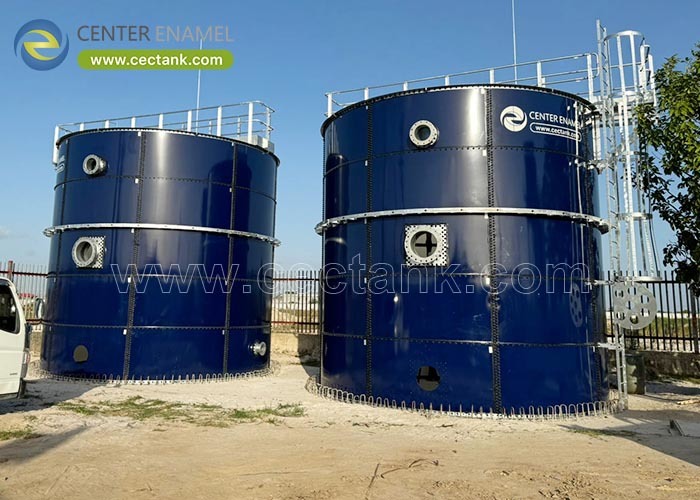
Good Quality 3000 m3 Glass Lining Steel Tank: What 'Good' Actually Means
| Place of Origin: | China |
| Brand Name: | CEC TANKS |
| Certification: | ISO 9001:2008, AWWA D103 , OSHA , BSCI |
| Model Number: | J2016012312 |
| Minimum Order Quantity: | 1set |
| Price: | $5000~$20000 one set |
| Packaging Details: | PE poly-foam between each two steel plates ; wooden pallet and wooden box |
| Delivery Time: | 0-60 days after deposit received |
| Payment Terms: | L/C,T/T |
| Supply Ability: | 60 sets per month |
|
Detail Information |
|||
| Place of Origin | China | Brand Name | CEC TANKS |
|---|---|---|---|
| Certification | ISO 9001:2008, AWWA D103 , OSHA , BSCI | Model Number | J2016012312 |
| Coating Thickness: | 0.25mm - 0.4mm, Two Coating Internal And External | Corrosion Resistance: | Excellent ! Suitable For Waste Water Salt Water, Sea Water, High Sulfur Crude Oil, Salt Fox, Organic And Inorganic Compounds |
| Adhesion: | 3,450N/cm | Permeability: | Gas And Liquid Impermeable |
| Acid And Alkalinity Proof: | Standard Coating Suits For PH3 - PH11, Special Coating Suits For PH1 - PH14 | Elastic: | Same As Steel Sheet , Around 500KN/mm |
| Serive Life: | More Than 30 Years | PH Range: | PH 1 - PH 14 |
| Highlight: | 3000 m3 glass lining steel tank,glass fused to steel tank with warranty,large capacity glass lined storage tank |
||
Product Description
Good Quality 3000 m3 Glass Lining Steel Tank: What 'Good' Actually Means
Every supplier describes their tanks as good quality, which makes the phrase useless as a specification. At 3000 m3 the vessel is large enough that a coating failure is a serious financial event rather than a maintenance item, and the buyer is committing to a structure that will stand for decades. What separates a genuinely well-made glass lined tank from an average one is not the brochure language but a handful of measurable properties, each of which can be tested and each of which a serious manufacturer records as a matter of routine.
The practical approach is to convert the word quality into a list of numbers with test methods attached, then ask for the records. Shijiazhuang Zhengzhong Technology Co., Ltd. (Center Enamel) has manufactured glass-fused-to-steel tanks since 2008 and holds close to 200 enamelling patents; the same set of production controls is applied to a 3000 m3 tank as to the largest vessels in the reference list.
1. Which Properties Actually Define Coating Quality?
A vitreous enamel coating is a glass layer fused to steel at 820-930 degrees Celsius. Its performance depends on thickness, continuity, adhesion and hardness, and each of those has a specific test. Four numbers describe almost everything that matters.
- Coating Thickness: Two-coat-two-fire systems are specified at roughly 0.25-0.45 mm per side. Too thin and defects bridge the layer; too thick and thermal expansion mismatch raises the risk of crazing during firing.
- Continuity: Holiday testing at 1500 V across one hundred percent of the surface is the acceptance test. A pinhole invisible to the eye is a corrosion cell waiting for an electrolyte.
- Adhesion: Bond strength to the steel substrate is measured in the region of 3450 N per square centimetre. Adhesion is what keeps the coating intact when the shell flexes under load.
- Surface Hardness: Around 6.0 on the Mohs scale, the coating resists abrasion from grit, ice and cleaning. Hardness is also the property that lets the wall be cleaned without damage.
- Chemical Inertia: A properly fired vitreous surface is inert across a wide pH range and does not support biological growth, which is why the same tank family serves drinking water and aggressive industrial effluent.
2. Why Does 3000 m3 Change the Engineering?
At 3000 m3 the tank stops being a container and becomes a structure. Shell plate thickness steps by course, the roof becomes a spanning element, and wind and seismic loads begin to govern details that a small tank never has to consider.
- Shell Design: Plate thickness is calculated course by course against hydrostatic load, so lower courses are heavier. A generic single-thickness quotation is a warning sign at this size.
- Wind and Seismic: Uplift, overturning and shell buckling under wind all require anchorage and stiffener design matched to the site's actual wind speed and seismic zone.
- Roof Span: At this diameter a self-supporting dome, a raftered cone or an external structure is a real decision. The roof also carries the coating duty for the vapour space.
- Foundation Tolerance: A bolted tank built on an out-of-tolerance ring beam will not seat. Foundation flatness and level tolerance are part of the engineering deliverable, not the contractor's problem alone.
- Bolted Joint Integrity: Grade 8.8 bolts, correct sealant and a defined torque sequence determine whether the shell behaves as a continuous structure under load.
3. How Do You Verify Quality Before Shipment?
Quality that exists only in a marketing claim cannot be verified. Quality that is recorded can. Ask for the production records tied to your tank, not a generic certificate, and check that the identifiers match the panels in your shipment.
- Steel Traceability: Mill certificates for the plate, matched to heat numbers. The coating can only perform as well as the steel beneath it, and the substrate chemistry is what makes enamelling grade steel different.
- Furnace Records: Firing temperature and time charts for the production run. The fusion reaction that creates the bond happens in the furnace, and it cannot be inspected afterwards.
- Test Reports: Holiday test coverage records, thickness measurements, and adhesion and hardness results from the same batch or from witness test pieces.
- Panel Marking: Every panel should carry an identifier that maps to the drawing and to the production record, so a panel on site can be traced back to its firing.
- Pre-Shipment Inspection: Third-party or witness inspection before packing, with a defined punch list and a closing record. This is the last point at which a defect is cheap to fix.
| Quality Indicator | How It Is Measured | What a Weak Result Looks Like |
|---|---|---|
| Coating thickness | Dry film measurement, typically 0.25-0.45 mm per side | Quoted as a single figure with no tolerance or method |
| Continuity | 1500 V holiday test over 100 percent of surface | Spot testing only, or no coverage record |
| Adhesion to steel | Bond strength test, around 3450 N per square centimetre | No value offered, or quoted without a test method |
| Firing control | Furnace temperature and time charts per run | No furnace record; a certificate issued after the fact |
| Traceability | Panel marking tied to mill and firing records | Unmarked panels and generic documentation |
Engineering Assurance and Project Support
Every tank delivered by Shijiazhuang Zhengzhong Technology Co., Ltd. (Center Enamel) is engineered against AWWA D103-09 and EN 1090 with finite element verification of shell, roof and nozzle loads, fused at 820-930°C under ISO 9001 and ISO 45001 control, holiday tested at 1500 V across one hundred percent of the surface, and assembled with Grade 8.8 bolts and manufacturer-certified sealant. Tanks are fused at 820-930 degrees Celsius using two-coat-two-fire or three-coat-three-fire systems, holiday tested at 1500 V across the full surface, engineered to AWWA D103-09 and EN 1090 with course-by-course shell design, and supplied with mill certificates, furnace charts, coating and adhesion test reports, panel marking and pre-shipment inspection records.
"A coating specification is a set of numbers with test methods behind them. If a supplier cannot produce the record, the number was never real."
Frequently Asked Questions (FAQ)
What coating thickness should a 3000 m3 glass lined tank have?
Expect roughly 0.25-0.45 mm per side for a two-coat-two-fire system, with the value stated together with a measurement method and a tolerance. Thickness alone is not the whole picture: continuity, adhesion and hardness are tested separately and all three should appear in the documentation set.
Why is 3000 m3 a common size?
It suits municipal and mid-sized industrial duty - large enough to give meaningful buffer or treatment volume, small enough to keep shell thickness, foundation and roof span within straightforward limits. It is also a size that ships efficiently, because the panel count still fits a manageable container programme.
How long does a 3000 m3 glass lined tank take to deliver?
Standard delivery is around 30 days from approved drawings for the tank package, with engineering, coating and packing running in sequence. Site preparation - the ring beam and its tolerance - is the activity most likely to delay erection and should start in parallel.
Can a 3000 m3 glass lined tank be customized to our duty?
Yes. Coating grade by zone, shell course design, roof type, nozzle and penetration layout, mixers, level and temperature instrumentation, external finish and access arrangements are all configured to the stored medium and the site loading, and documented before production.
Key Takeaways
- Replace the word quality with four measurable properties: thickness, continuity, adhesion and hardness.
- Ask for furnace charts and panel marking - a coating bond cannot be verified after firing, only documented during it.
- At 3000 m3 the tank is a structure: course-by-course shell design, wind and seismic design, and foundation tolerance all matter.
- Pre-shipment inspection is the last cheap point to find a defect; make it a contract requirement.