-
Glass Fused To Steel Tanks (882)
-
Stainless Steel Tanks (434)
-
Fusion Bonded Epoxy Tanks (622)
-
Galvanized Steel Tanks (321)
-
Aluminum Dome Roofs (1336)
-
Wastewater Storage Tanks (280)
-
Welded Steel Tanks (457)
-
Pressure Vessels (295)
-
Anaerobic Digester (202)
-
Industrial Water Tanks (349)
-
Glass Lined Steel Tanks (180)
-
Bolted Steel Tanks (389)
-
Sludge Storage Tank (115)
-
Biogas Storage Tank (173)
-
Leachate Storage Tanks (133)
-
Agricultural Water Storage Tanks (179)
-
Fire Water Tank (166)
-
Grain Storage Silos (146)
-
Biogas Projects (424)
-
Wastewater Treatment Projects (1650)
-
Double Membrane Roof (223)

|
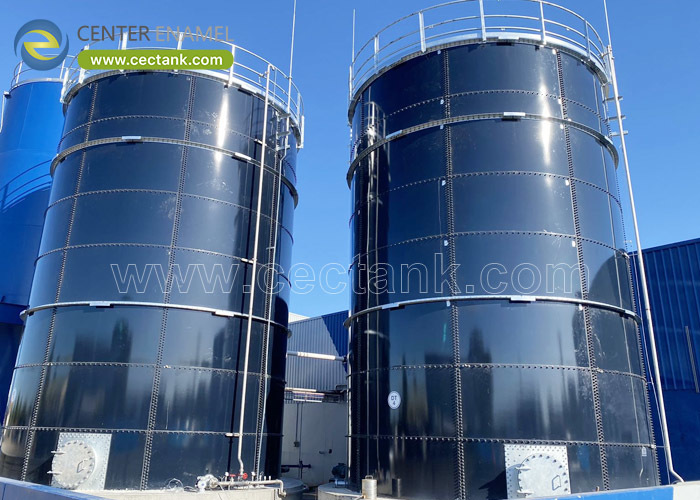
Liquid Storage Tanks Manufacturer: Judging Capability Before You Judge the Quote
| Place of Origin: | China |
| Brand Name: | CEC TANKS |
| Certification: | ISO 9001:2008, AWWA D103 , OSHA , BSCI |
| Model Number: | W |
| Minimum Order Quantity: | 1set |
| Price: | $5000~$20000 one set |
| Packaging Details: | PE poly-foam between each two steel plates ; wooden pallet and wooden |
| Delivery Time: | 10-30 days after deposit received |
| Payment Terms: | L/C,T/T |
| Supply Ability: | 60 sets per month |
|
Detail Information |
|||
| Place of Origin | China | Brand Name | CEC TANKS |
|---|---|---|---|
| Certification | ISO 9001:2008, AWWA D103 , OSHA , BSCI | Model Number | W |
| Tank Material: | Glass Fused To Steel | Foundation: | Concrete Or Glass Fused Steel |
| Steel Plates Thickness: | 3mm To 12mm , Depends On The Tank Structure | Size Of Panel: | 2.4M * 1.2M |
| Easy To Clean: | Smooth, Glossy, Inert, Anti-adhesion | Permeability: | Gas / Liquid Impermeable |
| Highlight: | glass fused steel liquid storage tanks,liquid storage tanks manufacturer,glass fused to steel tanks warranty |
||
Product Description
Liquid Storage Tanks Manufacturer: Judging Capability Before You Judge the Quote
Nearly every company selling liquid storage tanks describes itself as a manufacturer, and in a loose sense most of them are. The distinction that matters to a buyer is narrower: does the supplier control the process that determines how long the tank lasts, or do they buy in coated plate and assemble it? Both can produce a tank that looks identical on delivery day. Only one of them can produce furnace records, coating test reports and plate traceability when you ask five years later, and only one of them can tell you why a particular coating failed and what to change.
Shijiazhuang Zhengzhong Technology Co., Ltd. (Center Enamel) has manufactured bolted liquid storage tanks since 2008, holds close to two hundred enamelling patents, and supplies glass-fused-to-steel, fusion bonded epoxy, galvanized and stainless steel vessels for water, wastewater, chemical, food and industrial liquid duties. The checks below are the ones that reliably distinguish manufacturers from assemblers.
1. Does the Manufacturer Own the Coating Process?
On a coated steel tank the coating is the product. Everything else is geometry. A supplier who cannot show you the furnace and its records is asking you to accept the single most important variable on trust.
- Furnace Ownership and Records: Glass-fused-to-steel requires firing at 820-930 degrees Celsius. Ask whose furnace it is and for temperature records from actual production, not a brochure figure.
- Test Coverage: Holiday testing should cover one hundred percent of the surface, at 1500 V for the higher coating systems. Sample testing is not adequate on a vessel holding liquid.
- Measured Properties: Adhesion near 3450 N/cm squared and hardness around 6.0 Mohs are the figures to expect, and both should appear in the inspection and test plan rather than in marketing.
- Coating Range: A supplier offering one system will apply it to every duty. Look for a range spanning glass-fused-to-steel, fusion bonded epoxy, galvanized and stainless steel.
- Development Capability: Enamelling patents and an R&D function indicate that the coating is being developed rather than merely applied, which matters when your duty is unusual.
2. How Deep Is the Engineering?
A bolted tank is assembled from hundreds of parts on someone else's site, and the engineering that makes that possible happens before anything ships. Suppliers who only fabricate deliver a kit and a drawing and leave the integration risk with the buyer.
- Structural Verification: Shell, roof and nozzle loads verified by finite element analysis against AWWA D103-09 or EN 1090, with wind and seismic cases for the specific site.
- Penetration Engineering: Every nozzle is a discontinuity. It should be engineered and formed in the factory, not cut on site where the coating cannot be restored.
- Foundation Interface: Large bolted vessels are intolerant of differential settlement, so the manufacturer should supply foundation loading and tolerance requirements.
- Drawing Package: General arrangement, plate schedule, nozzle schedule matched to the process and instrumentation diagram, and a bolt and sealant schedule.
- Change Control: Ask how revisions are handled after order. A document-controlled process handles them cleanly; its absence means changes get resolved on site.
3. What Does Traceability Look Like in Practice?
Traceability is the difference between a claim and a record. It is easy to assert and hard to fake, which is why it is the single most useful thing to test during an audit.
- Plate Traceability: Plates identifiable to a production batch, with coating test records that can be matched back to that batch.
- Material Certificates: Mill certificates for the steel, with the coating system and thickness recorded against the same batch reference.
- Inspection Records: Holiday test results, adhesion and thickness verification, and hydrostatic test records, all retained and retrievable.
- Hold Points: Agreed inspection stages where the buyer or a third party may attend, with certificates issued at each stage.
- Retrieval After Years: The real test: ask for records from a tank delivered several years ago. A genuine system produces them; a decorative one does not.
| Capability Check | Strong Answer | Warning Sign |
|---|---|---|
| Coating process | Own furnace at 820-930 degrees C with records | Brochure claims without furnace data |
| Test regime | 100 percent holiday at 1500 V, in the ITP | Sampling, or tests only described in sales material |
| Material range | GFS, epoxy, galvanized and stainless offered | One system applied to every duty |
| Engineering | FEA to code, site-specific load cases | Standard drawings with no project engineering |
| Traceability | Batch records retrievable years later | Certificates issued but not traceable to a batch |
Engineering Assurance and Project Support
Every tank delivered by Shijiazhuang Zhengzhong Technology Co., Ltd. (Center Enamel) is engineered against AWWA D103-09 and EN 1090 with finite element verification of shell, roof and nozzle loads, fused at 820-930°C under ISO 9001 and ISO 45001 control, holiday tested at 1500 V across one hundred percent of the surface, and assembled with Grade 8.8 bolts and manufacturer-certified sealant. Tanks are engineered against AWWA D103-09 and EN 1090 under ISO 9001 and ISO 45001, fused at 820-930 degrees Celsius and holiday tested at 1500 V across one hundred percent of the surface, with GFS, epoxy, galvanized and stainless systems available, and delivered with plate traceability, coating test records and support for buyer or third-party inspection.
"Anyone can assemble a tank. Ask for the furnace records from a job delivered five years ago - that tells you who actually made it."
Frequently Asked Questions (FAQ)
What is the difference between a manufacturer and a supplier?
A manufacturer controls the process that determines service life - in this case the coating furnace and its testing - and can produce records traceable to a production batch. A supplier or assembler may buy in coated plate and erect it competently, but cannot produce furnace records or coating development data for the specific product.
Which tank material should we choose for our liquid?
It depends on chemistry, temperature and whether the liquid is for human or food contact. Glass-fused-to-steel covers pH 3 to 11 as standard with 1 to 14 on special specification and suits most water, wastewater and chemical duties. Stainless steel is specified where hygiene is paramount, and epoxy is a cost-effective middle option.
How do we verify quality claims before ordering?
Ask for the inspection and test plan, confirm holiday test voltage and coverage, request adhesion and thickness figures, and ask to see records from a comparable project delivered several years ago. Where the purchase justifies it, appoint a third-party inspector at the agreed hold points.
Can the tank be engineered to our liquid and site conditions?
Yes. Diameter, height, coating system, roof type, penetration layout, access and instrumentation are all configured to the duty. Provide the liquid analysis, temperature range, capacity and site conditions and the tank will be engineered to match.
Key Takeaways
- The coating is the product - ask whose furnace it is and for records from actual production.
- Test coverage belongs in the inspection and test plan, at one hundred percent and 1500 V, not in sales material.
- Traceability is the difference between a claim and a record: ask for data from a tank delivered years ago.
- A manufacturer offering only one coating system will apply it to every duty regardless of fit.