-
Glass Fused To Steel Tanks (734)
-
Stainless Steel Tanks (434)
-
Fusion Bonded Epoxy Tanks (592)
-
Galvanized Steel Tanks (321)
-
Aluminum Dome Roofs (1336)
-
Wastewater Storage Tanks (237)
-
Welded Steel Tanks (457)
-
Pressure Vessels (295)
-
Anaerobic Digester (202)
-
Industrial Water Tanks (349)
-
Glass Lined Steel Tanks (180)
-
Bolted Steel Tanks (389)
-
Sludge Storage Tank (115)
-
Biogas Storage Tank (173)
-
Leachate Storage Tanks (133)
-
Agricultural Water Storage Tanks (179)
-
Fire Water Tank (166)
-
Grain Storage Silos (146)
-
Biogas Projects (424)
-
Wastewater Treatment Projects (1430)
-
Double Membrane Roof (223)
|
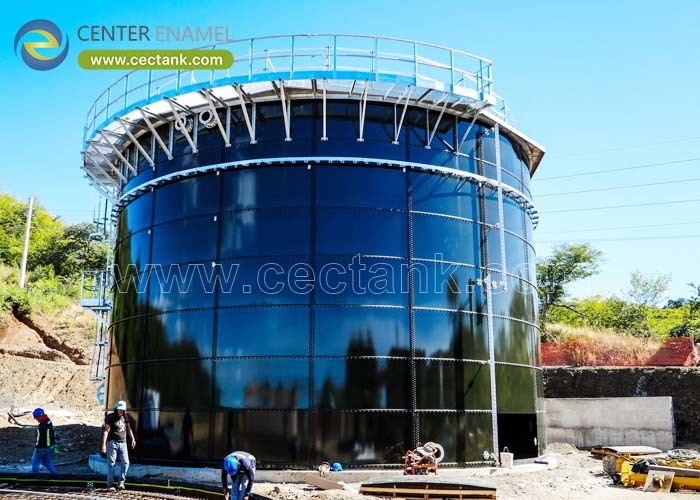
Durable GFS Water Storage Tanks: What Service Life Really Rests On
| Place of Origin: | CHINA |
| Brand Name: | CEC TANKS |
| Certification: | ISO 9001:2008, AWWA D103 , OSHA , BSCI |
| Model Number: | W20180508003 |
| Minimum Order Quantity: | 1 SET |
| Price: | $5000~$20000 one set |
| Packaging Details: | PE poly-foam between each two steel plates;wooden pallets and wooden box |
| Delivery Time: | 10-30 days after deposit received |
| Payment Terms: | L/C,T/T |
| Supply Ability: | 60 sets per month |
|
Detail Information |
|||
Product Description
Durable GFS Water Storage Tanks: What Service Life Really Rests On
Service life figures are quoted freely and rarely explained. A manufacturer can say thirty years and be right, or say thirty years and be describing a tank that will need attention in ten. The difference is not dishonesty - it is that a tank's life is decided partly in the factory and partly by whoever owns it afterwards, and the second half is almost never part of the conversation at the point of sale.
It is worth having that conversation, because the owner-controlled half is manageable and inexpensive when it is planned. Shijiazhuang Zhengzhong Technology Co., Ltd. (Center Enamel) has manufactured glass-fused-to-steel tanks since 2008 and states service life together with the conditions that support it.
1. What Determines How Long a Tank Actually Lasts?
Split the factors into those the factory controls and those the owner controls. The first group sets the ceiling; the second group decides whether the ceiling is reached. Most premature failures come from the second group.
· Coating Quality: A vitreous layer fused at 820-930 degrees Celsius, holiday tested at 1500 V, with adhesion around 3450 N per square centimetre. This is the factory's responsibility and it is verifiable on delivery.
· Structural Design: Shell thickness by course, wind and seismic design, and anchorage. Undersizing here is permanent, because it cannot be corrected later.
· Foundation: A tank built on a ring beam that settles unevenly will distort. Foundation movement is the most common cause of problems that look like coating failures.
· Commissioning: Filling sequence, valve operation and first cleaning set the initial condition. A blocked vent or an overflow that cannot discharge will damage a tank in its first weeks.
· Operating Regime: Water chemistry, temperature cycling, cleaning method and how the tank is filled and drawn all affect how long the asset lasts.
2. Which Failure Modes Are Owner-Side?
Almost every premature failure has a cause that was visible beforehand. The list is short and, with a maintenance regime, most of it is preventable at modest cost.
· Foundation Settlement: Differential settlement distorts the shell and loads the seams. Regular checks of level and of the ring beam condition catch movement early.
· Blocked Vents and Overflows: A blocked vent creates vacuum during draw-off; a blocked overflow creates overpressure during filling. Both can deform a tank that was correctly designed.
· External Corrosion at the Base: Splash zone, standing water and vegetation against the shell attack the tank from outside, at the one location that is hardest to inspect.
· Sealant and Bolt Condition: Sealant ages and bolts relax. Periodic inspection and re-torquing restore what thermal cycling and settlement have taken out.
· Damage from Cleaning and Modification: Abrasive cleaning, grinding near the coating, and site-drilled penetrations are the fastest way to destroy a coating that would otherwise last decades.
3. What Does a Sensible Maintenance Regime Look Like?
GFS tanks are low maintenance, not no maintenance. A regime that is light but consistent protects the asset far better than one that is thorough but occasional, and it produces the records that make a warranty or insurance claim straightforward.
· Annual External Walk-Down: Check the base, the external coating, the anchor bolts, the vents and the overflow. Most issues are visible from the ground.
· Periodic Internal Inspection: Drain and inspect at an interval set by the duty, checking coating condition, seams, and any deposits. Photograph and date the findings.
· Bolt and Sealant Checks: Inspect and re-torque at the interval the manufacturer specifies for the duty and climate. This is the single highest value maintenance task.
· Cleaning Method Agreement: Agree a cleaning method compatible with the coating - no abrasive blasting, no aggressive scraping - and make it a site procedure rather than a contractor's choice.
· Record Keeping: Keep the coating records, inspection findings and any repairs together. A documented history is what turns a forty year tank into a provable forty year tank.
|
Factor |
Who Controls It |
Effect on Service Life |
|
Coating fusion and testing |
Manufacturer |
Sets the ceiling: inert, impermeable, holiday tested at 1500 V |
|
Structural and foundation design |
Joint - design and construction |
Differential settlement distorts the shell and loads the seams |
|
Vents and overflow function |
Owner |
Blockage creates vacuum or overpressure that can deform a correctly designed tank |
|
External base condition |
Owner |
Splash zone and vegetation attack where inspection is hardest |
|
Bolt torque and sealant |
Owner |
Periodic re-torquing restores what cycling and settlement remove |
Engineering Assurance and Project Support
Every tank delivered by Shijiazhuang Zhengzhong Technology Co., Ltd. (Center Enamel) is engineered against AWWA D103-09 and EN 1090 with finite element verification of shell, roof and nozzle loads, fused at 820-930°C under ISO 9001 and ISO 45001 control, holiday tested at 1500 V across one hundred percent of the surface, and assembled with Grade 8.8 bolts and manufacturer-certified sealant. Tanks are fused at 820-930 degrees Celsius, holiday tested at 1500 V, engineered to AWWA D103-09 and EN 1090 with wind and seismic design, and supplied with coating and test records, foundation drawings and tolerance, commissioning guidance, a maintenance schedule with inspection and re-torquing intervals, an approved cleaning method, and documentation structured for warranty and asset records.
Frequently Asked Questions (FAQ)
How long does a glass-fused-to-steel water tank last?
Service life of thirty to fifty years is the usual expectation for potable and municipal water duty, and longer where the regime is favourable. The figure depends as much on the foundation, the venting, the external condition and periodic maintenance as on the coating itself, which is why it should be stated together with the conditions that support it.
What maintenance does a GFS tank actually need?
An annual external check of the base, external coating, anchors, vents and overflow; a periodic internal inspection at an interval set by the duty; bolt inspection and re-torquing to the manufacturer's schedule; and a cleaning method agreed in advance. It is light, consistent work rather than heavy occasional work.
What is most likely to damage the coating?
Site modification and cleaning. Cutting or drilling penetrations on site, grinding near coated surfaces, and abrasive cleaning methods damage a coating that would otherwise last decades. Any penetration should be formed in the factory before firing, and cleaning should follow an agreed non-abrasive method.
Can a durable GFS water tank be customized to our water and site?
Yes. Volume, coating grade by zone, shell and roof design, wind and seismic provisions, foundation requirements, nozzle and instrumentation layout, external finish and access are all configured to the water analysis and the site conditions, and documented for the operating and maintenance regime.
·