-
Glass Fused To Steel Tanks (734)
-
Stainless Steel Tanks (434)
-
Fusion Bonded Epoxy Tanks (592)
-
Galvanized Steel Tanks (321)
-
Aluminum Dome Roofs (1336)
-
Wastewater Storage Tanks (237)
-
Welded Steel Tanks (457)
-
Pressure Vessels (295)
-
Anaerobic Digester (202)
-
Industrial Water Tanks (349)
-
Glass Lined Steel Tanks (180)
-
Bolted Steel Tanks (389)
-
Sludge Storage Tank (115)
-
Biogas Storage Tank (173)
-
Leachate Storage Tanks (133)
-
Agricultural Water Storage Tanks (179)
-
Fire Water Tank (166)
-
Grain Storage Silos (146)
-
Biogas Projects (424)
-
Wastewater Treatment Projects (1430)
-
Double Membrane Roof (223)


|
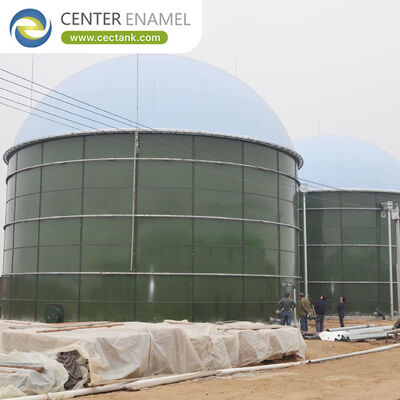
BSCI Sludge Storage Tank: Social Compliance Where the Duty Is at Its Worst
| Place of Origin: | China |
| Brand Name: | CEC TANKS |
| Certification: | ISO 9001:2008, AWWA D103 , OSHA , BSCI |
| Model Number: | J2016012316 |
| Minimum Order Quantity: | 1set |
| Price: | $5000~$20000 one set |
| Packaging Details: | PE poly-foam between each two steel plates ; wooden pallet and wooden box |
| Delivery Time: | 0-60 days after deposit received |
| Payment Terms: | L/C,T/T |
| Supply Ability: | 60 sets per month |
|
Detail Information |
|||
| Place of Origin | China | Brand Name | CEC TANKS |
|---|---|---|---|
| Certification | ISO 9001:2008, AWWA D103 , OSHA , BSCI | Model Number | J2016012316 |
| Acid And Alkalinity Proof: | Standard Coating Suits For PH3 - PH11, Special Coating Suits For PH1 - PH14 | Elastic: | Same As Steel Sheet , Around 500KN/mm |
| Serive Life: | More Than 30 Years | PH Range: | PH 1 - PH 14 |
| Coating Color: | Dark Blue, Dark Green , White, And Customized | Steel Plates Thickness: | 3mm - 12mm , Depends On The Diameter & Height |
| Easy Yo Clean: | Smooth, Glossy, Inert, Anti-adhesion | Coating Thickness: | 4.0.25mm - 0.4mm, Two Coating Internal And External |
| Highlight: | BSCI sludge storage tank with warranty,glass fused to steel sludge tank,social compliance sludge storage tank |
||
Product Description
BSCI Sludge Storage Tank: Social Compliance Where the Duty Is at Its Worst
Sludge storage sits at the uncomfortable end of both worlds. Technically it is one of the most aggressive duties a bolted tank can be asked to handle, because septicity turns the vapour space acidic and the seam becomes an odour path. Commercially it attracts more scrutiny than a water tank does, because sludge handling facilities are regulated, frequently publicly owned, and often financed by institutions that apply supply chain requirements to every package in the project. Buyers therefore find themselves answering two sets of questions at once, and the temptation is to treat the compliance side as paperwork that can be handled after the technical decision is made.
That order causes problems, because the two are connected. A factory that documents its labour practices, safety incidents and corrective actions is usually the same factory that can produce furnace records and coating test reports without being chased. Shijiazhuang Zhengzhong Technology Co., Ltd. (Center Enamel) manufactures sludge tanks under BSCI audited conditions with ISO 9001 and ISO 45001 certified systems, and has supplied glass-fused-to-steel sludge vessels since 2008.
1. What Makes Sludge the Hardest Storage Duty?
Sludge combines four mechanisms that rarely coincide elsewhere: sulphide generation, acid formation in the vapour space, abrasive settled solids, and long standing periods that let the biology run. A specification that addresses only immersion corrosion will fail above the waterline.
- Sulphide Generation: Sulphate-reducing bacteria convert sulphate to hydrogen sulphide once sludge stands. Any residence beyond a day or two makes gas generation effectively certain.
- Vapour Space Acid: Hydrogen sulphide oxidises on damp surfaces above the liquid line, forming sulphuric acid. Corrosion concentrates on the roof and upper courses, not on the floor.
- Abrasion and Grit: Settled grit scours the floor during discharge and the moving waterline abrades the wall, so the lower zone needs abrasion resistance as well as chemical resistance.
- Septic Standing Time: A holding tank buffering a dewatering line may sit for days between draws, allowing acid concentrations that a continuously fed vessel never reaches.
- Odour as a Design Constraint: On a sludge tank, gas escaping at a seam is a neighbourhood problem and a regulatory one, so gas tightness is part of the specification rather than a finish detail.
2. How Should the Coating and Seams Be Specified?
Specify by zone. The vapour space needs the higher coating grade, the immersed lower courses need less, and the seam needs a sealant rated for sulphide. Applying one grade uniformly either wastes money below the waterline or under-protects above it.
- Roof and Upper Courses: Two-coat-two-fire as a minimum, three-coat-three-fire for industrial sludge, because this is where acid forms. Both are holiday tested at 1500 V across one hundred percent of the surface.
- Immersed Lower Courses: Two-coat-one-fire can be appropriate for municipal sludge in permanent immersion, at 210-430 microns tested at 900 V.
- Floor and Abrasion Zone: Specify abrasion resistance at the floor and the discharge path, and arrange the outlet to minimise the distance grit travels across the plate.
- Bolted Seams: Grade 8.8 bolts with a sulphide-compatible sealant and a defined torque sequence. The coating protects the plate; the sealant protects the seam, and the seam is where gas escapes.
- External Coating: Sludge splashes and washdown water attack the outside of the tank. External protection should be specified to the same standard as the internal system.
3. Where Does BSCI Fit in a Sludge Tank Procurement?
BSCI is a social compliance framework covering labour conditions at the manufacturing site. It says nothing about coating performance, which is why it must sit alongside - not instead of - quality and product certification. Asking for all three is what makes a sludge tank procurement defensible.
- What It Covers: Freely chosen employment, no child or forced labour, working hours within legal limits, health and safety provisions, and a functioning management system, verified by periodic audit.
- What It Does Not Cover: Coating quality, structural design or product certification. A socially compliant factory can still supply an under-specified tank, so the technical scope remains the buyer's responsibility.
- Evidence to Demand: The latest audit report with its date and rating, plus written confirmation of which manufacturing site was audited. A certificate image without a recent audit proves very little.
- Companion Certifications: ISO 9001 for quality management, ISO 45001 for occupational health and safety, and for the product itself ISO 28765 for the glass-fused-to-steel coating system.
- Why Timing Matters: Compliance questions raised after technical evaluation force a reopened shortlist or an accepted risk. Raised at tender stage, they are simply another line in the evaluation matrix.
| Procurement Element | What to Require | What It Protects |
|---|---|---|
| Vapour space coating | 2C2F minimum, 3C3F for industrial sludge | Acid attack above the liquid line |
| Immersed zone coating | 2C1F acceptable for municipal sludge | Avoids over-specifying where attack is mild |
| Seam specification | Grade 8.8 bolts, sulphide-rated sealant, torque sequence | Gas tightness and odour control |
| Social compliance | Latest BSCI audit report with date, rating and site | Vendor approval and reputational exposure |
| Quality system | ISO 9001, ISO 45001, ISO 28765 | Documented production control and coating evidence |
Engineering Assurance and Project Support
Every tank delivered by Shijiazhuang Zhengzhong Technology Co., Ltd. (Center Enamel) is engineered against AWWA D103-09 and EN 1090 with finite element verification of shell, roof and nozzle loads, fused at 820-930°C under ISO 9001 and ISO 45001 control, holiday tested at 1500 V across one hundred percent of the surface, and assembled with Grade 8.8 bolts and manufacturer-certified sealant. Sludge tanks are manufactured under BSCI audited conditions with ISO 9001 and ISO 45001 systems, engineered against AWWA D103-09 and EN 1090, fused at 820-930 degrees Celsius and holiday tested at 1500 V, and supplied with gas-tight roof options, mixing penetrations, sulphide-compatible sealant and full coating and test documentation.
Frequently Asked Questions (FAQ)
Does BSCI certification mean the tank will resist hydrogen sulphide?
No, and the distinction matters. BSCI covers labour conditions at the factory. Hydrogen sulphide resistance comes from the coating system and the sealant specification - two-coat-two-fire or three-coat-three-fire above the liquid line and a sulphide-rated sealant at the seams. The two requirements are independent and both belong in the specification.
How do we verify a supplier's BSCI status?
Request the most recent audit report rather than a certificate image, check the audit date and rating, and confirm the audited site name matches the manufacturing location in the quotation. Where your organisation has access, verification can also be made through the amfori platform.
What coating grade does a sludge tank need?
Above the liquid line, two-coat-two-fire as a minimum and three-coat-three-fire for industrial streams, because that is where sulphuric acid forms. In permanent immersion, two-coat-one-fire is often adequate for municipal sludge. Specifying by zone targets spend where corrosion actually occurs.
Can a sludge tank be configured to our sludge and compliance requirements?
Yes. Volume, coating grade by zone, roof type, mixing provision, discharge arrangement and instrumentation are all configured to the duty, and the compliance documentation set can be assembled in the format your procurement team requires.
Key Takeaways
- Sludge corrodes above the waterline, so the roof and upper courses need the highest coating grade.
- The coating protects the plate and the sealant protects the seam - both must be rated for sulphide.
- BSCI covers labour conditions, not coating performance; request it alongside ISO 9001 and product certification.
- Raise compliance requirements at tender stage, when they are an evaluation line rather than an emergency.