-
Glass Fused To Steel Tanks (734)
-
Stainless Steel Tanks (434)
-
Fusion Bonded Epoxy Tanks (592)
-
Galvanized Steel Tanks (321)
-
Aluminum Dome Roofs (1336)
-
Wastewater Storage Tanks (237)
-
Welded Steel Tanks (457)
-
Pressure Vessels (295)
-
Anaerobic Digester (202)
-
Industrial Water Tanks (349)
-
Glass Lined Steel Tanks (180)
-
Bolted Steel Tanks (389)
-
Sludge Storage Tank (115)
-
Biogas Storage Tank (173)
-
Leachate Storage Tanks (133)
-
Agricultural Water Storage Tanks (179)
-
Fire Water Tank (166)
-
Grain Storage Silos (146)
-
Biogas Projects (424)
-
Wastewater Treatment Projects (1430)
-
Double Membrane Roof (223)

|
GFS Grain Silo Company: What to Check Before You Shortlist One
| Place of Origin: | China |
| Brand Name: | CEC TANKS |
| Certification: | ISO 9001:2008, AWWA D103 , OSHA , BSCI |
| Model Number: | W20160705009 |
| Minimum Order Quantity: | 1set |
| Price: | $5000~$20000 one set |
| Packaging Details: | PE poly-foam between each two steel plates ; wooden pallet and wooden box |
| Delivery Time: | 0-60 days after deposit received |
| Payment Terms: | L/C,T/T |
| Supply Ability: | 60 sets per month |
|
Detail Information |
|||
Product Description
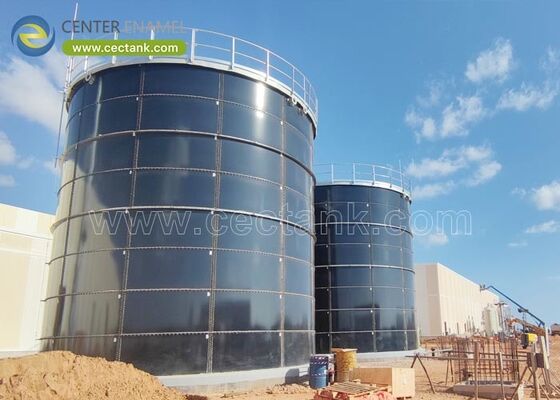
GFS Grain Silo Company: What to Check Before You Shortlist One
A grain silo looks like a simple container for a dry product, which is why grain storage is frequently bought on price per tonne of capacity. The losses that follow are rarely dramatic - no leaks, no visible failure - but they are continuous and they accumulate. Grain that heats in one pocket of a silo, bridges over the outlet, or goes out of specification on moisture is grain that has already been paid for and cannot be sold at full value.
Choosing the company is therefore more important than choosing the silo. Shijiazhuang Zhengzhong Technology Co., Ltd. (Center Enamel) has manufactured glass-fused-to-steel silos since 2008 and evaluates a grain project on the crop, the climate and the storage duration before quoting a capacity, because those three things decide the engineering.
1. What Makes a Grain Silo Different from a Liquid Tank?
Grain is a living, breathing, abrasive solid that exerts lateral pressure differently from a liquid and generates its own heat and moisture. A company that treats a silo as a tank without a roof will get the shell right and the storage wrong.
- Living Product: Stored grain respires. It consumes oxygen, produces carbon dioxide and releases moisture and heat, which is why aeration and temperature monitoring exist.
- Non-Hydrostatic Load: Bulk solids load the wall differently from liquid, and eccentric discharge during emptying creates asymmetric loading the shell must resist.
- Abrasiveness: Grain sliding down the wall abrades the surface on every fill and discharge cycle. A coating that resists corrosion but not abrasion will wear.
- Moisture Migration: Temperature differences inside the mass move moisture, which condenses at cooler surfaces - typically near the wall and the top - and starts spoilage there.
- Pest and Fumigation Duty: Silos are fumigated. The structure has to be sealable and the coating has to tolerate the fumigants used.
2. What Grain-Specific Engineering Is Essential?
Four systems decide whether stored grain comes out at the quality it went in: aeration, temperature monitoring, discharge and sealing. A silo quotation without them is incomplete regardless of what the shell costs.
- Aeration System: A perforated floor or ducting with a fan sized to the crop and the volume. Aeration equalises temperature and removes the moisture and heat the grain produces.
- Temperature Monitoring: Cables or probes distributed through the mass, read on a schedule. Rising temperature in one zone is the earliest and most useful warning of spoilage.
- Discharge Arrangement: Hopper bottom for free-flowing grain, or flat floor with a sweep auger where the crop or the capacity suits. The outlet must be sized against the crop's flow properties.
- Sealing and Fumigation: A sealed roof and sealed penetrations allow fumigation to work. Leaks in the envelope make pest control ineffective and expensive.
- Filling and Distribution: How grain enters the silo determines whether fines concentrate in the centre. Distribution and a proper filling sequence reduce the hotspots that follow.
3. How Do You Assess a Silo Company's Real Capability?
Capacity figures are easy to quote and hard to verify. What separates a manufacturer from an assembler is ownership of the coating process, engineering depth and the willingness to document both.
- Coating Ownership: Does the company fire its own enamel, or buy painted panels? Coating quality cannot be subcontracted and then certified - it has to be produced and tested in house.
- Engineering in House: Ask who performs the structural calculation and who stamps the drawings. Silos fail structurally through undersized stiffeners and under-designed foundations.
- Relevant Reference Projects: Ask for grain installations in a comparable climate with a comparable crop, and ask how long they have been in service.
- Documentation Discipline: Mill certificates, coating records, structural calculations and erection drawings should be available as a matter of course, not on request.
- Spare Parts and Aftercare: Aeration fans, temperature cables and sweep augers wear. Confirm spares availability and the response arrangement before ordering.
| Assessment Area | What to Ask | Why It Matters |
| Coating process | Do you fire the enamel in your own plant? | Coating quality cannot be subcontracted and then certified |
| Structural engineering | Who performs and stamps the calculation? | Silo failures are usually stiffener or foundation issues, not plate thickness |
| Grain systems | Is aeration, monitoring and discharge in the scope? | These decide whether the crop comes out at the quality it went in |
| References | Comparable crop and climate, and how long in service? | Grain behaviour varies enormously between crops and regions |
| Aftercare | Spares for fans, cables and sweeps? | Wearing components decide whether the silo is usable in ten years |
Engineering Assurance and Project Support
Every tank delivered by Shijiazhuang Zhengzhong Technology Co., Ltd. (Center Enamel) is engineered against AWWA D103-09 and EN 1090 with finite element verification of shell, roof and nozzle loads, fused at 820-930°C under ISO 9001 and ISO 45001 control, holiday tested at 1500 V across one hundred percent of the surface, and assembled with Grade 8.8 bolts and manufacturer-certified sealant. Silos are engineered for the crop and the climate, with glass-fused-to-steel panels fused at 820-930 degrees Celsius for abrasion and corrosion resistance, hopper or flat-bottom discharge, aeration floors or ducting with fans sized to the volume, temperature monitoring cables, sealed roofs and penetrations for fumigation, stiffener and foundation design, and full structural and coating documentation.
"Grain does not announce that it is going wrong. The temperature cable tells you, or the buyer tells you later at a lower price."
Frequently Asked Questions (FAQ)
How do I size a grain silo?
Work from the tonnage to be stored and the bulk density of the specific crop, then add the freeboard needed for filling and aeration. The crop matters: wheat, maize, rice and soya have different densities and different flow and aeration behaviour, so a tonnage-only enquiry will produce a generic answer.
Why is aeration necessary?
Stored grain respires and generates heat and moisture. Without aeration, temperature gradients drive moisture migration, condensation forms near the wall and at the top, and spoilage begins there. Aeration equalises temperature across the mass and removes the moisture the grain releases.
What is better, a hopper bottom or a flat floor with a sweep auger?
Hopper bottoms give reliable gravity discharge for free-flowing grain and are simple to operate. Flat floors with sweep augers suit larger capacities and poorer-flowing crops, hold more grain for the same height, and cost less per tonne - at the price of a mechanical component that needs maintenance.
Can a GFS grain silo be customized to our crop and climate?
Yes. Capacity, shell and stiffener design, discharge arrangement, aeration capacity, temperature monitoring density, sealing for fumigation, roof type and foundation design are all configured to the crop, the storage duration and the local climate, and documented before production.
Key Takeaways
- Buy the company, not the silo: coating ownership and in-house structural engineering are what separate a manufacturer from an assembler.
- Aeration, temperature monitoring, discharge and sealing are part of the silo, not optional extras.
- Grain is alive - it generates heat and moisture, and spoilage starts where temperature gradients move moisture.
- Ask for references in a comparable crop and climate, and confirm spares for fans, cables and sweeps.