-
Glass Fused To Steel Tanks (734)
-
Stainless Steel Tanks (434)
-
Fusion Bonded Epoxy Tanks (592)
-
Galvanized Steel Tanks (321)
-
Aluminum Dome Roofs (1336)
-
Wastewater Storage Tanks (237)
-
Welded Steel Tanks (457)
-
Pressure Vessels (295)
-
Anaerobic Digester (202)
-
Industrial Water Tanks (349)
-
Glass Lined Steel Tanks (180)
-
Bolted Steel Tanks (389)
-
Sludge Storage Tank (115)
-
Biogas Storage Tank (173)
-
Leachate Storage Tanks (133)
-
Agricultural Water Storage Tanks (179)
-
Fire Water Tank (166)
-
Grain Storage Silos (146)
-
Biogas Projects (424)
-
Wastewater Treatment Projects (1430)
-
Double Membrane Roof (223)

|
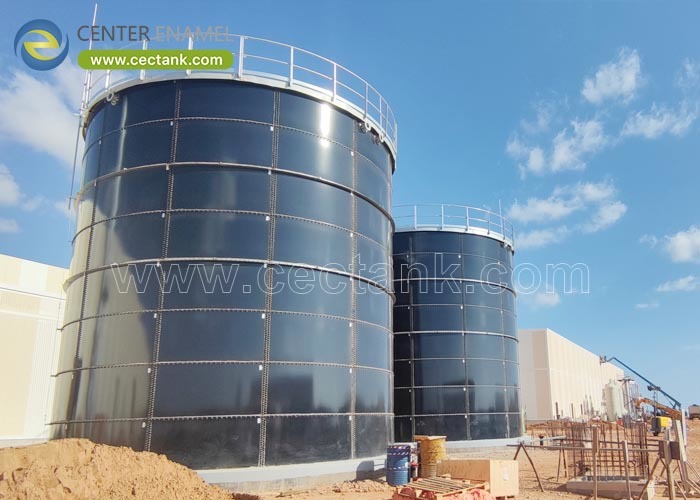
Leachate Storage Tanks Made in China: Evaluating Origin Without the Prejudice
| Place of Origin: | China |
| Brand Name: | CEC TANKS |
| Certification: | ISO 9001:2008, AWWA D103 , OSHA , BSCI |
| Model Number: | J2016012315 |
| Minimum Order Quantity: | 1set |
| Price: | $5000~$20000 one set |
| Packaging Details: | PE poly-foam between each two steel plates ; wooden pallet and wooden box |
| Delivery Time: | 0-60 days after deposit received |
| Payment Terms: | L/C,T/T |
| Supply Ability: | 60 sets per month |
|
Detail Information |
|||
| Place of Origin | China | Brand Name | CEC TANKS |
|---|---|---|---|
| Certification | ISO 9001:2008, AWWA D103 , OSHA , BSCI | Model Number | J2016012315 |
| Acid And Alkalinity Proof: | Standard Coating Suits For PH3 - PH11, Special Coating Suits For PH1 - PH14 | Elastic: | Same As Steel Sheet , Around 500KN/mm |
| Serive Life: | More Than 30 Years | PH Range: | PH 1 - PH 14 |
| Coating Color: | Dark Blue, Dark Green , White, And Customized | Steel Plates Thickness: | 3mm - 12mm , Depends On The Diameter & Height |
| Easy Yo Clean: | Smooth, Glossy, Inert, Anti-adhesion | Coating Thickness: | 4.0.25mm - 0.4mm, Two Coating Internal And External |
| Highlight: | Leachate storage tanks made in China,Glass fused to steel leachate tanks,China-made leachate storage tanks |
||
Product Description
Leachate Storage Tanks Made in China: Evaluating Origin Without the Prejudice
Landfill leachate is one of the few liquids that defeats conventional containment on several fronts at once: high ammonia, high chloride, variable pH, a volatile fraction that generates gas, and a composition that changes as the landfill ages. Because the consequence of failure is groundwater contamination and regulatory action, leachate procurement tends to be conservative, and conservatism has a habit of expressing itself as a preference for a familiar country of origin. That shortcut is understandable and it is also unreliable, because origin tells you nothing about the coating process that will actually determine whether the tank holds.
Shijiazhuang Zhengzhong Technology Co., Ltd. (Center Enamel) has manufactured glass-fused-to-steel tanks in China since 2008, holds close to two hundred enamelling patents, and has delivered leachate installations including a 10,392 cubic metre project in Beijing in 2023 and a ten-tank system for a Veolia facility in Hong Kong in 2019. The argument below is not that origin is irrelevant - it is that it is the wrong variable to optimise.
1. What Makes Leachate So Demanding?
Leachate attacks containment through four mechanisms simultaneously, and its composition shifts over the life of the landfill. A tank specified against a single analysis taken at commissioning may be under-specified for the leachate the site produces in ten years.
- High Ammonia: Ammoniacal nitrogen in the hundreds to thousands of milligrams per litre is common, and free ammonia concentration rises with pH, which makes the pH control strategy part of the containment design.
- High Chloride: Chloride concentrations of several thousand milligrams per litre stress stainless steels and concrete alike, and drive material selection away from the obvious choices.
- Variable and Ageing Chemistry: Young leachate is acidic with high organic acid content; mature leachate trends neutral to slightly alkaline with lower biodegradability. The tank has to cope with both.
- Gas Generation: The volatile fraction and residual biological activity generate gas, so the vapour space is a corrosion zone and the tank needs gas handling rather than a simple vent.
- Abrasive and Scaling Solids: Suspended solids and scale-forming salts abrade the wall at the waterline and foul outlets and instrumentation over time.
2. What Should Be Verified, Whatever the Origin?
Four things determine whether a leachate tank holds: the coating system and its test evidence, the gas handling design, the seam specification, and the secondary containment arrangement. Every one of them is verifiable before shipment, and none of them correlates reliably with the country the tank ships from.
- Coating System and Evidence: Glass-fused-to-steel fired at 820-930 degrees Celsius, holiday tested at 1500 V across one hundred percent of the surface, with two-coat-two-fire or three-coat-three-fire specified for the vapour space.
- Gas Handling Design: A gas-tight roof with a collection connection, sulphide-compatible sealant and a route to treatment or flaring. Venting leachate gas to atmosphere is rarely acceptable any more.
- Seam Specification: Grade 8.8 bolts with sealant rated for the gas composition, applied to a defined torque sequence, because the seam is both the leak path and the corrosion site.
- Secondary Containment: Bunding or double-wall construction sized to the regulatory requirement, with leak detection in the annulus and a route to inspection.
- Reference Installations: Comparable leachate projects with contactable operators. Water or wastewater references do not demonstrate leachate performance.
3. How Do Chinese Manufacturers Compare on Capability?
The honest answer is that the spread within China is wider than the spread between countries, which is precisely why origin is a poor proxy. There are Chinese factories coating plate in controlled furnaces with full traceability, and there are Chinese factories painting plate in a shed. Both will tell you they are a manufacturer.
- Coating Technology Depth: The relevant question is whether the factory owns and operates the furnace and can show temperature records, not whether it is in a particular country.
- Scale and Reference Base: Capacity to deliver large diameters and a track record of comparable installations matter more than location. Asia's largest single bolted tanks have been built by Chinese manufacturers.
- Certification Route: ISO 9001, ISO 45001, CE and EN 1090, and product standards such as ISO 28765 for the coating, are obtainable and verifiable regardless of origin.
- Delivery and Cost Structure: Shorter manufacturing lead times and lower unit cost are real advantages, provided the quality evidence is equally real and independently checked.
- Verification Is Cheap: Third-party inspection at agreed hold points, review of the inspection and test plan, and direct contact with reference operators cost a fraction of a containment failure.
| Evaluation Criterion | What to Require | Why Origin Does Not Answer It |
|---|---|---|
| Coating process | Furnace records at 820-930 degrees C | A furnace is a furnace anywhere; origin says nothing about it |
| Test coverage | 100 percent holiday at 1500 V in the ITP | Coverage is a contract requirement, not a national trait |
| Gas handling | Gas-tight roof, rated sealant, treatment route | Regulated by the site, not by the factory's country |
| Secondary containment | Bunding or double wall with leak detection | A local regulatory requirement wherever the tank is made |
| References | Comparable leachate plants, contactable | Performance history is project-specific, not national |
Engineering Assurance and Project Support
Every tank delivered by Shijiazhuang Zhengzhong Technology Co., Ltd. (Center Enamel) is engineered against AWWA D103-09 and EN 1090 with finite element verification of shell, roof and nozzle loads, fused at 820-930°C under ISO 9001 and ISO 45001 control, holiday tested at 1500 V across one hundred percent of the surface, and assembled with Grade 8.8 bolts and manufacturer-certified sealant. Leachate tanks are engineered against AWWA D103-09 and EN 1090 under ISO 9001 and ISO 45001, fused at 820-930 degrees Celsius and holiday tested at 1500 V, supplied with gas-tight roofs, sulphide-compatible sealant, secondary containment and full test documentation, with installations including a 10,392 cubic metre Beijing project in 2023 and a ten-tank Veolia system in Hong Kong in 2019.
"Judge a leachate tank by its furnace records and its gas handling, not by the stamp on the shipping documents. Groundwater does not care where the plate was made."
Frequently Asked Questions (FAQ)
Is a tank made in China reliable enough for leachate?
The relevant question is not origin but process control. Look for furnace records showing 820-930 degrees Celsius, one hundred percent holiday testing at 1500 V, coating grade specified for the vapour space, and comparable leachate references you can contact. Those criteria apply equally to any manufacturer, and they are what actually determine whether the tank holds.
What coating grade does leachate storage need?
Two-coat-two-fire as a minimum and three-coat-three-fire where ammonia or chloride is high or the leachate is industrial, because the vapour space is where corrosion concentrates. The immersed zone can often be specified lower, which targets spend where it matters.
Does a leachate tank need gas handling?
Almost always. Residual biological activity and the volatile fraction generate gas, and venting it to atmosphere is rarely permitted. A gas-tight roof with a collection connection routed to treatment or flaring, plus a sulphide-compatible sealant, should be part of the scope.
Can the tank be configured to our leachate analysis?
Yes. Volume, coating grade by zone, roof and gas handling, secondary containment, instrumentation and discharge provisions are all configured to the duty. Provide the leachate analysis including ammonia and chloride, expected volume and the applicable regulatory requirement and the tank will be engineered to match.
Key Takeaways
- Leachate attacks through ammonia, chloride, shifting chemistry and gas generation - all four must be addressed.
- Origin is a poor proxy for quality; furnace records, test coverage and gas handling are the verifiable variables.
- Specify the vapour space at a higher coating grade than the immersed zone.
- Comparable, contactable leachate references are worth more than any certificate.