-
Glass Fused To Steel Tanks (896)
-
Stainless Steel Tanks (434)
-
Fusion Bonded Epoxy Tanks (652)
-
Galvanized Steel Tanks (321)
-
Aluminum Dome Roofs (1336)
-
Wastewater Storage Tanks (280)
-
Welded Steel Tanks (457)
-
Pressure Vessels (426)
-
Anaerobic Digester (202)
-
Industrial Water Tanks (349)
-
Glass Lined Steel Tanks (180)
-
Bolted Steel Tanks (389)
-
Sludge Storage Tank (115)
-
Biogas Storage Tank (173)
-
Leachate Storage Tanks (133)
-
Agricultural Water Storage Tanks (179)
-
Fire Water Tank (166)
-
Grain Storage Silos (146)
-
Biogas Projects (424)
-
Wastewater Treatment Projects (1722)
-
Double Membrane Roof (223)

|
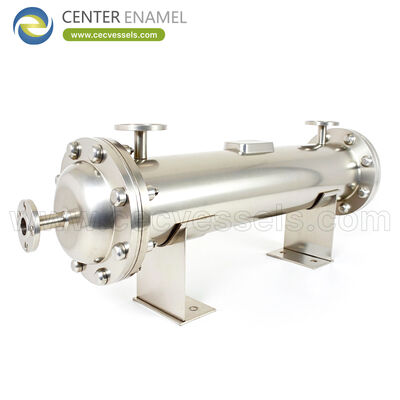
China Hydrogen Heat Exchanger Manufacturer Delivering Advanced Thermal Efficiency And Structural Reliability For Global Hydrogen Energy Systems
| Place of Origin: | China |
| Brand Name: | Center Enamel |
| Certification: | ISO 9001,CE, NSF/ANSI 61, WRAS, ISO 28765, LFGB, BSCI, ISO 45001 |
| Minimum Order Quantity: | 1 Sets |
| Price: | 2000 |
| Delivery Time: | 2 months |
| Payment Terms: | L/C,T/T |
| Supply Ability: | 200 sets / days |
|
Detail Information |
|||
Product Description
China Hydrogen Heat Exchanger Manufacturer Delivering Advanced Thermal Efficiency And Structural Reliability For Global Hydrogen Energy Systems
In hydrogen energy systems, a hydrogen heat exchanger must keep both thermal efficiency and structural reliability under hydrogen at pressure and temperature. Efficiency is meaningless if the structure cracks; reliability is the operating priority.
This guide covers the operations side: how embrittlement-rated design and thermal-stress control sustain structural reliability, how efficiency is maintained, and the inspection discipline that protects the H2 path over the plant life.
Structural Reliability Starts At Design
Hydrogen at pressure and temperature can embrittle susceptible steels. Structural reliability is built by selecting embrittlement-rated materials on the H2-exposed path, controlling hardness, and following codes such as NACE MR0175 / ISO 15156 where applicable.
Once in service, operators protect that design by avoiding conditions that exceed the qualified envelope - pressure, temperature, and any cyclic limits the material was rated for.
Thermal Stress And Cycling Control
Start-up, shutdown, and load changes impose thermal stress. Reliable units manage this through geometry, support, and operating procedure so thermal cycling does not fatigue joints or tubes. Uncontrolled rapid transients are a common reliability killer.
Operators should follow qualified heat-up/cool-down and ramp limits; the exchanger is only as reliable as the transient it is operated through.
Sustaining Thermal Efficiency In Operation
Efficiency in H2 service is maintained by keeping the H2-side clean (where accessible), controlling leaks that bypass duty, and monitoring heat duty against baseline. A leak on the hydrogen side is both an efficiency and a safety event.
Trending heat duty and pressure drop shows decay early; because the H2 path is critical, even small deviations warrant inspection rather than tolerance.
Inspection And Leak Discipline
Hydrogen's small molecule and embrittlement risk make leak and material inspection central. Planned inspection of the H2-exposed path, weld zones, and seals, plus leak testing, sustains reliability. Spares for seals/gaskets rated for H2 are kept on hand.
A manufacturer should provide the material basis, inspection points, and cleaning/leak guidance so operators can verify the critical path.
Design Features That Protect Reliability
Features such as embrittlement-rated alloys only where needed, controlled hardness, crevice-free and inspectable H2 paths, and qualified gaskets are what make long-term reliability achievable. They are specified at design, not added after a leak.
Buyers who ask only for efficiency and ignore the H2 material basis inherit embrittlement risk.
Reliability Factor Vs Practice
Factor |
Practice |
If Ignored |
Material basis |
H2-rated path |
Embrittlement crack |
Thermal cycle |
Qualified ramp |
Fatigue |
Leak test |
Scheduled |
Safety + loss |
Monitoring |
Duty + dP |
Silent decay |
Spares |
H2 seals |
Downtime |
Hydrogen HX Reliability Parameters
Parameter |
Operate / Inspect |
Why |
H2 partial P |
Within qualified |
Embrittlement limit |
Temperature |
Within envelope |
Material + gasket |
Heat duty |
Trend vs baseline |
Decay warning |
Pressure drop |
Monitor |
Blockage/leak |
Leak test |
Scheduled |
Containment |
Hardness |
As qualified |
Crack resistance |
Code |
ASME / NACE |
Acceptance |
Procurement, Acceptance, And Lifecycle
For a heat exchanger order, procurement starts with a complete specification: duty, stream composition, pressure and temperature, material, design code, and required inspection. A supplier who returns a written thermal or mechanical design basis - not just a price - lets the buyer compare bids on equal ground and avoids costly rework after fabrication begins.
Order quantities are flexible, with a minimum order quantity of one unit, which supports both pilot and full-scale projects. Typical fabrication and inspection lead time is approximately two months from confirmed design and material release, so the purchaser should align the milestone with the overall project schedule and freeze the specification early.
Payment is commonly handled through L/C or T/T terms, and acceptance should be defined up front: material certificates, dimensional check, hydrostatic or pneumatic test, and any market-specific documentation. Confirming the exact scope of supply and spare parts avoids ambiguity at the factory acceptance stage.
After delivery, lifecycle value depends on accessible design and clear operating limits. Request cleaning and inspection guidance, defined nozzle and access points, and the material basis so the unit can be maintained through its service life rather than replaced prematurely.
- Specification freeze: confirm duty, code, and material before fabrication to protect lead time.
- Acceptance scope: material certs, dimensional check, pressure test, and export docs.
- Commercial terms: flexible MOQ (minimum 1), L/C or T/T, ~2-month typical lead.
- Lifecycle: request inspection access and maintenance guidance at order.
Standards, Codes, And Quality Assurance
Qualified Heat Exchanger supply is built on recognized pressure-equipment codes. Fabrication is routinely performed to ASME VIII Div.1 and GB/T 150, with CE / PED marking available for the European market. For hydrogen or sour service, material selection follows NACE MR0175 / ISO 15156 so the wetted path resists the specific environmental mechanism rather than relying on generic corrosion allowances.
Quality management runs to ISO 9001, and the manufacturing workflow includes material traceability from mill certificate to finished vessel, followed by hydrostatic or pneumatic testing and dimensional verification. Welding procedures and inspector qualifications are documented so the delivered unit can be audited against the stated code and project specification.
Buyers should name the exact codes and any additional standards at request-for-quotation stage. Doing so keeps marking, documentation, and acceptance aligned with the destination market and removes the most common cause of late-stage rework.
- Codes: ASME VIII Div.1 and GB/T 150; CE/PED on request.
- Material integrity: NACE MR0175 / ISO 15156 for H2 or sour service.
- Quality: ISO 9001, full material traceability, pressure testing.
- Documentation: mill certs, WPS/PQR, test and inspection records.
Conclusion
Structural reliability of a hydrogen heat exchanger comes first: embrittlement-rated materials on the H2 path, controlled thermal cycling, and disciplined leak and material inspection. Maintain efficiency by trending heat duty and pressure drop and acting on H2-side deviations early. A manufacturer should deliver a documented material basis, inspectable H2 path, and H2-rated seals so operators can sustain both efficiency and safety over the plant life.
About The Manufacturer
The manufacturer fabricates hydrogen-duty exchangers to ASME VIII Div.1 and GB/T 150 with embrittlement-rated material selection, traceability, hydrostatic and leak testing, and NACE-aligned material basis on request.
Confirm H2 partial pressure, temperature, order quantity, lead time, and inspection scope before ordering.
Frequently Asked Questions (FAQ)
Why is structural reliability first for H2 exchangers?
Hydrogen can embrittle susceptible steels; efficiency is meaningless if the structure cracks.
What makes the H2 path reliable?
Embrittlement-rated materials, controlled hardness, and NACE-aligned basis where applicable.
How does thermal stress hurt reliability?
Rapid transients fatigue joints/tubes; qualified ramp limits protect the structure.
How is efficiency maintained in H2 service?
Keep H2-side clean where accessible, control bypass leaks, and trend heat duty vs baseline.
Why act early on H2-side deviations?
Small deviations can be leaks - both efficiency and safety events in hydrogen service.
What inspections matter?
H2-exposed path, weld zones, seals, plus scheduled leak testing.
What spares should I keep?
H2-rated seals/gaskets to cut downtime and avoid substitution.
What is the qualified envelope?
The pressure, temperature, and cyclic limits the material was rated for; stay within it.
What design code applies?
ASME VIII Div.1 or GB/T 150, often with NACE material basis.
Can a leak be tolerated briefly?
No - H2 leaks are safety-critical; inspect and repair per procedure.
What causes embrittlement cracks?
H2 at pressure/temp in susceptible steel beyond the qualified basis.
How do I compare offers on reliability?
On material basis, code, inspection access, and leak testing - not efficiency alone.
What monitoring shows decay?
Heat duty and pressure drop trended against clean baseline.
Why specify hardness?
Controlled hardness resists hydrogen-related cracking in the critical path.
What guidance should the maker provide?
Material basis, inspection points, and H2-rated cleaning/leak guidance.
Suggested CTA: For a reliable, embrittlement-rated hydrogen heat exchanger, Request Technical Specifications or Contact an Engineer to review your H2 envelope.