-
Glass Fused To Steel Tanks (896)
-
Stainless Steel Tanks (434)
-
Fusion Bonded Epoxy Tanks (652)
-
Galvanized Steel Tanks (321)
-
Aluminum Dome Roofs (1336)
-
Wastewater Storage Tanks (280)
-
Welded Steel Tanks (457)
-
Pressure Vessels (426)
-
Anaerobic Digester (202)
-
Industrial Water Tanks (349)
-
Glass Lined Steel Tanks (180)
-
Bolted Steel Tanks (389)
-
Sludge Storage Tank (115)
-
Biogas Storage Tank (173)
-
Leachate Storage Tanks (133)
-
Agricultural Water Storage Tanks (179)
-
Fire Water Tank (166)
-
Grain Storage Silos (146)
-
Biogas Projects (424)
-
Wastewater Treatment Projects (1712)
-
Double Membrane Roof (223)
|
What Is a Turnkey Fermentation Plant Reactor? Design, Integration & Applications
| Place of Origin: | China |
| Brand Name: | Center Enamel |
| Certification: | ISO 9001,CE, NSF/ANSI 61, WRAS, ISO 28765, LFGB, BSCI, ISO 45001 |
| Minimum Order Quantity: | 1 Sets |
| Price: | 2000 |
| Delivery Time: | 2 months |
| Payment Terms: | L/C,T/T |
| Supply Ability: | 200 sets / days |
|
Detail Information |
|||
Product Description
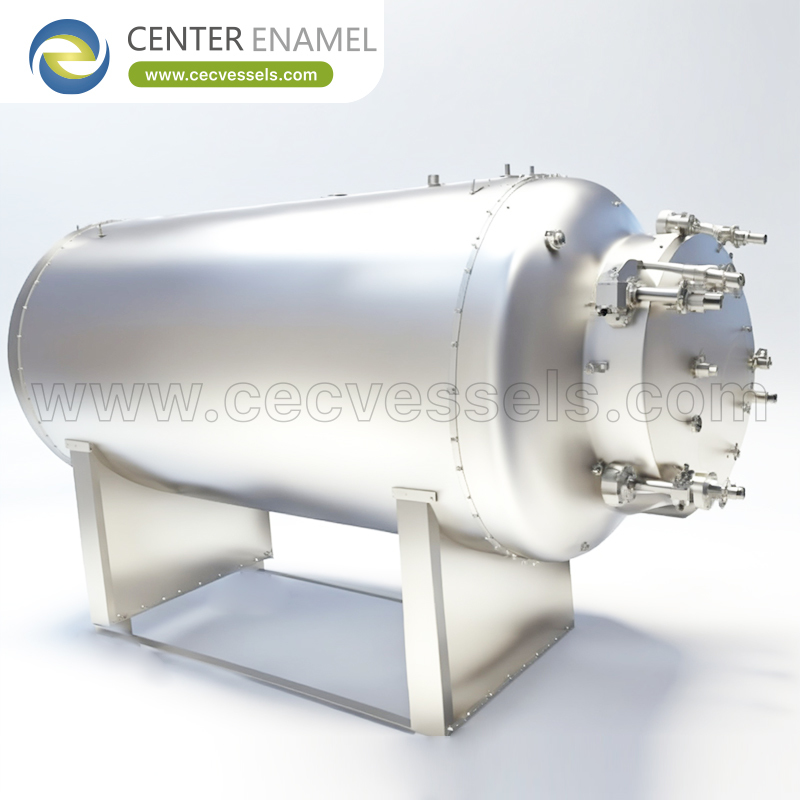
What Is a Turnkey Fermentation Plant Reactor? Design, Integration & Applications
Answering the core question: What is a turnkey fermentation plant reactor, and what does a delivered fermentation line include? A turnkey fermentation plant reactor is the central bioreaction vessel within a complete, vendor-delivered bioprocess line supplied under an EPC (engineering-procurement-construction) model. Rather than selling a single tank, the supplier integrates the seed train, production fermenters (10-200 m3 each), media preparator, CIP/SIP station, clean steam generator, and a DCS/SCADA control system into one commissioned package. The production fermenters are ASME-BPE stainless steel STRs with 3-5 stage seed cascades (1 L to 1,000 L) feeding the main vessel. The buyer receives a validated, start-up-ready plant with documented OEE targets of 75-85% and a single point of performance guarantee.
1. Core Integration Principles of a Turnkey Fermentation Plant
A turnkey delivery succeeds or fails on how tightly the bioreactor is coupled to upstream media handling, sterilization utility, and the control architecture that holds the process window.
- **Seed Train and Aseptic Connectivity:** The plant stages culture from 1 L seed flask to the 10-200 m3 production fermenter across 3-5 bioreactor stages, each 10x larger, with aseptic transfer via steam-sterilizable valves or single-use connectors. Each stage is inoculated at 5-10% volume to keep lag phase under 2 h. The seed fermenters share the same SIP/CIP utility train as the production vessel, and transfer lines follow the 3D drainability rule to prevent contamination and hold-up losses.
- **CIP/SIP and Clean Steam Utility:** A central CIP skid (0.5-2.0% NaOH at 70°C, 1-2% HNO3 rinse) and clean steam generator (CSS, producing filtered steam at 0.3-0.5 MPa, < 1 CFU/100 mL) serve all vessels. SIP holds 121°C for 30 min (Fo ≥ 15) across the vessel, sparge, and transfer lines; CIP cycle time is 60-90 min per vessel. A turnkey scope bundles these utilities so sterilization capacity matches the maximum simultaneous vessel count, eliminating the classic bottleneck of shared autoclaves.
- **DCS/SCADA Process Control:** The distributed control system runs 50-300 PID loops (temperature ±0.2°C, pH ±0.05, DO ±2% saturation, agitation ±1 RPM) with a 100-500 ms scan/update rate. PAT instruments (in-situ FTIR/Raman, off-gas mass spec for OUR/CTR, biomass probe) feed feed-forward control of substrate pumps. Data are logged to 21 CFR Part 11-compliant historians with ALCOA+ integrity, enabling batch release and continuous process verification (CPV) under QbD.
2. Major Reactor Configurations in Turnkey Fermentation Plants
The production reactor at the heart of the plant is selected by product class and volume. Three configurations dominate turnkey EPC offerings:
- **Single Large STR Battery:** A parallel battery of 50-200 m3 stainless steel STRs (each with 2-4 hydrofoil impellers, 1.5-3.0 kW/m3) is standard for high-volume products such as industrial enzymes, citric acid, and bioethanol. Redundancy lets one vessel be CIP/SIP'd while others run, lifting plant availability to 90%+. Skid-mounted peripheral systems (media, CIP, utilities) shorten field erection from 12-18 months to 6-9 months.
- **Fed-Batch / Perfusion Dual-Mode STR:** For recombinant proteins and vaccines, the turnkey reactor is a 2,000-20,000 L STR supporting both fed-batch (feeding 0.5-5 g/L·h) and perfusion (ATF/TFF cell retention at 1-3 RV/day). Switching modes requires the same vessel with an added harvest filter skid and variable-speed feed pumps, giving the plant flexibility to make multiple products from one asset.
- **Continuous Tower / Packed-Bed Bioreactor:** For stable, single-product outputs (e.g., vinegar, some antibiotics), turnkey plants deploy continuous tower or packed-bed bioreactors with immobilized cells, achieving residence times of 4-12 h and steady-state productivity for months. These reduce batch-to-batch variability and cut labor by 40-60% versus discrete fed-batch, at the cost of lower product flexibility.
Turnkey Fermentation Plant Sub-System Comparison Matrix
| Sub-System | Reactor Role | Capacity Scope | Code / Standard |
|---|---|---|---|
| Upstream Seed Train | Inoculum staging (3-5 stages) | 1 L -> 1,000 L | ASME-BPE, aseptic transfer |
| Production Fermenter | Main bioreaction vessel | 10-200 m3 (battery) | ASME VIII Div 1 + BPE |
| Utilities (CIP/SIP/CSS) | Sterilization supply | 60-90 min CIP cycle | 3-A, EHEDG, 21 CFR 11 |
Frequently Asked Questions (FAQ)
Q: What does EPC turnkey delivery actually include for a fermentation plant?
A: EPC (engineering-procurement-construction) turnkey covers process design and HAZOP, all equipment supply (reactors, media prep, CIP/SIP, utilities, DCS), piping and instrumentation, installation, commissioning, and performance qualification. The supplier guarantees a defined output (e.g., titer x, capacity y m3/day) at plant acceptance. The buyer provides the building, utilities tie-in, and raw materials; the vendor delivers a running, validated line with a single warranty and a single point of contact.
Q: How long does it take to deliver and start up a turnkey fermentation plant?
A: Skid-mounted turnkey plants typically require 6-9 months for fabrication and 3-6 months for field erection and qualification, versus 12-18 months for stick-built conventional builds. Start-up and three successful validation batches add 2-4 months. Early equipment supplier involvement (ESVI) and pre-approved URS templates compress the schedule further.
Q: Why is the seed train part of the turnkey scope, not the buyer's problem?
A: The seed train sets final productivity and contamination risk; a weak 1 L-to-1,000 L cascade undermines even a perfect 200 m3 production fermenter. Turnkey vendors include the seed train so the entire aseptic chain—from freezer vial to production vessel—is designed, sterilized, and qualified as one system with one guarantee, avoiding the interface gaps that cause most contamination events.
Q: What performance guarantee should a buyer require in a turnkey contract?
A: Require a guaranteed nameplate capacity (m3 product/day), guaranteed titer/yield at specified feed, plant availability (≥ 90%), SIP/CIP cycle times, and utility consumption per ton. Tie payment to successful performance qualification (three consecutive batches within ± 5% of target). Include spare-parts lists, training, and a defined OEE ramp (e.g., 75% at month 3, 85% at month 6).