-
Glass Fused To Steel Tanks (896)
-
Stainless Steel Tanks (434)
-
Fusion Bonded Epoxy Tanks (652)
-
Galvanized Steel Tanks (321)
-
Aluminum Dome Roofs (1336)
-
Wastewater Storage Tanks (280)
-
Welded Steel Tanks (457)
-
Pressure Vessels (426)
-
Anaerobic Digester (202)
-
Industrial Water Tanks (349)
-
Glass Lined Steel Tanks (180)
-
Bolted Steel Tanks (389)
-
Sludge Storage Tank (115)
-
Biogas Storage Tank (173)
-
Leachate Storage Tanks (133)
-
Agricultural Water Storage Tanks (179)
-
Fire Water Tank (166)
-
Grain Storage Silos (146)
-
Biogas Projects (424)
-
Wastewater Treatment Projects (1712)
-
Double Membrane Roof (223)
|
What Is a Pilot Plant Reactor? Design, Scale-Down & Scale-Up Applications
| Place of Origin: | China |
| Brand Name: | Center Enamel |
| Certification: | ISO 9001,CE, NSF/ANSI 61, WRAS, ISO 28765, LFGB, BSCI, ISO 45001 |
| Minimum Order Quantity: | 1 Sets |
| Price: | 2000 |
| Delivery Time: | 2 months |
| Payment Terms: | L/C,T/T |
| Supply Ability: | 200 sets / days |
|
Detail Information |
|||
Product Description
What Is a Pilot Plant Reactor? Design, Scale-Down & Scale-Up Applications
Answering the core question: What is a pilot plant reactor, and why is it the bridge between lab and commercial scale? A pilot plant reactor is a small but representative vessel (typically 1-500 L) built to reproduce the mixing, heat-transfer, and mass-transfer environment of the eventual production reactor so that scale-up is predictable rather than speculative. It is not a scaled-up beaker: it conserves the governing intensity (power per volume 1-10 kW/m3, kLa 50-200 h-1, or Reynolds > 10,000) and carries production-like internals (jacket, baffles, impeller geometry) and PAT (in-situ FTIR/Raman, off-gas analysis) that generate the kinetic and hydrodynamic data needed for a defensible scale-up. Pilot runs validate yield, selectivity, fouling, and safety (ADIABATIC Delta Tad) before committing to a 50-200 m3 production asset.
1. Core Principles of Pilot Plant Reactor Design
A pilot reactor earns its cost only if it is representative. Three principles make the data transferable:
- **Conserved Scale-Up Intensity:** The pilot conserves the single variable that limits the full-scale reaction: power per volume (1-10 kW/m3) for blending, kLa (50-200 h-1) for gas-liquid, or tip speed (3-7 m/s, shear cap) for biological systems. Geometric similarity alone is insufficient; a 10 L pilot at the same P/V as a 10 m3 production vessel reproduces macro-mixing and heat removal (jacket U 300-800 W/m2·K, delta T 10-40°C), so the pilot predicts hot-spot and conversion behavior at scale.
- **Representative Heat and Mass Transfer:** Exothermic steps are sized in the pilot for the same heat flux (5-50 kW/m2) and same jacket delta T the production jacket can deliver. This reveals whether the reaction is heat-transfer-limited (common above 50 kW/m2) before the larger vessel is built. Gas-liquid pilots measure kLa via dynamic gassing-out and OTR vs OUR to set sparge and agitation for scale.
- **PAT-Rich Data Capture:** Pilot reactors are instrumented far beyond production: in-situ Raman/FTIR (1-10 Hz spectra), off-gas mass spec (OUR/CTR), particle/droplet imaging, and automated sampling feed kinetic models. This data trains the scale-up model (CFD + kinetics) and populates the OPRD (operating procedure) with proven setpoints, guards, and critical process parameters (CPPs) for the commercial file.
2. Major Pilot Plant Reactor Configurations
Pilot reactors are built for flexibility and data density. Three common forms serve process development:
- **Bench-Scale Glass/SS Reactor (1-50 L):** A jacketed, fully instrumented vessel (often glass for visibility, SS for pressure) for early proof-of-concept and kinetic studies. Power 2-10 kW/m3, residence 0.5-24 h, with modular impellers and PAT probes. It generates the first kinetic constants (k, Ea, selectivity) and screens solvents/catalysts before committing to metal.
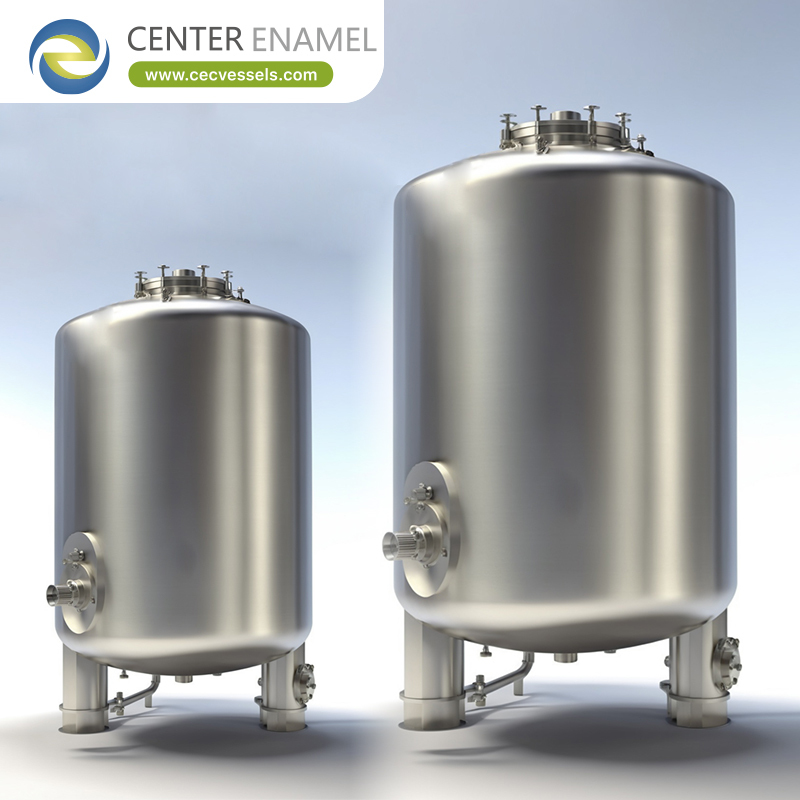
- **Pilot STR Skid (50-500 L):** A skid-mounted stainless STR (304/316L) with production-like jacket, CIP/SIP, and full DCS, used for integrated pilot campaigns producing kg-to-ton samples for customers and trials. It runs actual feedstock and validates fouling, corrosion, and cycle time, de-risking the 50-200 m3 production design with conservative scale-up factors (safety 1.2-2x on volume).
- **Miniplant / Continuous Pilot Loop:** A small continuous train (PFR + separators + recycle) at 1-50 L/h that proves steady-state continuous operation and catalyst life (1,000-5,000 h runs) before a continuous plant. It captures long-run deactivation, byproduct buildup, and control stability that batch pilots miss, cutting commercial start-up time by months.
Pilot Plant Reactor Scale Comparison Matrix
Scale |
Volume |
Power Intensity |
Primary Purpose |
Bench Reactor |
1-50 L |
2-10 kW/m3 |
Kinetics, PoC |
Pilot STR Skid |
50-500 L |
1-10 kW/m3 |
Integrated campaign, samples |
Miniplant Loop |
1-50 L/h cont. |
Steady-state SV |
Continuous proof, cat. life |
Frequently Asked Questions (FAQ)
Q: What scale should a pilot reactor be to guarantee reliable scale-up?
A: There is no fixed number; the pilot must conserve the limiting intensity (P/V, kLa, or Re) and carry production-like internals. A 50-500 L pilot at the same P/V and jacket U as the target vessel is usually enough to validate mixing and heat removal, with a 1.2-2x safety factor on volume. Going larger (miniplant) only adds value when catalyst life or continuous control must be proven.
Q: Why does the pilot need PAT that production may not have?
A: The pilot's job is to generate the data that lets you design and operate production safely. In-situ Raman/FTIR, off-gas analysis, and automated sampling build the kinetic and hydrodynamic models and define critical process parameters. Production can then run with fewer probes because the model, not live spectroscopy, holds the setpoints.
Q: How does a pilot reactor de-risk exothermic scale-up?
A: The pilot reproduces the production jacket's heat-flux and delta-T capability, exposing whether the step is heat-transfer-limited and where hot spots form. Adiabatic temperature rise (Delta Tad) and DIERS relief are measured, not assumed, so the production relief and emergency layers are correctly sized. Running the real exotherm at small scale prevents runaway surprises at 100x volume.
Q: When is a continuous miniplant preferable to a batch pilot?
A: Choose a continuous miniplant when the commercial plant will run continuously, when catalyst deactivation over 1,000-5,000 h matters, or when steady-state byproduct accumulation and control stability must be proven. Batch pilots miss long-run effects; a miniplant catches them and shortens commercial start-up by months, at higher pilot CAPEX.