-
Glass Fused To Steel Tanks (896)
-
Stainless Steel Tanks (434)
-
Fusion Bonded Epoxy Tanks (652)
-
Galvanized Steel Tanks (321)
-
Aluminum Dome Roofs (1336)
-
Wastewater Storage Tanks (280)
-
Welded Steel Tanks (457)
-
Pressure Vessels (426)
-
Anaerobic Digester (202)
-
Industrial Water Tanks (349)
-
Glass Lined Steel Tanks (180)
-
Bolted Steel Tanks (389)
-
Sludge Storage Tank (115)
-
Biogas Storage Tank (173)
-
Leachate Storage Tanks (133)
-
Agricultural Water Storage Tanks (179)
-
Fire Water Tank (166)
-
Grain Storage Silos (146)
-
Biogas Projects (424)
-
Wastewater Treatment Projects (1712)
-
Double Membrane Roof (223)
|
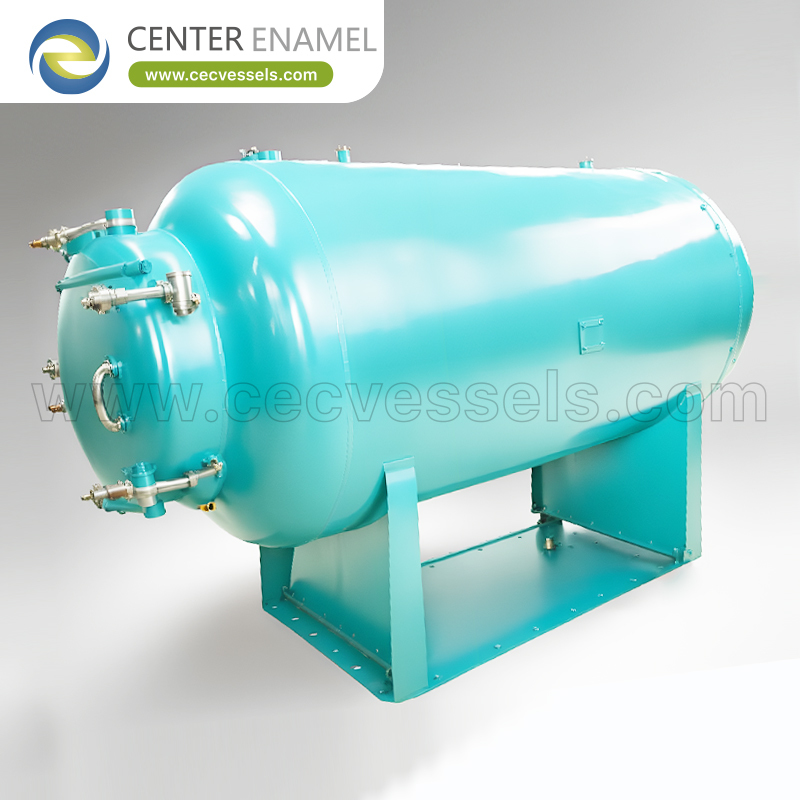
What Is a Production Reactor? Design, Scale-Up & Manufacturing Applications
| Place of Origin: | China |
| Brand Name: | Center Enamel |
| Certification: | ISO 9001,CE, NSF/ANSI 61, WRAS, ISO 28765, LFGB, BSCI, ISO 45001 |
| Minimum Order Quantity: | 1 Sets |
| Price: | 2000 |
| Delivery Time: | 2 months |
| Payment Terms: | L/C,T/T |
| Supply Ability: | 200 sets / days |
|
Detail Information |
|||
Product Description
What Is a Production Reactor? Design, Scale-Up & Manufacturing Applications
Answering the core question: What is a production reactor, and how does it deliver commercial-scale conversion reliably? A production reactor is the commercial-scale vessel (typically 5-200 m3) that performs the primary chemical or biochemical transformation in a manufacturing plant, optimized not just for conversion but for yield (85-99%), cycle time (4-48 h), and overall equipment effectiveness (OEE 75-90%). Unlike a pilot unit built to explore chemistry, the production reactor is engineered for repeatability: robust agitation (1-5 kW/m3), validated CIP, redundant instrumentation, and PAT feedback that holds the critical quality attributes within a ± 2% window across campaigns of 1-50 t/day. Scale-up from pilot preserves constant power-per-volume or constant kLa rather than geometric similarity alone, protecting productivity at 50-500x larger volume.
1. Core Design Principles of a Production Reactor
Production reactors trade experimental flexibility for robustness. Three design pillars separate them from development vessels:
- **Scale-Up by Conserved Intensity:** Going from 100 L pilot to 50 m3 production (500x) cannot preserve both geometry and mixing. Engineers conserve a single governing intensity: constant power per volume (1-5 kW/m3) for blending-limited steps, constant kLa (50-200 h-1) for gas-liquid, or constant Reynolds (turbulent, Re > 10,000) for similarity of flow. Tip speed (3-7 m/s) is capped to avoid shear damage, and mixing time (tm = 3-6·(N·tm)^-1, target < 30-60 s) is verified by CFD so no dead zone forms at production scale.
- **Reliability and Redundancy:** Production reactors run 8,000-8,400 h/year (availability 90%+). Critical loads (agitator, seal, cooling) have N+1 redundancy or fast-swap spares; double mechanical seals with barrier fluid (API Plan 53) prevent toxic release. Instrumentation is duplicated on safety-critical loops (T, P, level) with SIL-rated trip. The vessel is ASME Section VIII Div 1/2 with full material traceability and a 20-30 year design life under fatigue (cyclic pressure and thermal) assessment.
- **Yield and OEE Management:** OEE = availability x performance x quality. Cycle time is cut by parallel CIP/SIP (60-90 min) overlapping with discharge, and by feed-forward PAT control that prevents off-spec batches (rework drops yield 2-10%). Yield is defended by tight T/pH control (±0.2°C, ±0.05) and by minimizing hold-up in transfer lines (3D drainable). World-class plants hold OEE 85-90% with < 1% batch rejection.
2. Major Production Reactor Configurations
Production reactors are selected by whether the plant makes one product continuously or many products in campaigns. Three dominant forms:
- **Large Batch CSTR Train:** A battery of 20-200 m3 jacketed STRs making 1-50 t/day per product in campaigns. Flexible (clean between products in 4-8 h), it suits fine and specialty chemicals. Conversion 85-99%, cycle 8-48 h, OEE 75-85%. Shared CIP/SIP and feed skids reduce CAPEX; scheduling software balances campaign length against changeover loss.
- **Continuous Production Reactor:** PFR or CSTR-in-series running 24/7 at steady state for single high-volume products (polymers, intermediates). Residence 0.5-24 h, throughput 10-200 t/day, OEE 88-92% from eliminated batch changeover. Continuous plants cut labor 30-50% and inventory 50-70%, but need robust online PAT and long catalyst life to stay profitable.
- **Multi-Purpose Modular Reactor:** Skid-mounted 5-50 m3 reactors with reconfigurable piping and instrumentation, serving as a shared production asset for contract manufacturing. Quick product switch (2-6 h) and built-in HAZOP/LOPA per product recipe raise asset utilization. Modular builds also shorten delivery (6-9 months) versus stick-built trains.
Production Reactor Scale Comparison Matrix
Scale |
Volume Range |
Agitation Power |
Cycle Time |
Lab / Pilot |
1 L - 1,000 L |
2-10 kW/m3 |
4-24 h (explore) |
Production Batch |
5-200 m3 |
1-5 kW/m3 |
8-48 h (campaign) |
Continuous |
PFR / CSTR-in-series |
Constant STY |
24/7 (steady) |
Frequently Asked Questions (FAQ)
Q: What is the most reliable scale-up rule for a production reactor?
A: There is no single rule; the correct conserved variable is the one that limits the reaction. For blending- or heat-limited steps conserve power per volume (1-5 kW/m3); for gas-liquid reactions conserve kLa (50-200 h-1); for fast homogeneous reactions conserve Reynolds number (turbulent similarity). CFD and pilot data confirm no dead zones or hot spots at production scale before the final vessel is ordered.
Q: How is OEE improved in a production reactor plant?
A: OEE improves by overlapping CIP/SIP with discharge (cut changeover), adding N+1 redundancy on agitator/seal/cooling, using PAT feed-forward control to prevent off-spec batches, and minimizing transfer-line hold-up (3D drainable). Scheduling to maximize campaign length and predictive maintenance on mechanical seals typically lift OEE from 75% to 88-90%.
Q: Why choose continuous production over batch?
A: Continuous production eliminates batch changeover (higher OEE 88-92%), reduces labor 30-50%, lowers working-capital inventory 50-70%, and gives tighter quality via steady state. The trade-off is less product flexibility and dependence on long catalyst life and robust online PAT. It pays off for single high-volume products; batch remains better for diverse low-volume portfolios.
Q: What design life and code apply to a production reactor?
A: Production reactors are built to ASME Section VIII Div 1 (or Div 2 for high consequence) with a 20-30 year design life, validated by fatigue analysis for cyclic pressure and thermal swings. Material traceability, post-weld heat treatment, and hydrotest per code are mandatory. Mechanical seals follow API 682; relief per API 520/521; and where toxic/flammable, SIL layers per IEC 61511.