-
Glass Fused To Steel Tanks (896)
-
Stainless Steel Tanks (434)
-
Fusion Bonded Epoxy Tanks (652)
-
Galvanized Steel Tanks (321)
-
Aluminum Dome Roofs (1336)
-
Wastewater Storage Tanks (280)
-
Welded Steel Tanks (457)
-
Pressure Vessels (426)
-
Anaerobic Digester (202)
-
Industrial Water Tanks (349)
-
Glass Lined Steel Tanks (180)
-
Bolted Steel Tanks (389)
-
Sludge Storage Tank (115)
-
Biogas Storage Tank (173)
-
Leachate Storage Tanks (133)
-
Agricultural Water Storage Tanks (179)
-
Fire Water Tank (166)
-
Grain Storage Silos (146)
-
Biogas Projects (424)
-
Wastewater Treatment Projects (1712)
-
Double Membrane Roof (223)
|
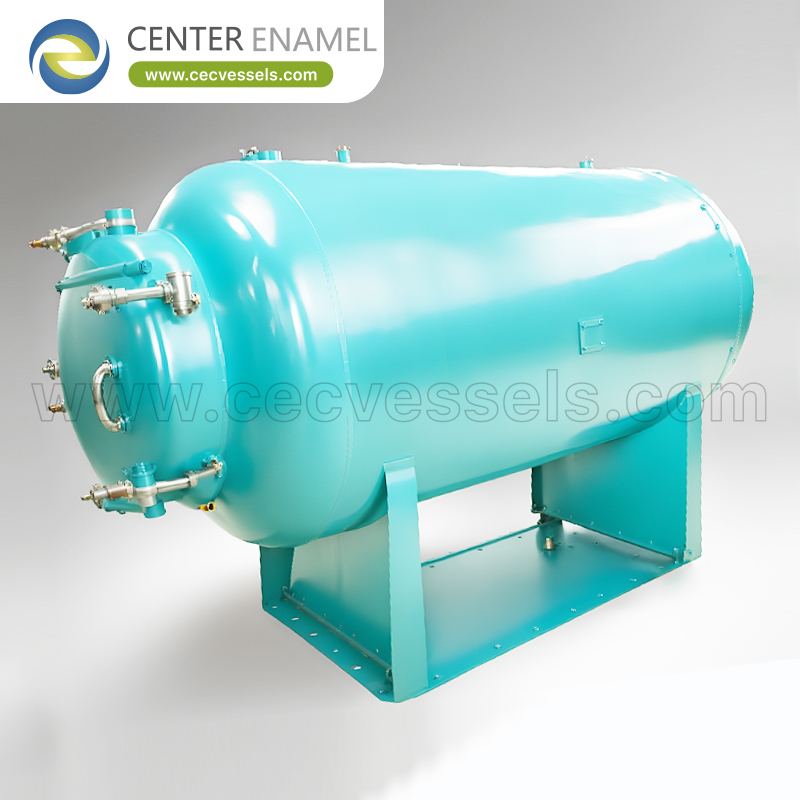
What Is a Zirconium Reactor? Corrosion Resistance, Design & Applications
| Place of Origin: | China |
| Brand Name: | Center Enamel |
| Certification: | ISO 9001,CE, NSF/ANSI 61, WRAS, ISO 28765, LFGB, BSCI, ISO 45001 |
| Minimum Order Quantity: | 1 Sets |
| Price: | 2000 |
| Delivery Time: | 2 months |
| Payment Terms: | L/C,T/T |
| Supply Ability: | 200 sets / days |
|
Detail Information |
|||
Product Description
What Is a Zirconium Reactor? Corrosion Resistance, Design & Applications
Answering the core question: What is a zirconium reactor, and why is it used where stainless steel fails? A zirconium reactor is a pressure vessel constructed from zirconium alloys (Zircadyne 702: 99.2% Zr + Hf; 705: Zr + 2.5% Nb) for services where hydrochloric acid, sulfuric acid, and hot chloride solutions destroy stainless steel and even Hastelloy. Zirconium's dense adherent ZrO2 passive film gives a critical pitting temperature (CPT) above 90°C in chlorides and a corrosion rate below 0.025 mm/y in boiling hydrochloric acid—immunity that extends vessel life from months to decades. Fabricated to ASTM/ASME SB-523 and B-551, zirconium reactors (wall 3-12 mm, 0.1-3 MPa, 20-250°C) are the standard for urea, acetic acid, and chlorination process equipment where no cheaper alloy survives.
1. Core Corrosion-Resistance Principles of Zirconium Reactors
Zirconium's value is entirely in its oxide film. Three principles explain its unique service envelope:
- **Protective ZrO2 Passive Film:** In air and most aqueous media, zirconium forms a tight, self-healing ZrO2 film (2-5 nm) that stops further attack. Unlike stainless steel, this film is stable in reducing acids (HCl, H2SO4) and does not depend on oxidizing species, so it resists conditions that pit or crevice stainless. The film reforms within seconds if scratched, giving immunity rather than just slow corrosion (< 0.025 mm/y in boiling HCl).
- **Critical Pitting Temperature (CPT) Above 90°C:** Zirconium's CPT in chloride solutions exceeds 90°C (vs ~20-40°C for 316L, ~60-80°C for C-276), meaning it does not pit even in hot, concentrated brines. This makes it the alloy of choice for chlor-alkali, HCl recovery, and urea reactors where chloride concentration and temperature defeat lesser grades. Grade 705 (Zr+2.5% Nb) adds strength and even better resistance to nitric/oxidizing acids.
- **Immune to Strong Reducing Acids:** Zirconium is effectively immune to HCl at all concentrations up to the boiling point and to H2SO4 up to ~60-70% at moderate temperature (corrosion < 0.125 mm/y), a regime where 316L dissolves rapidly and Hastelloy C is marginal. It also resists acetic, formic, and phosphoric acids and most organic chlorides. It is NOT suitable for HNO3 > 65% (oxidizing) or HF, which dissolve the film.
2. Major Zirconium Reactor Applications and Grades
Zirconium reactors are specified where life-cycle cost beats the high alloy price. Three dominant applications:
- **Urea and Carbamate Reactors:** In urea plants, the carbamate solution (NH3 + CO2 + H2O + NH4COONH2) is fiercely corrosive at 180-200°C. Zirconium liners/clad reactors (grade 702) resist carbamate and ammonium chloride far better than 316L or even duplex, extending campaign life and cutting unplanned downtime. Zirconium is used as loose liner or explosion-clad over carbon steel to manage cost (lining 3-6 mm over 20-40 mm shell).
- **HCl and Chlorination Process Vessels:** HCl synthesis, HCl recovery, and chlorination (e.g., chloroacetic acid, MDI/TDI phosgenation off-gas scrubbers) run in boiling or concentrated HCl. Zirconium reactors and internals (sparge, baffles, dip pipes) give decades of service versus months for lined steel. Grade 702 for general HCl, 705 where mechanical strength under thermal cycling matters.
- **Acetic Acid and Specialty Organic Reactors:** Acetic acid, acrylic acid, and related oxidations/chlorinations at 100-200°C attack most alloys; zirconium resists both the acid and trace halides. It is also used in pharmaceutical and agrochemical synthesis where product purity (no metal leaching) is critical. Fabrication follows ASME SB-523 with strict cleanliness to avoid iron/copper contamination that could seed corrosion.
Zirconium vs Alternative Alloy Comparison Matrix
Alloy | CPT in Chlorides | Boiling HCl | Relative Cost |
Zirconium 702/705 | > 90°C (immune) | < 0.025 mm/y | High (3-5x 316L) |
316L Stainless | ~20-40°C | Dissolves rapidly | Low |
Hastelloy C-276 | ~60-80°C | Marginal (slow) | Medium-High |
Frequently Asked Questions (FAQ)
Q: In what media is zirconium NOT suitable for a reactor?
A: Zirconium resists reducing acids (HCl, H2SO4, acetic) and chlorides but is attacked by oxidizing nitric acid above ~65% and by hydrofluoric acid (HF), which dissolves the ZrO2 film. It is also not for strong alkalis at very high temperature or for molten metals. For HNO3 or blended oxidizing/reducing streams, grades like 705 or alternatives (C-4, titanium) are assessed case by case.
Q: Why is zirconium so expensive and is it worth it?
A: Zirconium is costly (3-5x 316L, comparable to C-276) due to ore processing (separating Hf) and difficult fabrication (reactive welding under inert gas, strict cleanliness). It is worth it when life-cycle cost wins: in boiling HCl or hot chlorides, a 316L vessel may fail in months while zirconium lasts decades, avoiding downtime, leaks, and replacement. Use it only where cheaper alloys truly cannot survive.
Q: How is a zirconium reactor fabricated and inspected?
A: Zirconium is welded under inert (Argon) shielding with TIG/GTAW, using zirconium-purified filler, with strict avoidance of iron/copper contamination that could seed corrosion. It is fabricated to ASTM/ASME SB-523 (plate) and B-551 (bar/forgings) and code-stamped per ASME Section VIII. Common practice is explosion-clad zirconium over carbon steel to cut cost; liner integrity is verified by vacuum box and dye-penetrant testing.
Q: What is the difference between zirconium 702 and 705?
A: Grade 702 is unalloyed zirconium (99.2% Zr + Hf) with maximum corrosion resistance in reducing acids. Grade 705 adds 2.5% niobium, raising strength and improving resistance to nitric/oxidizing acids and to stress corrosion, while keeping the same HCl/chloride immunity. 705 is preferred where thermal cycling or mechanical load is high; 702 where pure corrosion resistance is the only driver.