-
Glass Fused To Steel Tanks (896)
-
Stainless Steel Tanks (434)
-
Fusion Bonded Epoxy Tanks (652)
-
Galvanized Steel Tanks (321)
-
Aluminum Dome Roofs (1336)
-
Wastewater Storage Tanks (280)
-
Welded Steel Tanks (457)
-
Pressure Vessels (426)
-
Anaerobic Digester (202)
-
Industrial Water Tanks (349)
-
Glass Lined Steel Tanks (180)
-
Bolted Steel Tanks (389)
-
Sludge Storage Tank (115)
-
Biogas Storage Tank (173)
-
Leachate Storage Tanks (133)
-
Agricultural Water Storage Tanks (179)
-
Fire Water Tank (166)
-
Grain Storage Silos (146)
-
Biogas Projects (424)
-
Wastewater Treatment Projects (1722)
-
Double Membrane Roof (223)

|
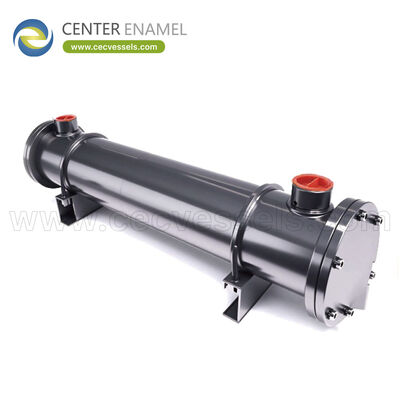
China Ethanol Heat Exchanger Manufacturer Delivering Reliable Heat Transfer Performance For Biofuel Production Systems
| Place of Origin: | China |
| Brand Name: | Center Enamel |
| Certification: | ISO 9001,CE, NSF/ANSI 61, WRAS, ISO 28765, LFGB, BSCI, ISO 45001 |
| Minimum Order Quantity: | 1 Sets |
| Price: | 2000 |
| Delivery Time: | 2 months |
| Payment Terms: | L/C,T/T |
| Supply Ability: | 200 sets / days |
|
Detail Information |
|||
Product Description
China Ethanol Heat Exchanger Manufacturer Delivering Reliable Heat Transfer Performance For Biofuel Production Systems
An ethanol heat exchanger moves heat in biofuel production across fermentation cooling, distillation columns, condensers, and product stabilization. Reliability here is measured by stable heat-transfer coefficients over months of duty, not by a single test-point rating.
This guide helps buyers select an ethanol-plant exchanger on the right duty, material, and cleanability basis - the factors that actually determine whether heat transfer stays reliable through fouling, cleaning, and seasonal throughput swings.
Where Heat Exchangers Sit In Ethanol Biofuel Plants
Fermentation generates heat that must be removed to hold the optimum yeast temperature. Distillation then uses reboilers, condensers, and column interchangers to separate ethanol. Each duty has a different temperature, phase, and fouling profile, so one 'ethanol heat exchanger' specification cannot cover all of them.
Correct selection starts by naming the exact duty (fermentation cooling, distillation condenser, product cooler) because the material and cleanability needs change with each.
Fouling Is The Main Reliability Risk
Ethanol streams carry organics, solids from mash, and scale-forming species. Fouling gradually raises thermal resistance and drops the effective heat-transfer coefficient. The selection that ignores fouling may rate well on day one and fail by month three.
Buyers should specify the expected fouling factor, the cleaning method, and the acceptable performance decay between cleanings. A supplier who designs only for clean conditions is designing for a plant that does not exist.
Material Choice For Ethanol Service
Ethanol is less corrosive than seawater but is a flammable solvent and, in biofuel, a food-adjacent product. 304 or 316L stainless steel is common for clean ethanol duties; copper must be avoided because it catalyzes ethanol oxidation and taints product.
Where the stream is acidic or contains chlorides from process water, 316L or higher is preferred. Food-contact surfaces should be specified to the relevant hygiene standard so the unit passes audit.
Cleanability And Hygiene Design
Biofuel and beverage-adjacent lines need exchangers that drain fully, have no dead legs, and tolerate CIP. Shell-and-tube with proper end geometry or hygienic plate designs are typical. The selection must state cleanability, not assume it.
Ask whether the unit can be disassembled for inspection, what gasket material is used (must be ethanol-compatible), and whether surfaces meet the hygiene grade your market requires.
Specification Points That Keep Transfer Reliable
A reliable bid rests on duty definition, fouling allowance, material, gasket compatibility, code, and inspection. Buyers who fix these before RFQ receive validated designs instead of optimistic ratings.
Request the thermal design basis and a performance guarantee framed around the fouled condition, not the clean condition, so the quoted unit performs through the operating cycle.
Ethanol Exchanger Duty Comparison
Duty |
Typical Phase |
Key Selection Concern |
Fermentation cooling |
Liquid-liquid |
Hygiene, stable duty |
Distillation condenser |
Vapor-liquid |
Condensing area, fouling |
Column reboiler |
Liquid-vapor |
Material, stability |
Product cooler |
Liquid-liquid |
Food contact, CIP |
Stillage preheat |
Liquid-liquid |
Heavy fouling, cleanability |
Selection Parameters For Ethanol Biofuel
Parameter |
Specify |
Reason |
Duty location |
Ferment / distill / cool |
Sets material + fouling |
Fouling factor |
From stream history |
Day-1 vs cycle performance |
Material |
304 / 316L |
Avoid copper |
Gasket |
Ethanol-compatible |
No contamination |
Hygiene grade |
Market standard |
Audit pass |
Code |
ASME / GB |
Acceptance |
Cleaning |
CIP / disassemble |
Reliability |
Procurement, Acceptance, And Lifecycle
For a heat exchanger order, procurement starts with a complete specification: duty, stream composition, pressure and temperature, material, design code, and required inspection. A supplier who returns a written thermal or mechanical design basis - not just a price - lets the buyer compare bids on equal ground and avoids costly rework after fabrication begins.
Order quantities are flexible, with a minimum order quantity of one unit, which supports both pilot and full-scale projects. Typical fabrication and inspection lead time is approximately two months from confirmed design and material release, so the purchaser should align the milestone with the overall project schedule and freeze the specification early.
Payment is commonly handled through L/C or T/T terms, and acceptance should be defined up front: material certificates, dimensional check, hydrostatic or pneumatic test, and any market-specific documentation. Confirming the exact scope of supply and spare parts avoids ambiguity at the factory acceptance stage.
After delivery, lifecycle value depends on accessible design and clear operating limits. Request cleaning and inspection guidance, defined nozzle and access points, and the material basis so the unit can be maintained through its service life rather than replaced prematurely.
- Specification freeze: confirm duty, code, and material before fabrication to protect lead time.
- Acceptance scope: material certs, dimensional check, pressure test, and export docs.
- Commercial terms: flexible MOQ (minimum 1), L/C or T/T, ~2-month typical lead.
- Lifecycle: request inspection access and maintenance guidance at order.
Standards, Codes, And Quality Assurance
Qualified Heat Exchanger supply is built on recognized pressure-equipment codes. Fabrication is routinely performed to ASME VIII Div.1 and GB/T 150, with CE / PED marking available for the European market. For hydrogen or sour service, material selection follows NACE MR0175 / ISO 15156 so the wetted path resists the specific environmental mechanism rather than relying on generic corrosion allowances.
Quality management runs to ISO 9001, and the manufacturing workflow includes material traceability from mill certificate to finished vessel, followed by hydrostatic or pneumatic testing and dimensional verification. Welding procedures and inspector qualifications are documented so the delivered unit can be audited against the stated code and project specification.
Buyers should name the exact codes and any additional standards at request-for-quotation stage. Doing so keeps marking, documentation, and acceptance aligned with the destination market and removes the most common cause of late-stage rework.
- Codes: ASME VIII Div.1 and GB/T 150; CE/PED on request.
- Material integrity: NACE MR0175 / ISO 15156 for H2 or sour service.
- Quality: ISO 9001, full material traceability, pressure testing.
- Documentation: mill certs, WPS/PQR, test and inspection records.
Conclusion
Reliable ethanol heat exchanger performance comes from specifying the exact duty, fouling, material, and cleanability - not from a clean-condition rating. Avoid copper, confirm ethanol-compatible gaskets and hygiene grade, and request a design basis that holds through the fouled part of the cycle. A supplier who designs for your real stream protects uptime better than the lowest headline price.
About The Manufacturer
The manufacturer fabricates ethanol and biofuel duty exchangers in 304/316L stainless under ASME VIII Div.1 and GB/T 150, with material traceability and hydrostatic testing. Copper-free construction and specified hygiene grades are supported on request.
Buyers should confirm order quantity, lead time, inspection scope, and the exact food-contact or explosion-related standards applicable to their plant before order placement.
Frequently Asked Questions (FAQ)
What does an ethanol heat exchanger do in biofuel?
It cools fermentation, condenses and reboils distillation columns, and cools product - moving heat at different phases across the ethanol train.
Why is fouling the main ethanol reliability risk?
Organics and solids raise thermal resistance over time, dropping the heat-transfer coefficient; designs that ignore fouling fail after startup.
Which material is right for ethanol service?
304 or 316L stainless is standard; copper is avoided because it oxidizes ethanol and taints product.
Can copper be used anywhere in the unit?
It should be avoided in wetted ethanol paths because it catalyzes oxidation and contaminates the product.
What gasket material is safe for ethanol?
Only ethanol-compatible polymers specified by the supplier; the wrong gasket leaches or degrades and risks contamination.
How should I specify fouling?
Use the fouling factor from your stream history and ask for design on the fouled condition, not clean condition.
Is shell-and-tube or plate better for ethanol?
Shell-and-tube suits heavy fouling and disassembly; hygienic plate units suit clean, food-adjacent duties with CIP.
What hygiene grade should I request?
The grade your market or auditor requires for food- or beverage-adjacent ethanol contact.
How do I keep transfer reliable over time?
Specify cleanability, inspection access, and a fouled-condition performance basis so the unit holds through the cycle.
What code applies to exported ethanol exchangers?
ASME VIII Div.1 or GB/T 150 typically, named in the RFQ so marking and acceptance match the market.
Should I ask for a thermal design basis?
Yes - it shows the unit is sized for your duty and fouling, not a generic rating.
What is a distillation condenser duty?
It condenses ethanol-rich vapor from the column; condensing area and fouling control are the main selection concerns.
How does fermentation cooling differ?
It is steady liquid-liquid duty where hygiene and stable temperature control matter more than condensing area.
What inspection should I require?
Hydrostatic test, material certs, and any market-required hygiene or pressure documentation.
How do I compare ethanol exchanger bids?
On the same duty, fouling, material, gasket, code, and inspection - not price alone.