-
Glass Fused To Steel Tanks (896)
-
Stainless Steel Tanks (434)
-
Fusion Bonded Epoxy Tanks (652)
-
Galvanized Steel Tanks (321)
-
Aluminum Dome Roofs (1336)
-
Wastewater Storage Tanks (280)
-
Welded Steel Tanks (457)
-
Pressure Vessels (426)
-
Anaerobic Digester (202)
-
Industrial Water Tanks (349)
-
Glass Lined Steel Tanks (180)
-
Bolted Steel Tanks (389)
-
Sludge Storage Tank (115)
-
Biogas Storage Tank (173)
-
Leachate Storage Tanks (133)
-
Agricultural Water Storage Tanks (179)
-
Fire Water Tank (166)
-
Grain Storage Silos (146)
-
Biogas Projects (424)
-
Wastewater Treatment Projects (1722)
-
Double Membrane Roof (223)

|
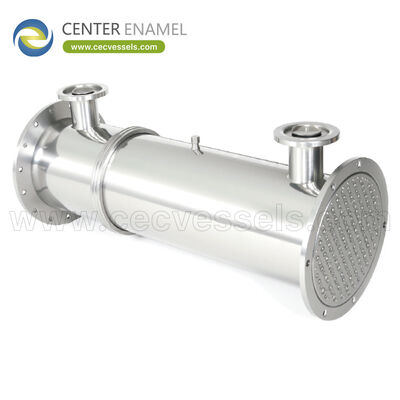
China Desalination Heat Exchanger Manufacturer Delivering Efficient Thermal Recovery Solutions For Seawater Treatment Facilities
| Place of Origin: | China |
| Brand Name: | Center Enamel |
| Certification: | ISO 9001,CE, NSF/ANSI 61, WRAS, ISO 28765, LFGB, BSCI, ISO 45001 |
| Minimum Order Quantity: | 1 Sets |
| Price: | 2000 |
| Delivery Time: | 2 months |
| Payment Terms: | L/C,T/T |
| Supply Ability: | 200 sets / days |
|
Detail Information |
|||
Product Description
China Desalination Heat Exchanger Manufacturer Delivering Efficient Thermal Recovery Solutions For Seawater Treatment Facilities
A desalination heat exchanger recovers or transfers thermal energy inside seawater treatment trains such as thermal desalination, brine concentrators, and mechanical vapor recompression (MVR) systems. The selection decision is not 'which supplier is cheapest' but 'which exchanger type, material, and duty envelope fit a high-chloride, fouling-prone, often high-temperature stream without premature failure'.
This guide walks procurement and process engineers through the selection logic, the comparison between dominant exchanger types, and a concrete specification checklist so a request for quotation (RFQ) produces comparable, technically valid bids rather than mismatched offers.
What Thermal Recovery Means In Seawater Desalination
In thermal desalination (MED, MVC, TVC) and in brine concentration, the evaporator rejects large latent-heat loads. A heat exchanger recovers that heat to preheat incoming seawater or to drive the next effect, directly lowering specific energy consumption (kWh per cubic metre of product water).
In reverse-osmosis (RO) plants the dominant recovery device is usually a pressure exchanger, but thermal recovery exchangers still appear in RO reject heat reuse, in thermal deaeration, and in hybrid plants. Selecting the right exchanger starts with defining the duty: sensible heating, evaporation, condensation, or a combination.
Plate Vs Shell-And-Tube For High-Salinity Service
Two architectures dominate. Plate heat exchangers offer high heat-transfer coefficients and compact footprints but are harder to clean mechanically and more sensitive to particulate and scaling feeds. Shell-and-tube exchangers tolerate higher temperatures and pressures, allow easier mechanical cleaning, and suit brine and vapor duties better.
For seawater treatment the deciding factors are fouling tendency, cleanability, pressure, and temperature. A facility with stable, filtered feed may favor plates for efficiency; a plant handling raw seawater, brine, or vapor with solids favors shell-and-tube for serviceability.
- Fouling control: shell-and-tube with online cleaning is safer for dirty streams.
- Footprint: plate units are compact where space is constrained.
- Temperature ceiling: shell-and-tube handles higher vapor temperatures in MED/MVC.
Material Selection For Chloride-Rich Seawater
Seawater chloride levels routinely exceed 19,000 mg/L, and brine concentrates are far higher. Carbon steel is unsuitable in the wetted path. Common choices are 316L stainless steel for low-risk duties, duplex (2205) for higher strength and corrosion margin, and 254SMO / super-austenitic or titanium for the most aggressive brine and vapor spaces.
Material choice is a lifecycle-cost decision, not a first-cost decision: under-specifying material produces leaks and unplanned shutdowns that dwarf any initial saving. Specifiers should request the exact alloy and the corrosion-allowance basis.
The Selection Checklist Before You Request A Quote
A comparable RFQ needs more than 'supply a desalination heat exchanger'. Buyers should fix the stream composition, flow, inlet/outlet temperatures, pressure, fouling allowance, and required design code before approaching a manufacturer.
Defining these parameters up front lets a qualified China manufacturer return a validated thermal and mechanical design instead of a generic catalogue unit that may not survive the duty.
- Stream data: seawater / brine / vapor, salinity, suspended solids, pH.
- Duty: heat load (kW), LMTD, allowable pressure drop.
- Codes: ASME VIII Div.1 / GB/T 150 / PED as applicable.
- Cleaning: CIP, mechanical, or both.
How A Capable Manufacturer Adds Value At Selection Stage
An experienced supplier contributes at the selection stage by proposing the exchanger type, recommending alloy and corrosion allowance, confirming the design code, and stating fabrication lead time and inspection scope. This de-risks the project before steel is cut.
Buyers should ask for a written thermal design basis and a material certificate path, not just a price. The lowest bid without a defensible design basis is the most expensive option over the plant lifecycle.
Desalination Heat Exchanger Type Comparison
Factor |
Plate Heat Exchanger |
Shell-And-Tube Heat Exchanger |
Best duty |
Sensible heating, clean streams |
Brine, vapor, fouling feeds |
Footprint |
Compact |
Larger |
Cleanability |
CIP, limited mechanical |
Mechanical + CIP |
Typical material |
316L / 254SMO |
Duplex / titanium |
Pressure / temp ceiling |
Moderate |
High |
Selection priority |
Efficiency + space |
Reliability + serviceability |
Specification Checklist (Selection Parameters)
Parameter |
What To Specify |
Why It Matters |
Stream type |
Seawater / brine / vapor |
Drives material choice |
Heat duty (kW) |
From process mass + energy balance |
Sizes the exchanger |
Inlet / outlet T |
Exact values |
Sets LMTD and area |
Pressure |
Operating + design |
Wall thickness, code |
Fouling allowance |
Based on feed quality |
Prevents undersizing |
Design code |
ASME / GB / PED |
Acceptance + export |
Material cert |
Mill cert path |
Traceability |
Conclusion
For seawater treatment facilities, the right desalination heat exchanger is selected on duty, fouling, and material - not price alone. Define the stream and codes, compare plate versus shell-and-tube on cleanability and temperature ceiling, and request a written thermal design basis before placing an order. A qualified manufacturer should help you validate the selection rather than simply quote a catalogue unit.
About The Manufacturer
The manufacturer supports thermal-recovery projects with ASME VIII Div.1 and GB/T 150 fabrication, material traceability, and hydrostatic and pneumatic testing. Capabilities cover shell-and-tube and plate-type exchangers in stainless, duplex, and titanium-clad constructions for chloride-rich service.
Procurement terms typically include flexible order quantity, documented inspection, and export packaging. Buyers should confirm the exact scope, lead time, and certification required for their destination market.
Frequently Asked Questions (FAQ)
What is a desalination heat exchanger used for?
It recovers or transfers thermal energy inside seawater treatment trains such as MED, MVC, or brine concentrators, preheating feed or recovering latent heat to lower energy per cubic metre of product water.
Which is better, plate or shell-and-tube for seawater?
Plate units win on efficiency and footprint for clean streams; shell-and-tube wins on cleanability, temperature ceiling, and reliability for brine, vapor, and fouling feeds.
What material should a seawater heat exchanger use?
316L suits low-risk duties, duplex 2205 adds strength and margin, and 254SMO or titanium suit the most aggressive brine and vapor spaces; material is a lifecycle decision.
How do I size a desalination heat exchanger?
Start from the process heat-duty and mass balance: stream flow, inlet/outlet temperatures, pressure, and fouling allowance, then let the manufacturer return a thermal design with LMTD and area.
What design code applies to exported units?
Commonly ASME VIII Div.1, GB/T 150, or PED depending on destination; the RFQ should name the code so acceptance and marking match the market.
Can one exchanger handle both brine and vapor?
Often a shell-and-tube or combined train is used because vapor condensation and brine heating have different material and cleanability needs; separate duties are usually safer.
What fouling allowance should I specify?
Base it on feed quality: filtered seawater needs less, raw seawater or brine concentrate needs more; under-specifying fouling causes premature undersizing and poor performance.
Why ask for a written thermal design basis?
It proves the unit is sized for your duty and code, not a catalogue guess, and gives you a defensible reference if performance disputes arise.
How long is typical lead time?
Lead time depends on material availability and inspection scope; confirm it in writing and align it with your project schedule before commitment.
Should I request material certificates?
Yes. Mill certificates and a clear cert path give traceability and are often required by the end client or insurer for chloride service.
What is LMTD and why does it matter?
Log Mean Temperature Difference drives the required heat-transfer area; a wrong LMTD estimate produces an undersized or oversized exchanger.
Is titanium always required for seawater?
No. Many duties run safely on 316L or duplex; titanium is reserved for the most aggressive brine or vapor spaces where lower alloys would corrode.
How are these exchangers cleaned?
Through CIP, mechanical tube cleaning, or both; shell-and-tube is easier to clean mechanically, which matters for fouling feeds.
What should the RFQ package contain?
Stream data, duty, temperatures, pressure, fouling allowance, code, material, and cleaning method so suppliers return comparable bids.
How do I compare supplier bids fairly?
Compare on the same design basis, material, code, inspection, and delivery - not price alone - because lowest bid without a defensible basis is the costliest over the lifecycle.
Suggested CTA: Request a written thermal design basis and specification review for your seawater treatment heat-recovery duty: Request Technical Specifications or Contact an Engineer before issuing the RFQ.