-
Glass Fused To Steel Tanks (896)
-
Stainless Steel Tanks (434)
-
Fusion Bonded Epoxy Tanks (652)
-
Galvanized Steel Tanks (321)
-
Aluminum Dome Roofs (1336)
-
Wastewater Storage Tanks (280)
-
Welded Steel Tanks (457)
-
Pressure Vessels (426)
-
Anaerobic Digester (202)
-
Industrial Water Tanks (349)
-
Glass Lined Steel Tanks (180)
-
Bolted Steel Tanks (389)
-
Sludge Storage Tank (115)
-
Biogas Storage Tank (173)
-
Leachate Storage Tanks (133)
-
Agricultural Water Storage Tanks (179)
-
Fire Water Tank (166)
-
Grain Storage Silos (146)
-
Biogas Projects (424)
-
Wastewater Treatment Projects (1722)
-
Double Membrane Roof (223)

|
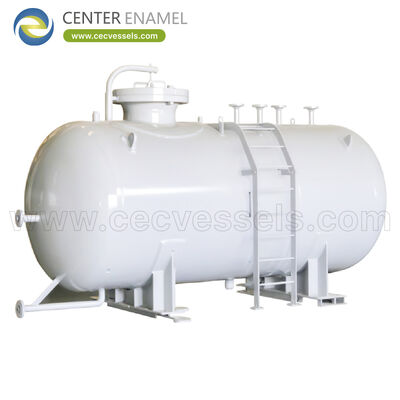
China Amine Separator Manufacturer Delivering Advanced Process Stability And Phase Separation Performance For Global Gas Sweetening Systems
| Place of Origin: | China |
| Brand Name: | Center Enamel |
| Certification: | ISO 9001,CE, NSF/ANSI 61, WRAS, ISO 28765, LFGB, BSCI, ISO 45001 |
| Minimum Order Quantity: | 1 Sets |
| Price: | 2000 |
| Delivery Time: | 2 months |
| Payment Terms: | L/C,T/T |
| Supply Ability: | 200 sets / days |
|
Detail Information |
|||
Product Description
In gas sweetening, an amine separator (or the separation stage of an amine contactor/regenerator train) must hold stable phase separation between sour gas and rich amine, and between stripped gas and lean amine. Stability here is not a comfort feature - it protects the solvent and the whole plant.
This guide focuses on the operating side: how separation stability prevents foaming and solvent loss, what design and practice keep it robust, and how to troubleshoot when performance drifts.
The Separation Stages In Amine SweeteningA sweetening loop has at least two critical separation points: the contactor where dried/sweet gas leaves rich amine, and the regenerator overhead where stripped acid gas leaves lean amine. Each needs clean phase split to avoid carrying liquid into downstream equipment.
A stable amine separator stage keeps liquid out of gas lines and gas out of liquid lines, which is the difference between a clean loop and one losing solvent daily.
Foaming: The First Symptom Of Unstable SeparationFoaming usually appears when fine amine droplets are entrained in gas or when contaminants accumulate. Unstable separation raises entrainment, which raises foaming risk, which then worsens separation - a loop that ends in solvent loss and upsets.
Operating practice (clean inlet gas, controlled levels, anti-foam discipline) and the right demisting keep the loop stable. The vessel design must support steady levels so foam has no trigger.
Solvent Degradation And Carryover ControlLean amine carrying hydrocarbons or solids accelerates thermal and chemical degradation in the regenerator. Good separation at the contactor outlet protects the solvent. Stable interface and draw-off prevent hydrocarbon from riding the amine loop.
Plants that control separation tightly see lower amine make-up and longer solvent life - a direct operating-cost outcome, not a marketing claim.
Design Features That Sustain StabilityGenerous demisting, proper liquid retention, and controlled level/interface management are the structural enablers of stability. The vessel should also allow inspection and drainage so contaminants can be managed.
Specifying only 'an amine contactor' without stability features invites the exact foaming and carryover problems the separator is meant to prevent.
Operating And Troubleshooting disciplineStable operation needs defined level/interface setpoints, inlet filtration where solids exist, and a foaming-response procedure. When performance drifts, the first checks are level control, demister condition, and inlet contamination - not immediately bigger equipment.
A manufacturer should support the operator with clear nozzles for instruments and access for inspection so stability can be maintained over the plant life.
Failure Mode Vs Operating CauseSymptom |
Likely Cause |
Stability Action |
Foaming |
Entrainment + contaminants |
Demist, filter, levels |
Solvent loss |
Liquid in gas |
Improve separation |
Degradation |
Hydrocarbon in amine |
Interface control |
Upsets |
Poor level control |
Setpoint + instrument |
Carryover |
Undersized demister |
Inspect, upgrade |
Parameter |
Operate To |
Why |
Gas outlet quality |
Droplet-free |
No entrainment |
Liquid level |
Steady setpoint |
No foam trigger |
Interface |
Controlled |
Hydrocarbon kept out |
Demister |
Clean, sized |
Entrainment control |
Inlet filter |
Where solids |
Contaminant control |
Access |
Inspectable |
Maintain stability |
Code |
ASME / GB |
Acceptance |
For a separator order, procurement starts with a complete specification: duty, stream composition, pressure and temperature, material, design code, and required inspection. A supplier who returns a written thermal or mechanical design basis - not just a price - lets the buyer compare bids on equal ground and avoids costly rework after fabrication begins.
Order quantities are flexible, with a minimum order quantity of one unit, which supports both pilot and full-scale projects. Typical fabrication and inspection lead time is approximately two months from confirmed design and material release, so the purchaser should align the milestone with the overall project schedule and freeze the specification early.
Payment is commonly handled through L/C or T/T terms, and acceptance should be defined up front: material certificates, dimensional check, hydrostatic or pneumatic test, and any market-specific documentation. Confirming the exact scope of supply and spare parts avoids ambiguity at the factory acceptance stage.
After delivery, lifecycle value depends on accessible design and clear operating limits. Request cleaning and inspection guidance, defined nozzle and access points, and the material basis so the unit can be maintained through its service life rather than replaced prematurely.
Specification freeze: confirm duty, code, and material before fabrication to protect lead time.
Acceptance scope: material certs, dimensional check, pressure test, and export docs.
Commercial terms: flexible MOQ (minimum 1), L/C or T/T, ~2-month typical lead.
Lifecycle: request inspection access and maintenance guidance at order.
Standards, Codes, And Quality AssuranceQualified Separator supply is built on recognized pressure-equipment codes. Fabrication is routinely performed to ASME VIII Div.1 and GB/T 150, with CE / PED marking available for the European market. For hydrogen or sour service, material selection follows NACE MR0175 / ISO 15156 so the wetted path resists the specific environmental mechanism rather than relying on generic corrosion allowances.
Quality management runs to ISO 9001, and the manufacturing workflow includes material traceability from mill certificate to finished vessel, followed by hydrostatic or pneumatic testing and dimensional verification. Welding procedures and inspector qualifications are documented so the delivered unit can be audited against the stated code and project specification.
Buyers should name the exact codes and any additional standards at request-for-quotation stage. Doing so keeps marking, documentation, and acceptance aligned with the destination market and removes the most common cause of late-stage rework.
Codes: ASME VIII Div.1 and GB/T 150; CE/PED on request.
Material integrity: NACE MR0175 / ISO 15156 for H2 or sour service.
Quality: ISO 9001, full material traceability, pressure testing.
Documentation: mill certs, WPS/PQR, test and inspection records.
In gas sweetening, a stable amine separator protects the solvent and the plant: it prevents foaming and carryover by keeping clean phase splits, controlled levels, and a managed oil-water/amine interface. Sustain it with proper demisting, inlet filtration where needed, and disciplined level control; when performance drifts, check levels, demister, and inlet contamination first. A manufacturer should deliver inspectable vessels with the nozzles and access that let operators keep the loop stable.
About The ManufacturerThe manufacturer builds amine contactor and separator stages to ASME VIII Div.1 and GB/T 150, with demisters, interface control, and inspection access, plus material traceability and pressure testing. Sour-service materials are quoted on request.
Confirm stream contaminants, order quantity, lead time, and inspection scope before ordering.
Frequently Asked Questions (FAQ) What is an amine separator in gas sweetening?The separation stage that keeps sour gas and rich amine, or stripped gas and lean amine, cleanly split.
Why is separation stability important?It prevents foaming, solvent loss, and degradation, protecting the whole sweetening loop.
What causes amine foaming?Entrained amine droplets plus contaminants; unstable separation raises entrainment and triggers foam.
How does separation affect solvent life?Clean separation keeps hydrocarbons and solids out of the amine, slowing degradation and lowering make-up.
What design features sustain stability?Sized demisters, adequate retention, controlled level/interface, and inspection access.
What is the contactor outlet risk?Liquid entrained into sweet gas lines; controlled demisting prevents it.
How do I control hydrocarbon in amine?Through interface management and draw-off so hydrocarbon does not ride the loop.
What should I check when performance drifts?Level control, demister condition, and inlet contamination before considering bigger equipment.
Does inlet filtration help?Yes, where solids exist; it removes a major foaming and degradation trigger.
What design code applies?ASME VIII Div.1 or GB/T 150, named in the RFQ.
What is lean vs rich amine?Lean is regenerated (H2S/CO2 stripped); rich has absorbed acid gas from the contactor.
Can foaming be fixed by bigger vessels?Not usually; first fix levels, demisting, and contamination at the root cause.
What inspection access matters?Manways and nozzles for instruments and demister removal so stability is maintainable.
What is the operating cost benefit?Lower amine make-up and fewer upsets from stable, clean separation.
How do I compare supplier offers?On stability features, code, access, and inspection - not shell size alone.
Suggested CTA: For a stable, inspectable amine separator for gas sweetening, Request Technical Specifications or Contact an Engineer to review your loop.