-
Glass Fused To Steel Tanks (896)
-
Stainless Steel Tanks (434)
-
Fusion Bonded Epoxy Tanks (652)
-
Galvanized Steel Tanks (321)
-
Aluminum Dome Roofs (1336)
-
Wastewater Storage Tanks (280)
-
Welded Steel Tanks (457)
-
Pressure Vessels (426)
-
Anaerobic Digester (202)
-
Industrial Water Tanks (349)
-
Glass Lined Steel Tanks (180)
-
Bolted Steel Tanks (389)
-
Sludge Storage Tank (115)
-
Biogas Storage Tank (173)
-
Leachate Storage Tanks (133)
-
Agricultural Water Storage Tanks (179)
-
Fire Water Tank (166)
-
Grain Storage Silos (146)
-
Biogas Projects (424)
-
Wastewater Treatment Projects (1712)
-
Double Membrane Roof (223)
|
What Is a Chemical Plant Reactor? Design, Unit Operations & Applications
| Place of Origin: | China |
| Brand Name: | Center Enamel |
| Certification: | ISO 9001,CE, NSF/ANSI 61, WRAS, ISO 28765, LFGB, BSCI, ISO 45001 |
| Minimum Order Quantity: | 1 Sets |
| Price: | 2000 |
| Delivery Time: | 2 months |
| Payment Terms: | L/C,T/T |
| Supply Ability: | 200 sets / days |
|
Detail Information |
|||
Product Description
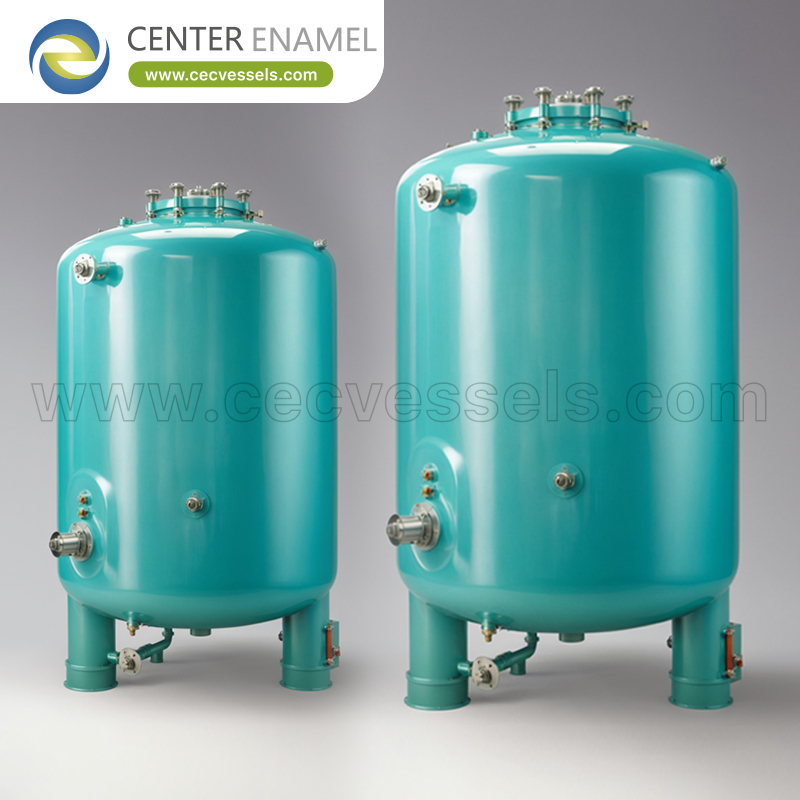
What Is a Chemical Plant Reactor? Design, Unit Operations & Applications
Answering the core question: What is a chemical plant reactor, and how does it fit the full process train? A chemical plant reactor is the vessel where feed is converted to product, but in a plant it never stands alone: it is integrated with separation (distillation, extraction), recycle (unreacted feed returned 1-10x), heat recovery (60-85% via pinch-designed exchangers), and safety systems (HAZOP/LOPA, SIL 1-3 relief). Although the reactor is typically only 10-30% of total CAPEX, it controls essentially 100% of conversion and selectivity, so its design dictates the size and cost of every downstream unit. A well-integrated chemical plant reactor pairs reaction severity (T, P, catalyst) with separation and utility design so overall yield (80-99.9%) and energy use are optimized together, not the reactor in isolation.
1. Core Integration Principles of a Chemical Plant Reactor
Plant-level performance comes from how the reactor couples to the rest of the train. Three integration principles matter most:
- **Reaction-Separation-Recycle Integration:** Low per-pass conversion forces recycle of unreacted feed (1-10x), so reactor conversion sets separation load and compressor/recycle-pump duty. Raising conversion from 85% to 95% can cut recycle and separation CAPEX 20-40%. Plants use pervaporation, membrane, or reactive distillation to push conversion in situ, merging reaction and separation into one integrated unit that also suppresses equilibrium limits.
- **Heat Integration and Pinch:** Reactants are heated and products cooled; heat integration via pinch analysis recovers 60-85% of process heat, often generating the LP/MP steam that drives the reactor jacket or reboiler. Exothermic reactors become heat sources (waste-heat boilers producing 10-100 bar steam); endothermic reactors consume furnace duty. A pinch-designed train minimizes external utility and CO2 by matching reactor duties to plant sinks.
- **Plant Safety Layers (HAZOP/LOPA):** The reactor defines the plant's major hazard (runaway, over-pressure, toxic/flammable release). HAZOP studies each deviation; LOPA assigns SIL 1-3 to protective layers (inhibitor injection, emergency cooling, dump, rupture disc + PSV per API 520/521, DIERS two-phase relief). The reactor relief system is sized for the worst credible over-pressure (110% design), and combustible/flammable inventories are minimized by layout and isolation.
2. Major Reactor Roles in a Chemical Plant
Within a plant, reactors are assigned by phase and duty. Three representative roles illustrate the range:
- **Gas-Phase Fixed-Bed Reactor (synthesis):** Multi-tubular PFR (tube ID 20-50 mm) for catalytic syntheses (ammonia, methanol, SO3). Single-pass conversion 90-99%, near-isothermal via boiling coolant (±5°C). It sets plant capacity and dictates the compression and separation train sizing; catalyst life (1-5 years) drives turnaround scheduling.
- **Liquid-Phase CSTR Battery (fine/specialty):** A train of 5-50 m3 jacketed STRs for multi-step synthesis where flexibility matters. Conversion 85-99% per step, cycle 8-48 h. Each reactor feeds a separator/reactor downstream; shared CIP/SIP and solvent recovery integrate the steps into one low-waste train (E-factor 5-25).
- **Slurry / Loop Reactor (hydrogenation):** Recirculating loop or stirred slurry reactor (2-30 m3) for catalytic hydrogenation (oils, amines, pharma intermediates) at 1-10 MPa. High kLa (200-600 h-1) and heat flux (50 kW/m2) enable compact, safe exothermic service feeding a filter and stripper. It minimizes catalyst handling and gives 95-99% conversion in one pass.
Chemical Plant Reactor Duty Comparison Matrix
Reactor Role |
Phase / Type |
Per-Pass X |
Drives Plant Unit |
Fixed-Bed Synthesis |
Gas, catalytic PFR |
90-99% |
Compression + separation |
CSTR Battery |
Liquid, multiproduct |
85-99% |
Solvent recovery + CIP |
Slurry Loop H2 |
Gas-liquid slurry |
95-99% |
Filter + stripper |
Frequently Asked Questions (FAQ)
Q: Why does the reactor control the whole plant even at 10-30% of CAPEX?
A: Conversion and selectivity are set at the reactor; everything downstream (separators, compressors, recyclers, utilities) only processes what the reactor produces. A 5-point gain in conversion can shrink separation and recycle equipment 20-40%, so reactor design dominates total plant CAPEX and OPEX even though the vessel itself is a small fraction of cost.
Q: How does heat integration reduce chemical plant energy use?
A: Pinch analysis matches every reactor heating/cooling duty to a plant sink/source, recovering 60-85% of process heat (e.g., exothermic reactor waste-heat boilers generating steam that drives endothermic reactor furnaces or reboilers). This cuts external fuel and cooling water, lowering OPEX and CO2. The reactor duty profile is the backbone of the pinch design.
Q: What safety layers protect a chemical plant reactor?
A: Layers include basic process control (BPCS), alarms, operator response, SIL 1-3 SIS (emergency cooling, inhibitor, dump-to-quench), and mechanical relief (rupture disc + PSV per API 520/521, DIERS two-phase sizing). HAZOP identifies deviations; LOPA quantifies needed SIL. Flammable/toxic inventories are minimized by layout, isolation, and knockdown systems.
Q: What is reactive distillation and when is it used in a plant?
A: Reactive distillation performs reaction and separation in one column, shifting equilibrium-limited reactions (e.g., esterification) to near-complete conversion by continuously removing product. It cuts CAPEX 20-40% and energy by removing separate reactor + column, but needs compatible T/P and catalyst-in-tray hardware. It is used when reaction and separation temperatures overlap and one product is more volatile.