-
Glass Fused To Steel Tanks (896)
-
Stainless Steel Tanks (434)
-
Fusion Bonded Epoxy Tanks (652)
-
Galvanized Steel Tanks (321)
-
Aluminum Dome Roofs (1336)
-
Wastewater Storage Tanks (280)
-
Welded Steel Tanks (457)
-
Pressure Vessels (426)
-
Anaerobic Digester (202)
-
Industrial Water Tanks (349)
-
Glass Lined Steel Tanks (180)
-
Bolted Steel Tanks (389)
-
Sludge Storage Tank (115)
-
Biogas Storage Tank (173)
-
Leachate Storage Tanks (133)
-
Agricultural Water Storage Tanks (179)
-
Fire Water Tank (166)
-
Grain Storage Silos (146)
-
Biogas Projects (424)
-
Wastewater Treatment Projects (1712)
-
Double Membrane Roof (223)
|
What Are Chemical Reactor Solutions? Selection, Design & Applications
| Place of Origin: | China |
| Brand Name: | Center Enamel |
| Certification: | ISO 9001,CE, NSF/ANSI 61, WRAS, ISO 28765, LFGB, BSCI, ISO 45001 |
| Minimum Order Quantity: | 1 Sets |
| Price: | 2000 |
| Delivery Time: | 2 months |
| Payment Terms: | L/C,T/T |
| Supply Ability: | 200 sets / days |
|
Detail Information |
|||
Product Description
What Are Chemical Reactor Solutions? Selection, Design & Applications
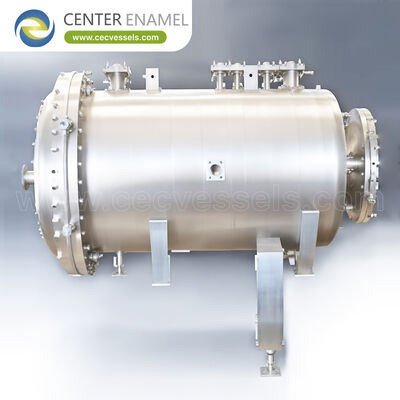
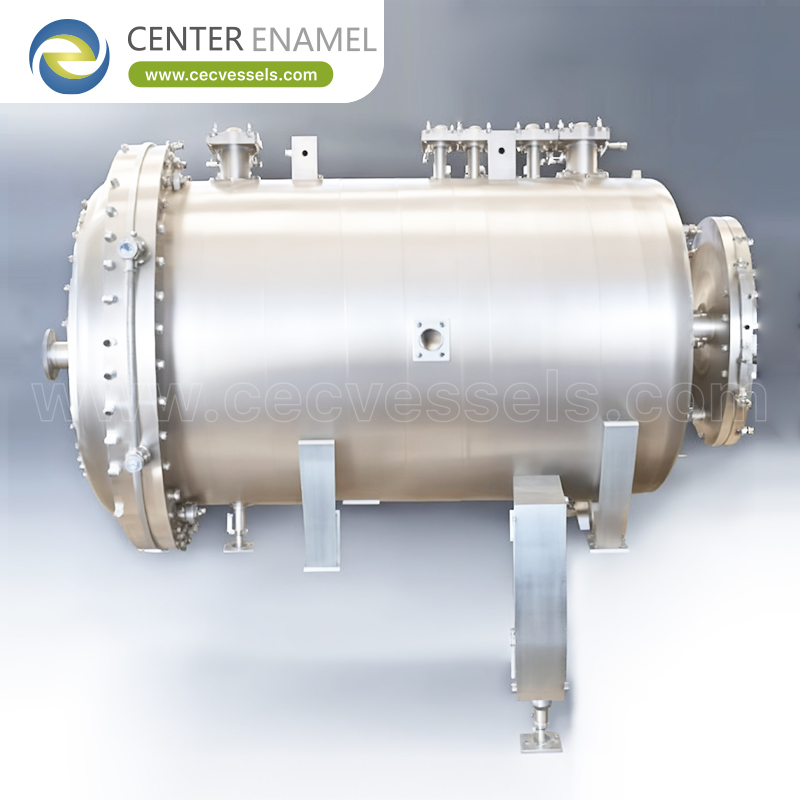
Answering the core question: What are chemical reactor solutions, and how do they match equipment to process duty? Chemical reactor solutions are engineered, vendor-delivered packages that pair the right reactor type (CSTR, PFR, or specialized), construction material, and control strategy to a specific reaction's conversion, selectivity, and heat-removal needs. The basis of design starts from reaction kinetics: a first-order liquid reaction with tau = 1/k needs a continuous stirred-tank reactor (CSTR) at 5-10x the plug-flow reactor (PFR) volume for the same conversion, but the CSTR's backmixing improves thermal safety for highly exothermic steps. Solutions are quantified by space-time yield (STY 0.1-10 kg/L·h), Damkohler number (Da = k·tau), and E-factor (1-50 kg waste/kg product), then supplied as ASME Section VIII coded skids with HAZOP/LOPA safety layers per IEC 61511.
1. Core Selection Principles for Chemical Reactor Solutions
A reactor solution is chosen by the interplay of kinetics, mixing, and heat removal. Three principles decide the architecture:
- **Kinetics, Conversion and Residence Time:** For a target conversion X, the required space time tau = -ln(1-X)/k in a PFR versus tau = X/((1-X)·k) in a CSTR. The Damkohler number Da = k·tau compares reaction to residence time; Da >> 1 means the vessel is reaction-limited and should be larger, Da << 1 means mixing or heat transfer limits performance. Solutions size the vessel so residence time (1 min to 24 h) delivers the required conversion at the lowest capital and utility cost.
- **Selectivity and Mixing Regime:** Parallel and consecutive side reactions punish poor mixing. A PFR gives uniform age (RTD narrow) and high selectivity for series products; a CSTR's backmixing can drop selectivity for consecutive reactions by 20-50%. For fast, exothermic, selectivity-sensitive steps (nitrations, polymerizations), solutions use short-residence PFRs or loop reactors with micromixing times < 0.1 s and tight T control (±1°C) to suppress byproducts.
- **Heat Removal and Safety Layers:** Exothermic reactions (heat of -50 to -500 kJ/mol) demand heat flux of 5-50 kW/m2 via jacket (U 300-800 W/m2·K), half-pipe coil, or internal tube bundle. The solution sets a maximum temperature (MTSR) below the decomposition onset using DIERS relief sizing and a SIL-rated emergency system. HAZOP identifies deviations; LOPA assigns SIL 1-3 per IEC 61511 for over-pressure, runaway, and loss-of-cooling scenarios.
2. Major Chemical Reactor Solution Types
Vendors package reactors into standard solution families. Three cover most fine, specialty, and commodity chemical duties:
- **CSTR Batch/Continuous Solution:** A jacketed or half-pipe-coil agitated vessel (0.5-50 m3) with Rushton/anchor agitator, used for multiproduct fine-chemical plants. Conversion 80-99% via recycle, residence 2-24 h, STY 0.1-2 kg/L·h. Its flexibility (clean between products) suits low-volume, high-margin synthesis; CIP and inert blanketing (N2) handle pyrophoric or toxic feeds. ASME Section VIII Div 1 with full traceability is standard.
- **PFR / Tubular Solution:** A shell-and-tube or multi-tube fixed-bed reactor (tube ID 20-50 mm, length 2-8 m) for gas-phase catalytic reactions (hydrogenation, oxidation). Single-pass conversion 95-99.9%, residence 1 s to 30 min, STY 1-10 kg/L·h. Multi-tubular designs use boiling coolant for near-isothermal operation (±5°C), critical for selectivity and catalyst life. Used in commodity and intermediate production.
- **Loop / Slurry Reactor Solution:** A recirculating draft-tube or jet-loop reactor (2-30 m3) for gas-liquid and slurry hydrogenations (e.g., edible oil, amine, pharmaceutical intermediates). High recirculation (10-50x feed) gives kLa 200-600 h-1 and near-plug behavior with 95-99% conversion. Compact footprint and excellent heat removal (50 kW/m2) make it a preferred solution for highly exothermic hydrogenations at 1-10 MPa.
Chemical Reactor Solution Types Comparison Matrix
| Solution Type | Conversion Mechanism | Best Duty | Typical STY |
|---|---|---|---|
| CSTR Batch/Continuous | Backmixed, jacket cooled | Multi-product fine chem | 0.1-2 kg/L·h |
| PFR / Tubular | Plug flow, fixed bed | Gas-phase catalytic | 1-10 kg/L·h |
| Loop / Slurry | Recirculated, gas-liquid | Exothermic hydrogenation | 0.5-5 kg/L·h |
Frequently Asked Questions (FAQ)
Q: When should a buyer choose a CSTR solution over a PFR?
A: Choose a CSTR for multiproduct plants (clean between batches), highly exothermic steps needing superior backmixed heat capacity, or reactions where feed variability demands buffering. Choose a PFR for single high-volume products where selectivity (narrow RTD) and small footprint matter. A vendor solution often blends both: PFR for the fast exothermic core, CSTR for work-up and quench.
Q: What is space-time yield and why is it the key metric?
A: Space-time yield (STY, kg product per L reactor per h) normalizes productivity to reactor volume, letting buyers compare a 0.5 m3 CSTR against a 10 m3 PFR on equal footing. It integrates conversion, selectivity, and residence time into one CAPEX/OPEX number. A solution targeting STY 5-10 kg/L·h signals a highly intensified, capital-efficient design versus 0.1-1 for flexible multiproduct trains.
Q: How do reactor solutions handle runaway-exotherm safety?
A: Solutions size emergency relief via DIERS two-phase methodology, set MTSR below decomposition onset, and add SIL-rated layers (inhibitor injection, dump-to-quench, emergency cooling, rupture disc + relief valve) per LOPA/IEC 61511. The reactor is designed for a worst-case cooling failure with adiabatic temperature rise (Delta Tad) bounded by relief capacity. HAZOP closes the loop on operability deviations.
Q: What materials are typical for corrosive chemical reactor solutions?
A: Carbon steel (SA-516) for non-corrosive service; 304/316L stainless for general corrosion; duplex 2205 and super-duplex 2507 for chloride and erosion; Hastelloy C-276, Inconel 625, or zirconium for strong acid/severe service; glass-lined steel for universal acid resistance; and PTFE/PVDF-lined for halogens. PREN = %Cr + 3.3·%Mo + 16·%N guides grade selection against pitting.