-
Glass Fused To Steel Tanks (896)
-
Stainless Steel Tanks (434)
-
Fusion Bonded Epoxy Tanks (652)
-
Galvanized Steel Tanks (321)
-
Aluminum Dome Roofs (1336)
-
Wastewater Storage Tanks (280)
-
Welded Steel Tanks (457)
-
Pressure Vessels (426)
-
Anaerobic Digester (202)
-
Industrial Water Tanks (349)
-
Glass Lined Steel Tanks (180)
-
Bolted Steel Tanks (389)
-
Sludge Storage Tank (115)
-
Biogas Storage Tank (173)
-
Leachate Storage Tanks (133)
-
Agricultural Water Storage Tanks (179)
-
Fire Water Tank (166)
-
Grain Storage Silos (146)
-
Biogas Projects (424)
-
Wastewater Treatment Projects (1712)
-
Double Membrane Roof (223)
|
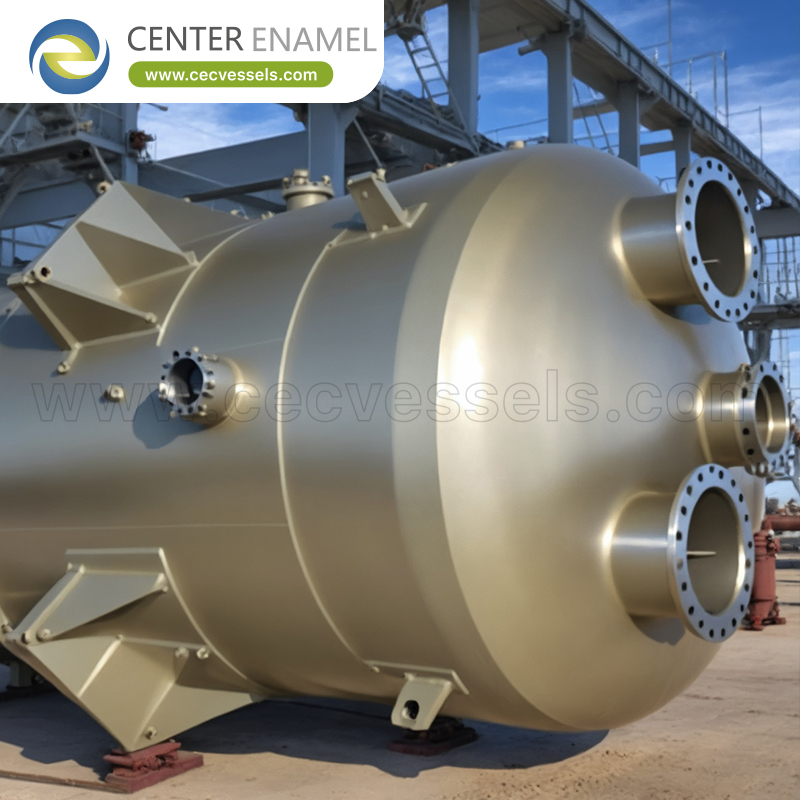
What Is a Yield Reactor? Optimization, Principles & Applications
| Place of Origin: | China |
| Brand Name: | Center Enamel |
| Certification: | ISO 9001,CE, NSF/ANSI 61, WRAS, ISO 28765, LFGB, BSCI, ISO 45001 |
| Minimum Order Quantity: | 1 Sets |
| Price: | 2000 |
| Delivery Time: | 2 months |
| Payment Terms: | L/C,T/T |
| Supply Ability: | 200 sets / days |
|
Detail Information |
|||
Product Description
What Is a Yield Reactor? Optimization, Principles & Applications
Answering the core question: What is a yield reactor, and how is it optimized to maximize product output per mole of feed? A yield reactor is any vessel operated under a control strategy that pushes stoichiometric conversion and selectivity to the limit - typically 85-99 percent yield with above 95 percent selectivity - while minimizing byproducts. Engineers use kinetic models (Arrhenius rate constants), Design of Experiments (DoE) screening 20-50 conditions, and real-time PAT (in-line FTIR or NMR) feedback to lock the optimal temperature, residence time, and stoichiometry. The payoff is a lower E-factor (waste to product ratio, 1-50) and higher atom economy in pharma and fine-chemical manufacture.
Core Operating Principles of Yield Reactors
- **Yield vs Selectivity Trade-off:** High conversion can lower selectivity via parallel side reactions; the optimum balances both, often at 85-98 percent conversion.
- **Kinetic and DoE Optimization:** Arrhenius-derived rate laws plus DoE maps temperature, pH, and ratio space, identifying the peak-yield window in 20-50 experiments.
- **Real-Time PAT Control:** In-line FTIR or NIR and Raman feed back to dosing pumps, holding critical quality attributes within spec during the run.
Major Strategies and Types of Yield Reactors
- **Plug-Flow (PFR) Yield Reactors:** Narrow residence distribution maximizes selectivity for consecutive reactions versus backmixed tanks.
- **Fed-Batch Yield Reactors:** Controlled substrate addition suppresses byproduct formation, raising yield in biotransformations and polymerizations.
- **Cascade or Series CSTR:** Staging tunes concentration profiles to favor desired product over intermediates.
Yield Reactor Modes Comparison Matrix
Reactor Mode |
Selectivity Driver |
Typical Yield |
Best Reaction |
PFR |
Narrow RTD, no backmix |
90-99 percent |
Consecutive A to B to C |
Fed-Batch |
Substrate limiting |
85-98 percent |
Biotransform, poly |
Series CSTR |
Staged conc. profile |
88-97 percent |
Complex networks |
Batch (base) |
Recipe control |
80-95 percent |
Multipurpose |
Frequently Asked Questions (FAQ)
Q: What is the difference between yield and selectivity?
A: Yield is product obtained versus theoretical maximum; selectivity is product formed versus all reacted feed. High selectivity is needed for high yield when side reactions compete.
Q: How does DoE improve yield?
A: Design of Experiments systematically varies temperature, ratio, and time (20-50 runs), revealing interactions and the optimum operating window without testing every point.
Q: What is PAT and why does it raise yield?
A: Process Analytical Technology places in-line sensors (FTIR or NIR) that feed back to control dosing in real time, keeping critical attributes in-spec and avoiding off-grade batches.
Q: Why prefer PFR for high-yield consecutive reactions?
A: Plug flow avoids backmixing so intermediate B is not over-reacted to C, lifting selectivity and yield versus a single stirred tank.