-
Glass Fused To Steel Tanks (896)
-
Stainless Steel Tanks (434)
-
Fusion Bonded Epoxy Tanks (652)
-
Galvanized Steel Tanks (321)
-
Aluminum Dome Roofs (1336)
-
Wastewater Storage Tanks (280)
-
Welded Steel Tanks (457)
-
Pressure Vessels (426)
-
Anaerobic Digester (202)
-
Industrial Water Tanks (349)
-
Glass Lined Steel Tanks (180)
-
Bolted Steel Tanks (389)
-
Sludge Storage Tank (115)
-
Biogas Storage Tank (173)
-
Leachate Storage Tanks (133)
-
Agricultural Water Storage Tanks (179)
-
Fire Water Tank (166)
-
Grain Storage Silos (146)
-
Biogas Projects (424)
-
Wastewater Treatment Projects (1712)
-
Double Membrane Roof (223)
|
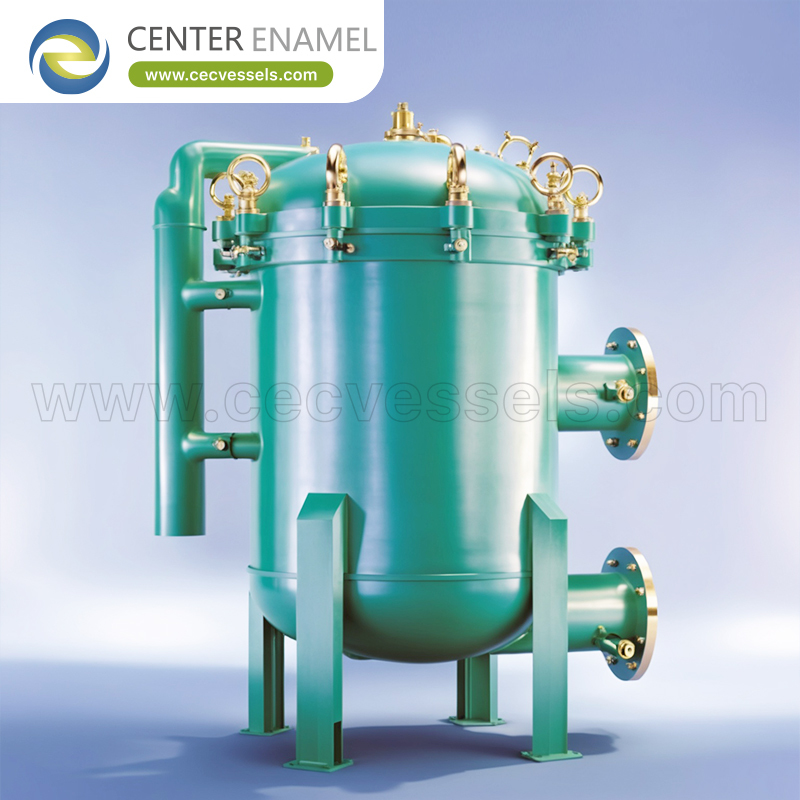
What Is a Fermenter Reactor? Design, Principles & Applications
| Place of Origin: | China |
| Brand Name: | Center Enamel |
| Certification: | ISO 9001,CE, NSF/ANSI 61, WRAS, ISO 28765, LFGB, BSCI, ISO 45001 |
| Minimum Order Quantity: | 1 Sets |
| Price: | 2000 |
| Delivery Time: | 2 months |
| Payment Terms: | L/C,T/T |
| Supply Ability: | 200 sets / days |
|
Detail Information |
|||
Product Description
What Is a Fermenter Reactor? Design, Principles & Applications
Answering the core question: What is a fermenter reactor, and how does it grow microorganisms into valuable biochemicals? A fermenter reactor is a sterile, aerated vessel that cultivates bacteria, yeast, or mammalian cells under controlled temperature (30-37 degree C), pH (5-7.5), and dissolved oxygen (DO above 30 percent saturation). Mechanical agitation at 50-200 rpm with sparged air delivers a volumetric mass-transfer coefficient kLa of 50-400 per hour, sustaining cell densities above 10^9 CFU/mL. Industrial units range from 0.5 m3 pilot tanks to 300 m3 production fermenters, producing antibiotics, enzymes, beer, and bioethanol at yields of 80-95 percent substrate conversion.
Core Operating Principles of Fermenter Reactors
- **Aeration and kLa Control:** Sparged, oil-free air plus impeller shear sets kLa (50-400 per hour); DO probes feed back to airflow and agitation to keep respiration unhindered.
- **Sterile Operation (SIP/CIP):** Steam-in-place at 121-134 degree C for 20-30 min sterilizes the vessel; sterile filters (0.2 micrometer) protect incoming air and exhaust.
- **Metabolic Monitoring:** Online pH, DO, off-gas O2/CO2 (OUR/CPR) and feed pumps implement fed-batch control, preventing substrate inhibition.
Major Types of Fermenter Reactors
- **Aerated Stirred-Tank Fermenter:** Rushton or HE-3 impellers in 0.5-300 m3 stainless steel; workhorse for antibiotics, yeast, and single-cell protein.
- **Air-Lift Fermenter:** Bubble-column with internal draft tube; low shear suits plant cells and mycelial cultures with kLa 50-150 per hour.
- **Membrane / Hollow-Fiber Bioreactor:** Continuous cell-retention for mammalian and perfusion cultures needing gentle, high-density growth.
Fermenter Reactor Types Comparison Matrix
Fermenter Type |
Agitation |
Scale Range |
Typical kLa / DO |
Stirred-Tank |
Mechanical Rushton/HE-3 |
0.5-300 m3 |
kLa 100-400/h, DO>30% |
Air-Lift |
Pneumatic (no shaft) |
1-200 m3 |
kLa 50-150/h, low shear |
Hollow-Fiber |
Perfusion, membrane |
0.01-10 m3 |
High cell density, gentle |
Fixed-Bed |
Trickle / packed |
0.1-50 m3 |
Immobilized cells |
Frequently Asked Questions (FAQ)
Q: What is kLa and why is it critical?
A: kLa is the volumetric mass-transfer coefficient describing how fast oxygen enters the liquid; insufficient kLa starves cells, cutting growth rate mu and product titer.
Q: How is a fermenter kept sterile?
A: SIP steam sterilizes the vessel and lines at 121-134 degree C, while 0.2 micrometer hydrophobic or HEPA filters sterilize incoming air and trap exhaust, preventing contamination.
Q: What is fed-batch fermentation?
A: Nutrient is added gradually instead of all at once, avoiding high substrate concentrations that inhibit cells and raising final yield to 80-95 percent.
Q: Which fermenter best suits shear-sensitive cells?
A: Air-lift and hollow-fiber bioreactors provide low-shear, bubble-driven or membrane-based mixing ideal for mammalian and plant cells.