-
Glass Fused To Steel Tanks (896)
-
Stainless Steel Tanks (434)
-
Fusion Bonded Epoxy Tanks (652)
-
Galvanized Steel Tanks (321)
-
Aluminum Dome Roofs (1336)
-
Wastewater Storage Tanks (280)
-
Welded Steel Tanks (457)
-
Pressure Vessels (426)
-
Anaerobic Digester (202)
-
Industrial Water Tanks (349)
-
Glass Lined Steel Tanks (180)
-
Bolted Steel Tanks (389)
-
Sludge Storage Tank (115)
-
Biogas Storage Tank (173)
-
Leachate Storage Tanks (133)
-
Agricultural Water Storage Tanks (179)
-
Fire Water Tank (166)
-
Grain Storage Silos (146)
-
Biogas Projects (424)
-
Wastewater Treatment Projects (1712)
-
Double Membrane Roof (223)
|
What Is a Cryogenic Reactor? Principles, Design & Applications
| Place of Origin: | China |
| Brand Name: | Center Enamel |
| Certification: | ISO 9001,CE, NSF/ANSI 61, WRAS, ISO 28765, LFGB, BSCI, ISO 45001 |
| Minimum Order Quantity: | 1 Sets |
| Price: | 2000 |
| Delivery Time: | 2 months |
| Payment Terms: | L/C,T/T |
| Supply Ability: | 200 sets / days |
|
Detail Information |
|||
Product Description
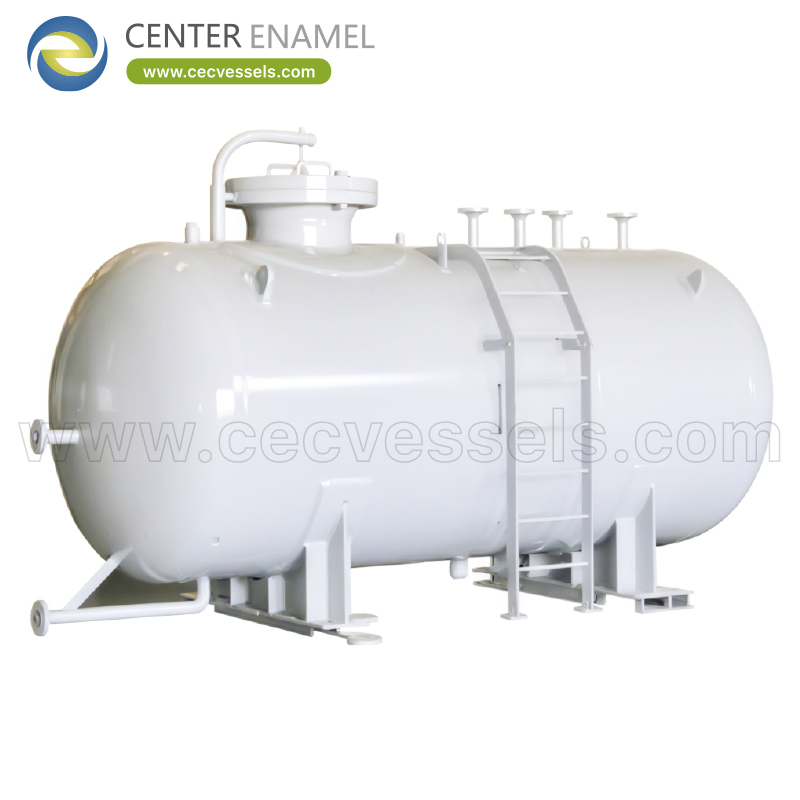
What Is a Cryogenic Reactor? Principles, Design & Applications
Answering the core question: What is a cryogenic reactor, and how does it enable chemistry below minus 40 degree C? A cryogenic reactor is a vessel engineered for sub-ambient operation down to minus 196 degree C using liquid-nitrogen (LN2) or chilled brine or glycol jackets. Low-temperature service exploits the ductile-brittle transition: L-grade 304L or 316L steels (carbon below 0.03 percent) retain toughness below minus 100 degree C, while carbon steel would fracture. Cryo units run free-radical polymerizations, organolithium syntheses, and vapor-phase condensation of volatiles at 0.1-10 MPa, with double-wall vacuum or expanded-PE insulation limiting heat leak to below 5 W/m2.
- **Cryogenic Cooling Methods:** Direct LN2 injection, internal coils, or external brine jackets (minus 40 to minus 80 degree C) remove heat; LN2 boiling at minus 196 degree C gives the deepest setpoints.
- **Material Toughness (DBTT):** L-grade stainless (C below 0.03 percent) stays ductile below minus 100 degree C; carbon steel is excluded below minus 20 degree C due to brittle fracture risk.
- **Thermal Insulation:** Double-wall vacuum or PU or PE foam cuts heat leak to below 5 W/m2, stabilizing the low-temperature envelope and reducing refrigerant load.
- **LN2-Direct Reactor:** Open or closed vessel with submerged LN2 coils for minus 80 to minus 196 degree C specialty organometallic runs.
- **Brine/Glycol Jacketed Reactor:** Standard jacketed vessel cooled to minus 40 degree C for cryo-polymerization and diazotization.
- **Cryo-Condensation Reactor:** Vapor-phase unit condensing volatile products or reagents at minus 50 to minus 100 degree C before reaction.
| Cryo Method | Temp Range | Coolant | Typical Use |
|---|---|---|---|
| LN2 Direct | -80 to -196 degree C | Liquid N2 | Organolithium, RIE |
| Brine/Glycol | -10 to -40 degree C | Chilled fluid | Cryo-polymer, diazotize |
| Vapor Cryo-Cond. | -50 to -100 degree C | Refrigerant | Volatile capture |
| Jacketed CO2 | -20 to -50 degree C | CO2 cycle | Pharma intermediates |
Q: What materials are safe below minus 40 degree C?
A: L-grade stainless (304L/316L, C below 0.03 percent) retains toughness below minus 100 degree C; carbon and many alloy steels become brittle and are excluded.
Q: How is such low temperature maintained?
A: LN2 or chilled brine or glycol jackets plus vacuum or foam insulation limit heat leak to under 5 W/m2, holding the setpoint stably.
Q: Why run reactions cryogenically?
A: Low temperature suppresses side reactions, stabilizes reactive intermediates (organolithiums), and improves selectivity in polymerizations.
Q: What pressure can a cryogenic reactor hold?
A: Standard designs cover 0.1-10 MPa; vacuum-jacketed units add an insulated annulus but the process shell still meets ASME pressure rules.