-
Glass Fused To Steel Tanks (777)
-
Stainless Steel Tanks (434)
-
Fusion Bonded Epoxy Tanks (592)
-
Galvanized Steel Tanks (321)
-
Aluminum Dome Roofs (1336)
-
Wastewater Storage Tanks (237)
-
Welded Steel Tanks (457)
-
Pressure Vessels (295)
-
Anaerobic Digester (202)
-
Industrial Water Tanks (349)
-
Glass Lined Steel Tanks (180)
-
Bolted Steel Tanks (389)
-
Sludge Storage Tank (115)
-
Biogas Storage Tank (173)
-
Leachate Storage Tanks (133)
-
Agricultural Water Storage Tanks (179)
-
Fire Water Tank (166)
-
Grain Storage Silos (146)
-
Biogas Projects (424)
-
Wastewater Treatment Projects (1470)
-
Double Membrane Roof (223)

|
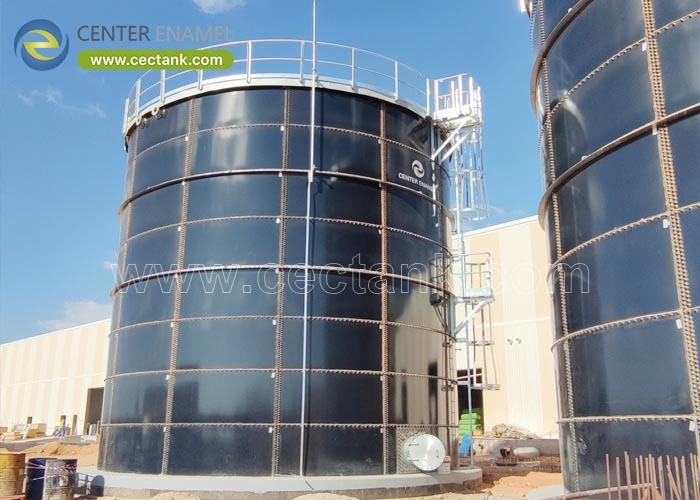
Glass-Fused-to-Steel Grain Storage Silos: Hygiene and Moisture Control
| Place of Origin: | China |
| Brand Name: | CEC TANKS |
| Certification: | ISO 9001:2008, AWWA D103 , OSHA , BSCI |
| Model Number: | W |
| Minimum Order Quantity: | 1set |
| Price: | $5000~$20000 one set |
| Packaging Details: | PE poly-foam between each two steel plates ; wooden pallet and wooden |
| Delivery Time: | 10-30 days after deposit received |
| Payment Terms: | L/C,T/T |
| Supply Ability: | 60 sets per month |
|
Detail Information |
|||
| Place of Origin | China | Brand Name | CEC TANKS |
|---|---|---|---|
| Certification | ISO 9001:2008, AWWA D103 , OSHA , BSCI | Model Number | W |
| Tank Material: | Glass Fused To Steel | Foundation: | Concrete Or Glass Fused Steel |
| Steel Plates Thickness: | 3mm To 12mm , Depends On The Tank Structure | Size Of Panel: | 2.4M * 1.2M |
| Easy To Clean: | Smooth, Glossy, Inert, Anti-adhesion | Permeability: | Gas / Liquid Impermeable |
| Highlight: | Glass-Fused-to-Steel grain silos,hygienic grain storage silos,moisture control grain silos |
||
Product Description
Glass-Fused-to-Steel Grain Storage Silos: Hygiene and Moisture Control
A Glass-Fused-to-Steel (GFS) grain storage silo stores cereals in a smooth, inert, moisture-tight shell that resists mold, pests, and corrosion. The vitreous enamel fused at 820-930°C gives grain a clean contact surface no paint can match. Engineered by Shijiazhuang Zhengzhong Technology Co., Ltd. (Center Enamel), these bolted silos keep grain at safe moisture and temperature through long holding periods.
What a GFS Grain Storage Silo Is
A Glass-Fused-to-Steel (GFS) grain silo is a bolted steel silo whose interior is a vitreous enamel fused to the plate, presenting grain with a non-porous, food-grade contact surface. The smooth enamel denies mold a foothold and resists the humidity cycles that spoil cereals, which is why it is chosen where hygiene and hold life matter.
- Surface: Inert, smooth enamel interior.
- Build: Bolted panels, sealed joints.
- Duty: Cereals, pulses, and feed.
- Hygiene: No paint, no porous lining.
Key Characteristics, Components, and Types
GFS grain silos use bolted enamel panels with 8.8-grade fasteners, a sealed conical or dome roof, and aeration and temperature monitoring ports. Capacities run from a few hundred to 40,000 m3, and the silo is fitted with filling, emptying, and ventilation equipment matched to the grain type.
- Shell: Bolted GFS panels, 1500 V tested.
- Roof: Cone or geodesic dome, sealed.
- Kit: Aeration, temp probes, vents.
- Volume: Up to 40,000 m3 per silo.
Applications and Operating Conditions
GFS grain silos store wheat, maize, rice, soybeans, and animal feed at mills, ports, and farms. Grain is held at 13-15% safe moisture and monitored for temperature, because spoilage begins when moisture or heat climbs. The inert surface and sealed roof keep both under control through seasonal holding.
- Commodities: Wheat, maize, rice, soy, feed.
- Moisture: 13-15% safe storage band.
- Monitor: Temperature and aeration control.
- Sites: Mills, ports, farms.
Technical Considerations
Silo sizing follows grain volume and the 13-15% moisture band, with aeration set to manage temperature and a sealed roof to control humidity. The shell is calculated to AWWA D103-09 and the enamel to ISO 28765; the smooth 0.25-0.40 mm DFT surface is holiday-tested at 1500 V so no pore reaches the grain.
- Moisture: Hold 13-15% to avoid spoilage.
- Aeration: Manage temperature, prevent hotspots.
- Standards: D103-09 shell, ISO 28765 enamel.
- Test: 1500 V holiday test per surface.
Advantages and Limitations
A GFS grain silo gives a hygienic, corrosion-proof, long-life store with low cleaning effort. A limitation is that grain must still be loaded at the correct moisture and aerated; the enamel protects the structure but cannot fix over-wet grain, so this boundary must be confirmed at intake, not discovered in the silo.
- Advantage: Inert, smooth, hygienic surface.
- Advantage: 30-50 year life, low cleaning.
- Limitation: Grain must enter at 13-15% moisture.
- Limitation: Aeration still required for holding.
Design Parameters
These values define a GFS grain silo spec. They let the operator confirm the shell, the surface, and the aeration before build, and they are the checkpoints that keep grain safe through long storage.
| Design parameter | Typical value or range | Why it matters |
|---|---|---|
| Capacity range | 500-40,000 m3 | Single-tank throughput |
| Shell plate | 6-40 mm | Hydrostatic head by elevation |
| Enamel DFT | 0.25-0.40 mm | Verified before shipment |
| Fusion temperature | 820-930 °C | Enamel bond to steel |
| Holiday test | 1500 V | Every square meter checked |
| Bolt grade | 8.8 | Field joint integrity |
| Design life | 30-50 years | With inspection plan |
| Operating temperature | 20-60 °C | Product and climate |
| Code basis | AWWA D103-09 / ISO 28765 | Design authority |
| Limitation to check | Feed pH and abrasives | Confirm in specification |
Comparison and Selection Guide
Against galvanized steel and concrete, a Glass-Fused-to-Steel (GFS) grain silo leads on hygiene and corrosion resistance for the 500-40,000 m3 range. The table maps the options to their best fit for cereal storage.
| Criterion | GFS bolted tank | Welded steel tank | Concrete tank | FRP tank |
|---|---|---|---|---|
| Corrosion defense | Vitreous enamel, inert | Coating-dependent | Good but porous | Liner-dependent |
| Construction | Bolted, fast on site | Welded, slower | Cast in place | Molded / shop |
| Capacity ceiling | Up to 40,000 m3 | Up to 150,000 m3 | Very large | Limited (<5,000 m3) |
| Design life | 30-50 years | 30-50 years | 40-60 years | 20-30 years |
| Best fit | Corrosive, modular | Very large, generic | Heavy civil works | Small, neat chemical |
Best Practices: How to Store Grain Well
Load grain at 13-15% moisture, monitor temperature with probes, and aerate to control heat, while relying on the sealed GFS surface for hygiene. Shijiazhuang Zhengzhong Technology Co., Ltd. (Center Enamel) supplies the silo calculation, the coating certificate, and the inspection file so the store passes both food-safety and structural review.
- Load: Grain at 13-15% moisture.
- Monitor: Temperature probes, regular checks.
- Aerate: Control heat and humidity.
- Verify: 1500 V test, DFT 0.25-0.40 mm.
A Glass-Fused-to-Steel (GFS) grain silo protects cereals with an inert, smooth, sealed surface that paint and concrete struggle to match. Load at the right moisture, aerate, and prove the enamel, and the silo keeps grain marketable for its 30-50 year design life.
Frequently Asked Questions (FAQ)
What is a Glass-Fused-to-Steel grain silo?
A bolted steel silo whose interior is a vitreous enamel fused to the plate, giving grain a non-porous, food-grade, moisture-tight contact surface.
Why is GFS good for grain?
The smooth inert enamel denies mold a foothold, resists corrosion, and needs little cleaning, while the sealed roof controls humidity for safe holding at 13-15% moisture.
What moisture should grain be stored at?
Generally 13-15% safe moisture, with temperature monitored and aeration used to prevent hotspots that lead to spoilage.
What capacity can a GFS grain silo reach?
A single Glass-Fused-to-Steel (GFS) silo spans about 500-40,000 m3; larger duty uses multiple silos.
Which standards apply?
The bolted shell follows AWWA D103-09 and the enamel system ISO 28765, with food-contact hygiene managed by the inert surface and sealed roof.
Can the silo be customized?
Yes. Roof type, aeration, temperature probes, and filling/emptying equipment are matched to the grain type and the site.