-
Glass Fused To Steel Tanks (777)
-
Stainless Steel Tanks (434)
-
Fusion Bonded Epoxy Tanks (592)
-
Galvanized Steel Tanks (321)
-
Aluminum Dome Roofs (1336)
-
Wastewater Storage Tanks (237)
-
Welded Steel Tanks (457)
-
Pressure Vessels (295)
-
Anaerobic Digester (202)
-
Industrial Water Tanks (349)
-
Glass Lined Steel Tanks (180)
-
Bolted Steel Tanks (389)
-
Sludge Storage Tank (115)
-
Biogas Storage Tank (173)
-
Leachate Storage Tanks (133)
-
Agricultural Water Storage Tanks (179)
-
Fire Water Tank (166)
-
Grain Storage Silos (146)
-
Biogas Projects (424)
-
Wastewater Treatment Projects (1470)
-
Double Membrane Roof (223)

|
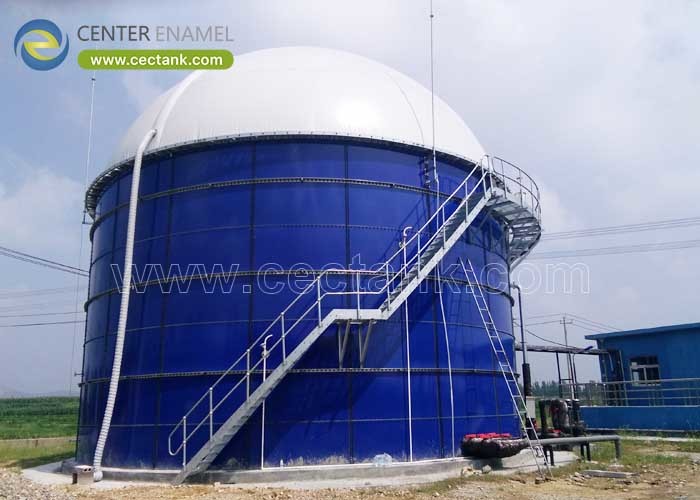
Double Wall Chemical Storage Tanks: Secondary Containment and Leak Detection
| Place of Origin: | China |
| Brand Name: | CEC TANKS |
| Certification: | ISO 9001:2008, AWWA D103 , OSHA , BSCI |
| Model Number: | W20160705006 |
| Minimum Order Quantity: | 1set |
| Price: | $5000~$20000 one set |
| Packaging Details: | PE poly-foam between each two steel plates ; wooden pallet and wooden box |
| Delivery Time: | 0-60 days after deposit received |
| Payment Terms: | L/C,T/T |
| Supply Ability: | 60 sets per month |
|
Detail Information |
|||
| Place of Origin | China | Brand Name | CEC TANKS |
|---|---|---|---|
| Certification | ISO 9001:2008, AWWA D103 , OSHA , BSCI | Model Number | W20160705006 |
| Coating Thickness: | 0.25mm~0.40mm , Two Layer Of Coating Internal And External | Tank Material: | Glass Fused To Steel |
| Steel Grade: | ART 310 | Roof Available: | Glass Fused Steel Roof , Membrane Roof, Aluminum Roof , GRP Roof |
| Highlight: | Double wall chemical storage tanks,Glass fused steel secondary containment tanks,Leak detection chemical storage tanks |
||
Product Description
Double Wall Chemical Storage Tanks: Secondary Containment and Leak Detection
A double wall chemical storage tank encloses the primary vessel in a sealed secondary wall so any leak is caught before it reaches soil or groundwater. For corrosive liquids this is often a permit requirement, not a preference. Engineered by Shijiazhuang Zhengzhong Technology Co., Ltd. (Center Enamel), a Glass-Fused-to-Steel (GFS) double-wall tank uses an inert enamel interior with a monitored interstice for reliable containment.
What a Double Wall Chemical Storage Tank Is
A double wall chemical storage tank has two concentric shells with an annular space between them. The inner wall holds the product; the outer wall provides secondary containment. The interstice is monitored so a breach of the primary wall is detected at the leak-detection point long before any release reaches the environment.
- Primary wall: Holds the chemical; may be GFS, steel, or lined steel.
- Interstice: Empty annular space, typically 50-150 mm wide, kept monitored.
- Secondary wall: Captures the full primary volume on failure.
- Monitor: Probe or sensor reports accumulation in the interstice.
Key Characteristics, Components, and Types
Double wall tanks differ by inner material and by monitoring method. Glass-Fused-to-Steel (GFS) gives an inert primary for aggressive chemistry; a steel primary with a secondary steel wall suits milder duty; and flexible or concrete outer walls serve fixed installations. Monitoring is by vacuum, pressure, or intrusive probe.
- Inner material: GFS enamel, epoxy-coated steel, or PE/FRP liner.
- Monitoring: Vacuum, pressure, or point-level leak detector in the interstice.
- Roof: Fixed or geodesic dome, sealed to keep the interstice dry.
- Basis of design: Secondary must hold 100% of the primary volume.
Applications and Operating Conditions
Double wall chemical storage tanks protect sites storing acids, caustics, solvents, and process reagents, especially where the tank sits over susceptible ground or inside a regulated facility. They are common at water-treatment chemical buildings, electroplating lines, and bulk-agriculture depots where a single spill carries a large penalty.
- Water treatment: Alum, ferric chloride, and sodium hypochlorite side tanks.
- Industrial: Acid and caustic day tanks near process lines.
- Agriculture: Fertilizer and adjuvant bulk storage.
- Siting: Over vulnerable soils or inside permit boundaries.
Technical Considerations
Specification starts from the chemical compatibility list, then sets the secondary volume to 100% of the primary and the interstice width to 50-150 mm for access and monitoring. The primary coating is chosen for the reagent; for aggressive acids a Glass-Fused-to-Steel (GFS) enamel fused at 820-930°C outperforms paint. Leak detection is wired to alarm and shutoff.
- Compatibility: Match enamel or liner to the reagent and its concentration.
- Containment: Secondary rated for 100% of primary volume.
- Detection: Interstice probe or vacuum monitor with alarm output.
- Standards: AWWA D103-09 shell, with local containment rules applied.
Advantages and Limitations
The double wall turns a catastrophic release into a monitored, contained event and usually satisfies the permit in one structure. A limitation is cost and weight: two walls, a monitored interstice, and more foundation load raise capital and civil cost, so the choice should be confirmed against the actual spill risk and the regulatory threshold rather than assumed.
- Advantage: Leak is contained and detected, not released.
- Advantage: Often satisfies secondary-containment rules directly.
- Limitation: Higher capital and foundation load than single wall.
- Limitation: Interstice must be kept dry and serviced to stay reliable.
Design Parameters
The values below define a defensible double wall chemical tank. They let the specifier confirm capacity, containment, and monitoring before fabrication and give the insurer the evidence that a breach will be caught, not missed.
| Design parameter | Typical value or range | Why it matters |
|---|---|---|
| Primary capacity | 10-5,000 m3 | Day or bulk storage volume |
| Interstice width | 50-150 mm | Access and monitor space |
| Secondary volume | 100% of primary | Full containment on breach |
| Coating DFT | 0.25-0.40 mm | Chemical resistance of wall |
| Fusion temperature | 820-930 °C | Enamel bond for GFS |
| Holiday test | 1500 V | Every square meter checked |
| Code basis | AWWA D103-09 / ISO 28765 | Design and enamel authority |
| Leak detect | Vacuum or probe | Early breach alarm |
| Design life | 30-50 years | With inspection plan |
| Operating temp | -10 to 60 °C | Reagent and climate |
| Limitation to check | Reagent concentration | Confirm compatibility |
Comparison and Selection Guide
Against a single-wall tank plus a concrete bund, the double wall keeps containment integral to the vessel and simplifies monitoring. Use the table to weigh the double wall against a lined single wall and a bundled approach for your reagent and site.
| Criterion | Double wall GFS | Single wall + bund | Lined steel tank | FRP tank |
|---|---|---|---|---|
| Secondary containment | Integral, 100% | External bund | None unless added | None unless added |
| Leak detection | Interstice monitor | Visual only | Visual only | Visual only |
| Chemical resistance | Inert enamel | Coating-dependent | Liner-dependent | Resin-dependent |
| Footprint | Compact | Large bund | Compact | Compact |
| Best fit | Regulated sites | Open yards | Mild reagents | Small neat duty |
Best Practices: How to Choose
Specify the secondary volume at 100% of the primary, name the monitoring method, and require a coating proof for the reagent. Shijiazhuang Zhengzhong Technology Co., Ltd. (Center Enamel) provides the compatibility statement, the holiday-test report, and the interstice monitoring detail so the tank meets both the process and the permit.
- Require: Secondary rated for 100% of primary volume.
- Specify: Vacuum or probe leak detection with alarm.
- Verify: Enamel DFT 0.25-0.40 mm and holiday test at 1500 V.
- Confirm: Reagent concentration is within the coating's range.
A double wall chemical storage tank is the difference between a contained, alarmed event and a reportable release. Set the secondary at 100% of the primary, monitor the interstice, and prove the coating against the actual reagent, and the tank will satisfy the regulator and protect the site for decades.
Frequently Asked Questions (FAQ)
What is the purpose of a double wall chemical tank?
The outer wall provides secondary containment and the monitored interstice catches any leak from the primary wall, so a breach is detected and contained instead of reaching soil or groundwater.
How is a leak detected in the interstice?
By vacuum hold, by pressure change, or by a point-level probe in the annular space; the signal is wired to an alarm and, where specified, to an automatic shutoff.
Can a Glass-Fused-to-Steel tank be double walled?
Yes. A GFS inner wall gives an inert surface for aggressive reagents, enclosed by a secondary steel wall with a monitored 50-150 mm interstice.
What capacity can a double wall tank reach?
Double wall builds typically span 10-5,000 m3 per vessel; larger bulk duty is met with multiple tanks or a bundled single-wall design.
Does the secondary wall need to hold the full volume?
Yes, the secondary containment is normally rated for 100% of the primary volume so a total inner-wall failure is fully captured.
Which standard applies to the shell?
The bolted shell follows AWWA D103-09, with local secondary-containment regulations applied on top for the interstice and the foundation.