-
Glass Fused To Steel Tanks (896)
-
Stainless Steel Tanks (434)
-
Fusion Bonded Epoxy Tanks (660)
-
Galvanized Steel Tanks (321)
-
Aluminum Dome Roofs (1336)
-
Wastewater Storage Tanks (280)
-
Welded Steel Tanks (457)
-
Pressure Vessels (505)
-
Anaerobic Digester (217)
-
Industrial Water Tanks (404)
-
Glass Lined Steel Tanks (180)
-
Bolted Steel Tanks (389)
-
Sludge Storage Tank (115)
-
Biogas Storage Tank (173)
-
Leachate Storage Tanks (133)
-
Agricultural Water Storage Tanks (179)
-
Fire Water Tank (166)
-
Grain Storage Silos (146)
-
Biogas Projects (424)
-
Wastewater Treatment Projects (1852)
-
Double Membrane Roof (223)
|
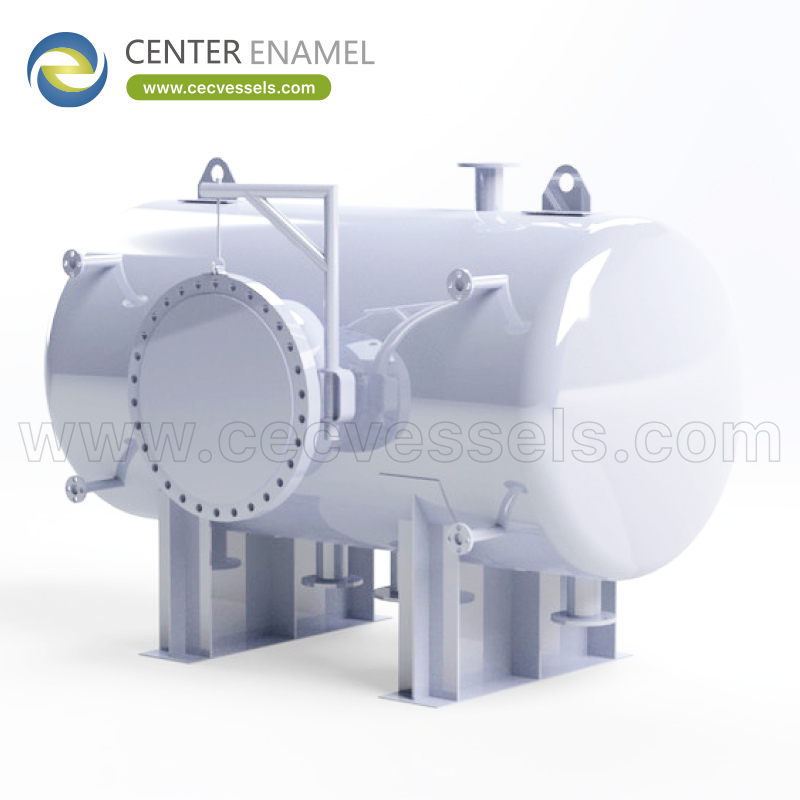
Pressure Vessel Fabrication From Plate To Hydrotest
| Place of Origin: | China |
| Brand Name: | Center Enamel |
| Certification: | ISO 9001,CE, NSF/ANSI 61, WRAS, ISO 28765, LFGB, BSCI, ISO 45001 |
| Minimum Order Quantity: | 1 Sets |
| Price: | 2000 |
| Delivery Time: | 2 months |
| Payment Terms: | L/C,T/T |
| Supply Ability: | 200 sets / days |
|
Detail Information |
|||
Product Description
Pressure Vessel Fabrication From Plate To Hydrotest
Pressure vessel fabrication converts an approved design into a code-stamped physical boundary through a controlled sequence: material receipt, cutting, forming, fit-up, welding, heat treatment, inspection and pressure test.
This guide walks that sequence and identifies the quality gate at each stage, so a buyer can see where a vessel's integrity is actually made - and what evidence to request.
Fabrication Scope Versus Design
Fabrication begins when the design is released. The shop's job is to realize the specified geometry and properties without degrading the material, and to record evidence at every step so the as-built vessel can be traced back to the calculation.
A capable shop plans the sequence before cutting: which seams will be welded, in what order, which need heat treatment, and where the inspection hold points sit. Poor sequencing turns a sound design into a distorted, hard-to-inspect vessel.
Material Receiving And Traceability
Plate, pipe and forgings arrive with mill test certificates tied to a heat or lot number. Fabrication starts by verifying that certificate against the ordered grade and by marking the material so its identity survives cutting into pieces.
This marking transfer - from full plate to each cut component - is what makes later traceability possible. Where the code or the customer requires it, material is also re-tested on receipt rather than accepted solely on the certificate.
Cutting And Plate Preparation
Plates are cut to developed shape by plasma, laser, waterjet or oxy-fuel depending on thickness and grade. The cut edge is then cleaned and machined to the weld bevel, because a sound weld starts with a clean, correctly angled joint preparation.
Heat-affected edges on some grades must be removed or treated before welding. Ignoring this step can leave hard, cracked-prone zones that no amount of later inspection will make acceptable.
Forming Shell Courses And Heads
Shell plates are rolled into courses on three- or four-roll machines, with pre-bending of the plate ends so the rolled course closes without a flat spot. Heads are formed by pressing or spinning, depending on diameter, thickness and quantity.
Forming changes thickness and can strain-harden the material; the shop measures thinning and, where required, restores properties with a suitable heat treatment before the part enters assembly.
Fit-Up And Welding Sequence
Courses are assembled on the longitudinal and circumferential seams with controlled alignment. Root gap, high-low (misalignment) and cleanliness are checked before welding, since fit-up defects are far easier to correct now than after the seam is closed.
Welding proceeds in a balanced sequence - back-stepping and alternating passes - to limit distortion and residual stress. The sequence is written into the procedure and witnessed for critical seams.
Post Weld Heat Treatment
Post weld heat treatment (PWHT) may be required by code, material thickness or service conditions to reduce residual stress and temper hardened zones. The vessel is heated to a controlled temperature, held for a set time per thickness, and cooled at a controlled rate.
The temperature-time record is charted and kept in the data book. PWHT is not optional where the code or the specified service demands it, and it must be planned into the schedule before inspection and testing.
NDT And Inspection Hold Points
Welds are examined by the methods the design calls for: radiography or ultrasonics for internal flaws in butt seams, magnetic particle or penetrant testing for surface-breaking flaws, plus visual and dimensional checks throughout.
A hold point is a stage where work cannot proceed until the inspection is accepted. Defining these points in advance - and agreeing who witnesses them - prevents the common failure of discovering a defect after the vessel has been closed up.
Hydrotest And Final Documentation
The completed vessel is hydrostatically tested at the code-specified multiple of allowable pressure, held while the boundary is examined for leakage and deformation, then drained and dried. A pneumatic test is used only where hydrotesting is not practical, with added safety controls.
The data book closes the loop: certificates, weld map, NDT reports, heat-treatment chart, test certificate and as-built drawings. A vessel without a complete data book is difficult to insure, register or resell.
Forming Method By Component
Component |
Common method |
Key control |
Shell course |
Three / four-roll |
Pre-bend, ovality |
Dished head |
Press or spin |
Thinning, knuckle |
Nozzle neck |
Pipe / forging |
Bevel, alignment |
Small parts |
Cut from plate |
Mark transfer |
Fabrication Hold Points
Stage |
Evidence released |
Material receipt |
Mill cert check, marking |
Pre-weld fit-up |
Gap / alignment record |
After welding |
NDT report |
After PWHT |
Time-temperature chart |
Final |
Hydrotest certificate |
Release |
As-built data book |
Conclusion
Pressure vessel fabrication is a chain of controlled stages, and the integrity of the finished vessel is set by the weakest link - often material traceability, fit-up or an unwitnessed hold point rather than the welding itself.
Before placing an order, ask the shop for its sequence and hold-point plan and a sample data book; those two documents reveal more about real capability than a general claim of experience.
About Center Enamel
Center Enamel is a pressure vessel and process equipment manufacturer based in China, producing stainless steel and carbon steel pressure vessels, separators, reactors, heat exchangers and storage tanks for chemical, oil and gas, power, food, pharmaceutical and water-treatment applications.
Fabrication is carried out under ASME VIII Div.1, GB/T 150 and ISO 9001 with CE/PED and NACE MR0175 / ISO 15156 options for sour service. Each unit is supplied with material traceability, documented welding procedures, NDT, hydrostatic testing and an export data book.
- Material range: Stainless steel (304 / 316L), duplex and carbon steel with rubber or epoxy lining for corrosion duty.
- Standards: ASME VIII Div.1, GB/T 150, ISO 9001, CE/PED, NACE MR0175 / ISO 15156.
- Commercial terms: Minimum order quantity 1 unit, typical lead time about 2 months, L/C or T/T.
Frequently Asked Questions (FAQ)
What is pressure vessel fabrication?
The controlled sequence that turns an approved design into a code-compliant vessel: material receipt, cutting, forming, welding, heat treatment, inspection and test.
Why is material traceability important?
It links every finished part back to its mill certificate through heat or lot numbers and marking transfer, which is required for code compliance and later verification.
What is a hold point?
A stage where fabrication must stop until a specified inspection is accepted and, where required, witnessed by the agreed party.
Which cutting methods are used?
Plasma, laser, waterjet and oxy-fuel, selected by thickness and grade; the cut edge is then machined to the weld bevel.
How are shell courses formed?
Plates are rolled on three- or four-roll machines with pre-bending of the ends so the course closes without a flat spot.
What does forming do to thickness?
It thins the plate slightly and can strain-harden some grades; thinning is measured and properties restored where required.
Why control welding sequence?
Balanced, back-step welding limits distortion and residual stress that a correct but poorly sequenced weld would leave in the shell.
What is PWHT and when is it needed?
Post weld heat treatment reduces residual stress and tempers hardened zones; it is required by code, thickness or service conditions in many cases.
Which NDT methods are typical?
Radiography and ultrasonics for internal weld flaws, magnetic particle or penetrant for surface flaws, plus visual and dimensional checks.
What pressure is a hydrotest done at?
At the multiple of allowable working pressure specified by the governing code, held while the boundary is examined for leakage and deformation.
When is a pneumatic test used?
Only where a hydrotest is impractical, and with additional safety controls because stored energy in a gas test is far higher.
What goes in the data book?
Material certificates, weld map, NDT reports, heat-treatment chart, pressure-test certificate and as-built drawings.
Can a defect be repaired after test?
Yes, but a repair reopens the inspection and often the test sequence; it is recorded in the weld map and data book.
What should a buyer check before ordering?
The fabrication sequence, the hold-point plan and a sample completed data book from a comparable vessel.
What is the typical lead time?
About two months from a China manufacturer for an engineered pressure vessel, subject to code, size and inspection scope.
Suggested CTA: Request a technical quotation with your duty, pressure, temperature and fluid data, or discuss your vessel specification with a Center Enamel engineer for a sized proposal.