-
Glass Fused To Steel Tanks (896)
-
Stainless Steel Tanks (434)
-
Fusion Bonded Epoxy Tanks (660)
-
Galvanized Steel Tanks (321)
-
Aluminum Dome Roofs (1336)
-
Wastewater Storage Tanks (280)
-
Welded Steel Tanks (457)
-
Pressure Vessels (505)
-
Anaerobic Digester (217)
-
Industrial Water Tanks (404)
-
Glass Lined Steel Tanks (180)
-
Bolted Steel Tanks (389)
-
Sludge Storage Tank (115)
-
Biogas Storage Tank (173)
-
Leachate Storage Tanks (133)
-
Agricultural Water Storage Tanks (179)
-
Fire Water Tank (166)
-
Grain Storage Silos (146)
-
Biogas Projects (424)
-
Wastewater Treatment Projects (1852)
-
Double Membrane Roof (223)
|
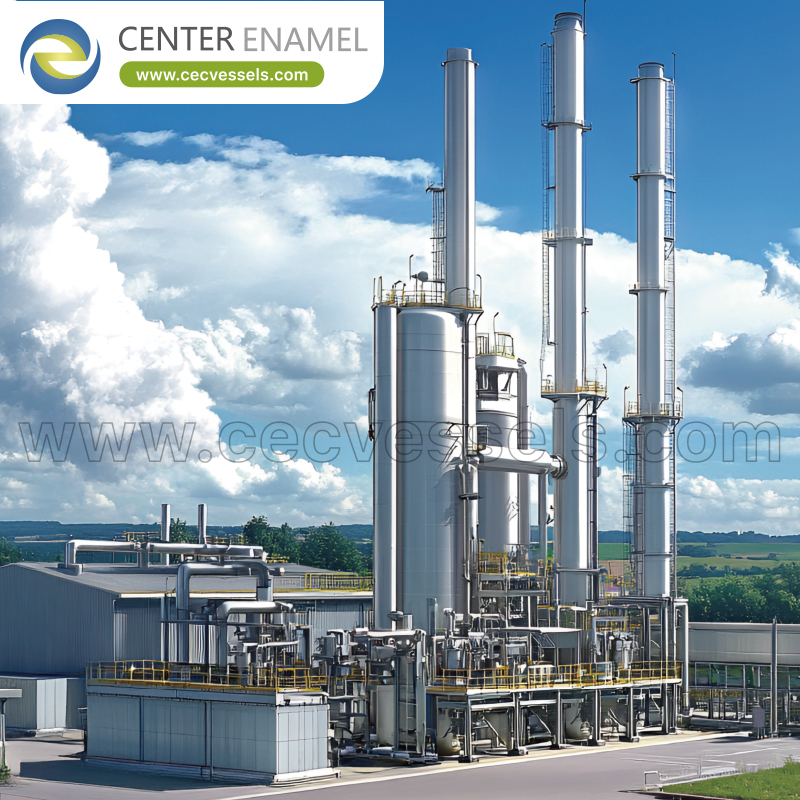
Pressure Vessel Design Codes Loads And Sizing Workflow
| Place of Origin: | China |
| Brand Name: | Center Enamel |
| Certification: | ISO 9001,CE, NSF/ANSI 61, WRAS, ISO 28765, LFGB, BSCI, ISO 45001 |
| Minimum Order Quantity: | 1 Sets |
| Price: | 2000 |
| Delivery Time: | 2 months |
| Payment Terms: | L/C,T/T |
| Supply Ability: | 200 sets / days |
|
Detail Information |
|||
Product Description
Pressure Vessel Design Codes Loads And Sizing Workflow
Pressure vessel design is the engineering discipline that turns a process duty into a code-compliant pressure boundary: it fixes geometry, wall thickness, materials, openings and supports so the vessel survives its load cases with an accepted margin.
This guide follows the actual design sequence - code selection, load identification, thickness calculation, external-pressure check, reinforcement and fatigue - using verifiable rules rather than rules of thumb.
What Pressure Vessel Design Actually Covers
Design is distinct from fabrication. It produces the calculation report, the general arrangement, the material specification and the inspection requirements that the shop later builds to. A sound design anticipates how the vessel will be made, but it is judged on whether the boundary is safe under every stated load.
The scope splits into mechanical sizing (shell and head thickness, reinforcement, supports), code compliance (the rules of the jurisdiction) and material selection. Each is a separate deliverable, and a weakness in any one of them cannot be compensated by the others.
Design Codes And Jurisdiction
The applicable code is set by where the vessel will be installed and by the customer, not by the preference of the builder. ASME BPVC Section VIII governs most North American and many international projects; EN 13445 is the harmonised European standard under the PED; GB/T 150 is the Chinese national code.
A vessel is designed to one primary code. Mixing formulas from different codes in a single calculation invalidates the compliance claim, so the design basis must name the code and edition before any sizing begins.
Load Cases The Designer Must Check
Internal pressure is the obvious case, but it is rarely the only one. External pressure or full vacuum can collapse a shell that is more than adequate in internal pressure; the static head of the liquid adds to bottom-course stress; wind and seismic loads act on tall vertical units.
Nozzle piping loads, support reactions, thermal expansion and cyclic pressure or temperature complete the list. A responsible design report states which cases were evaluated and which were excluded, with the reason for each exclusion.
Wall Thickness Calculation Basics
Under the ASME VIII-1 rule for a cylindrical shell under internal pressure, required thickness derives from pressure, radius, allowable stress and joint efficiency. Corrosion allowance and the plate negative tolerance are added to the calculated value before a nominal plate is selected.
Joint efficiency reflects the extent of radiographic examination of the longitudinal seam: a fully radiographed seam permits a higher efficiency and a thinner shell than a spot-examined one. The inspection plan is therefore a design input, not a shop afterthought.
External Pressure And Vacuum
External pressure is not internal pressure with the sign reversed. A shell under vacuum fails by elastic instability long before the material reaches its compressive strength, so thickness is checked against external-pressure charts that account for length, diameter and stiffening rings.
This is why a tank designed for low internal pressure can still require a much thicker shell - or additional vacuum breaker and stiffener details - if it can be subjected to full vacuum during cleaning, pump-out or a process upset.
Openings And Reinforcement
Every nozzle, manway or inspection opening removes load-bearing material and raises local stress. The area-replacement method restores the lost cross-section using surplus thickness in the shell, surplus thickness in the nozzle neck, a reinforcement pad, or a combination of these.
The reinforcement must lie within a defined zone around the opening; material placed outside that zone does not count. The designer also checks that adjacent openings do not share the same reinforcement area.
Fatigue And Cyclic Duty
A vessel that cycles pressure or temperature many times can fail at a stress far below its static allowable. Division 1 treats many services by rule with conservative detailing; Division 2 requires a fatigue screening and, where needed, a detailed stress analysis at discontinuities.
Cycle count, stress range and local geometry at heads, nozzles and supports drive the assessment. A duty that is safe for a batch vessel running tens of cycles a year may need a different design approach when the same vessel cycles several times an hour.
Design Output And The Data Book
The design deliverables are a calculation report, detailed drawings, a material take-off and a specification for welding, heat treatment and inspection. These documents are the contract between engineering and fabrication and later form part of the as-built data book.
A buyer should review the calculation basis - code, edition, load cases, corrosion allowance, joint efficiency - before release for fabrication, because changes at that stage are cheap and changes after welding are not.
Design Path By Code
Code |
Basis |
Typical use |
ASME VIII Div.1 |
Rule-based |
General process vessels |
ASME VIII Div.2 |
Stress-analysis based |
High pressure / cyclic |
EN 13445 |
Three design paths |
EU / PED projects |
GB/T 150 |
Rule-based |
China domestic / export |
Pressure Vessel Design Inputs
Input |
Why it matters |
Design pressure / temperature |
Sets thickness and material strength |
Fluid and corrosivity |
Sets corrosion allowance and grade |
Code and edition |
Defines all allowable stresses |
Vessel orientation |
Drives wind / seismic / head loads |
Cyclic duty |
Triggers fatigue assessment |
Vacuum possibility |
Triggers external-pressure check |
Inspection extent |
Sets joint efficiency |
Conclusion
Pressure vessel design is a sequence: choose the code, enumerate the load cases, size the boundary for internal and external pressure, restore strength at every opening, then address fatigue and supports.
The value of a design is in the stated assumptions. Review the basis - not just the final thickness - before fabrication, and keep the calculation report with the as-built data book.
About Center Enamel
Center Enamel is a pressure vessel and process equipment manufacturer based in China, producing stainless steel and carbon steel pressure vessels, separators, reactors, heat exchangers and storage tanks for chemical, oil and gas, power, food, pharmaceutical and water-treatment applications.
Fabrication is carried out under ASME VIII Div.1, GB/T 150 and ISO 9001 with CE/PED and NACE MR0175 / ISO 15156 options for sour service. Each unit is supplied with material traceability, documented welding procedures, NDT, hydrostatic testing and an export data book.
- Material range: Stainless steel (304 / 316L), duplex and carbon steel with rubber or epoxy lining for corrosion duty.
- Standards: ASME VIII Div.1, GB/T 150, ISO 9001, CE/PED, NACE MR0175 / ISO 15156.
- Commercial terms: Minimum order quantity 1 unit, typical lead time about 2 months, L/C or T/T.
Frequently Asked Questions (FAQ)
What is pressure vessel design?
The engineering process that defines a vessel's geometry, thickness, materials, openings and supports so the pressure boundary is safe under its stated load cases.
Which code should a design follow?
The one required by the installation jurisdiction and the customer: ASME VIII for most international projects, EN 13445 under the PED, or GB/T 150 in China.
Can formulas from different codes be mixed?
No. A compliance claim is valid only against one named code and edition; mixing rules invalidates the calculation.
What is wall thickness calculation based on?
Pressure, radius, allowable stress and joint efficiency, with corrosion allowance and plate negative tolerance added before selecting nominal plate.
Why check external pressure separately?
A shell under vacuum fails by elastic instability, not compressive yield, so it is checked against external-pressure rules with length, diameter and stiffeners.
What is joint efficiency?
A reduction factor tied to the extent of weld radiography; full radiography permits higher efficiency and a thinner shell than spot examination.
What does area replacement do?
It restores the cross-section lost at a nozzle or manway using surplus shell thickness, nozzle thickness, a pad, or a combination within a defined zone.
When is fatigue analysis needed?
When pressure or temperature cycles are frequent enough that stress range and cycle count could cause failure below the static allowable.
What is corrosion allowance?
Extra thickness added to the calculated value to compensate for expected material loss in service; it is a design provision, not a life guarantee.
What belongs in a design data book?
Calculation report, drawings, material certificates, weld and NDT records, heat-treatment chart and the pressure test certificate.
Does design include supports?
Yes. Support reactions, saddle or lug loads and their effect on the shell are part of the design scope.
What is MAWP?
Maximum Allowable Working Pressure - the pressure rating established by the code calculation, which may exceed the nominal design pressure.
Can design be changed after welding starts?
Technically yes, but changes after fabrication begins are costly; the design basis should be frozen and reviewed before release.
What does a buyer review first?
The design basis: code and edition, load cases, corrosion allowance, joint efficiency and material selection, before the final thickness figure.
How long does a design take?
It depends on complexity and code route; a bespoke engineered vessel is commonly scheduled around a roughly two-month build window from a China manufacturer.
Suggested CTA: Request a technical quotation with your duty, pressure, temperature and fluid data, or discuss your vessel specification with a Center Enamel engineer for a sized proposal.