-
Glass Fused To Steel Tanks (896)
-
Stainless Steel Tanks (434)
-
Fusion Bonded Epoxy Tanks (660)
-
Galvanized Steel Tanks (321)
-
Aluminum Dome Roofs (1336)
-
Wastewater Storage Tanks (280)
-
Welded Steel Tanks (457)
-
Pressure Vessels (485)
-
Anaerobic Digester (217)
-
Industrial Water Tanks (384)
-
Glass Lined Steel Tanks (180)
-
Bolted Steel Tanks (389)
-
Sludge Storage Tank (115)
-
Biogas Storage Tank (173)
-
Leachate Storage Tanks (133)
-
Agricultural Water Storage Tanks (179)
-
Fire Water Tank (166)
-
Grain Storage Silos (146)
-
Biogas Projects (424)
-
Wastewater Treatment Projects (1832)
-
Double Membrane Roof (223)

|
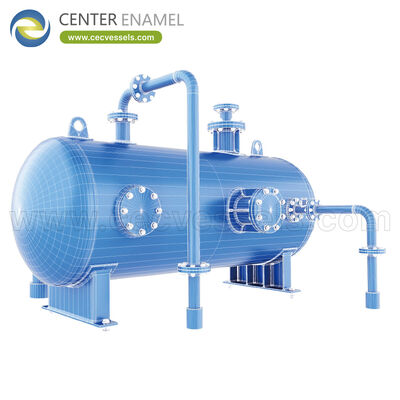
Water Treatment Pressure Vessel Filter Vessels RO And Deaerator Design
| Place of Origin: | China |
| Brand Name: | Center Enamel |
| Certification: | ISO 9001,CE, NSF/ANSI 61, WRAS, ISO 28765, LFGB, BSCI, ISO 45001 |
| Minimum Order Quantity: | 1 Sets |
| Price: | 2000 |
| Delivery Time: | 2 months |
| Payment Terms: | L/C,T/T |
| Supply Ability: | 200 sets / days |
|
Detail Information |
|||
Product Description
Water Treatment Pressure Vessel Filter Vessels RO And Deaerator Design
A water treatment pressure vessel does the work a tank cannot: it holds filter media, membrane elements or resin under pressure so water flows through treatment instead of merely being stored.
This guide covers the main vessel types in filtration, reverse osmosis and demineralisation, and how each is specified for pressure, material and code without inventing performance figures.
Pressure Vessels Versus Storage Tanks In Water
Clarifiers and storage tanks hold water at low or no pressure; a pressure vessel is where the treatment actually happens - media filtration, membrane separation or ion exchange under a pressure differential.
That difference decides the code path: treatment vessels are ASME VIII Div.1 or GB/T 150 rated where the pressure and risk require it, while the associated balance tank stays a tank.
Filter Vessels: Media And Carbon
Multi-media and activated-carbon filter vessels hold the media bed and direct flow through it under pressure, removing suspended solids, chlorine and organics before membrane or process use.
Sizing follows the service flow rate and the required contact or empty-bed time; internal distributors and support grids keep the bed stable and prevent media blow-by to the downstream train.
RO Pressure Vessels: FRP Versus Metal
Reverse-osmosis pressure vessels house the spiral-wound membrane elements and see high feed pressure - often tens of bar in seawater desalination. They are commonly FRP composites rated for the pressure and the brackish or seawater environment.
Metal RO housings exist for specific duties, but the dominant specification point is the pressure rating, the element count and the end-cap seal that must hold the full feed pressure without weeping.
Deaerators And Oxygen Control
Deaerator vessels remove dissolved oxygen and other gases from boiler feed or process water, typically under slight pressure with a packed or tray section and a steam or vacuum arrangement.
They are pressure vessels by function and code, and their internals - distribution, packing, vent - answer the stripping duty rather than just the shell pressure.
Ion Exchange Pressure Vessels
Softening and demineralisation use resin-filled pressure vessels where water passes through the bed under pressure and is regenerated in place. The vessel must hold the bed, the distributors and the regenerant chemistry.
Material choice follows the water and regenerant corrosivity; 316L or lined carbon steel is common where chloride or acid regenerant demands more resistance than plain carbon steel.
Material And Corrosion In Water Service
Potable and process water vary from benign to chlorinated and mildly corrosive; the vessel material and any lining follow the water analysis and the regenerant, not a generic 'stainless' assumption.
Where the shell is carbon steel, internal lining or coating protects against under-deposit and pitting, and the lining integrity is verified as part of acceptance.
Code, Marking And Documentation
Pressure-rated treatment vessels follow ASME VIII Div.1 or GB/T 150 with CE/PED for the EU where applicable; the rating, the nozzle loads and the internals are all part of the documented design.
Material certificates, NDT where required, hydrostatic test and the data report form the package, alongside any water-contact or potable-certification evidence the market requires.
Specification Checklist For Buyers
State the treatment duty (filter, RO, deaerator, IX), the design pressure and temperature, the flow rate, the water analysis and regenerant, and the required code and marking in the purchase order.
Confirm the builder can deliver the rated shell and the correct internals together, and verify a sample data book before award.
Water-Treatment Vessel Types
Type |
Pressure |
Core internal |
Media / carbon filter |
Moderate |
Distributor + bed |
RO housing |
High (tens bar) |
End-cap seal |
Deaerator |
Slight / vac |
Packing / tray |
Ion exchange |
Moderate |
Resin + distributors |
All |
Code rated |
Documented design |
Water-Treatment Vessel Spec Inputs
Input |
Why it matters |
Treatment duty |
Sets internal design |
Design pressure |
Defines boundary |
Flow rate |
Sizes bed / elements |
Water analysis |
Drives material |
Regenerant |
Corrosion + lining |
Code + marking |
Pressure approval |
Conclusion
A water-treatment pressure vessel is where filtration, RO or ion exchange actually happens under pressure, so it is specified for the duty, the rating, the internal design and the code - not as a storage shell.
Match the material and any lining to the water analysis and regenerant, confirm the rated shell and internals are delivered together, and verify a sample data book before award.
About Center Enamel
Center Enamel is a pressure vessel and process equipment manufacturer based in China, producing stainless steel and carbon steel pressure vessels, separators, reactors, heat exchangers and storage tanks for chemical, oil and gas, power, food, pharmaceutical and water-treatment applications.
Manufacturing is carried out under ASME VIII Div.1, GB/T 150 and ISO 9001 with CE/PED and NACE MR0175 / ISO 15156 options for sour service. Each unit is supplied with material traceability, hydrostatic or pneumatic testing, NDT and export documentation.
- Material range: Stainless steel (304 / 316L), duplex, carbon steel with rubber or epoxy lining for corrosion duty.
- Standards: ASME VIII Div.1, GB/T 150, ISO 9001, CE/PED, NACE MR0175 / ISO 15156.
- Commercial terms: Minimum order quantity 1 unit, typical lead time about 2 months, L/C or T/T.
Frequently Asked Questions (FAQ)
What is a water treatment pressure vessel?
A code vessel where treatment happens under pressure - media filtration, RO membrane housing, deaeration or ion exchange - not merely storage.
Is a filter tank the same as a storage tank?
No; a filter vessel holds media and drives flow under pressure, while a storage tank holds water at low or no pressure.
What are RO pressure vessels made of?
Commonly FRP composites rated for the high feed pressure, especially in brackish or seawater RO; metal housings exist for specific duties.
What pressure does RO see?
Often tens of bar in seawater desalination; the vessel and end-cap seal must hold the full feed pressure.
What is a deaerator vessel?
A pressure vessel that strips dissolved oxygen and gases from feed water, typically with packing or trays under slight pressure or vacuum.
Which material for water service?
Follows the water analysis and regenerant; 316L or lined carbon steel where chloride or acid demands more resistance than plain CS.
When is lining needed?
Where the shell is carbon steel in chlorinated or corrosive water; lining integrity is verified at acceptance.
Which code applies?
Pressure-rated vessels follow ASME VIII Div.1 or GB/T 150, with CE/PED for the EU where applicable.
What internals matter?
Distributors, support grids, packing, resin beds and end-cap seals - each answers the process, not just the shell.
What documents prove compliance?
Material certs, NDT where required, hydrostatic test and the data report, plus potable/water-contact evidence if required.
How is flow rate used?
It sizes the media bed, contact time or membrane element count for the duty.
How long to fabricate?
About 2 months from a China manufacturer for an engineered vessel scheduled around certification.
What should the PO state?
Treatment duty, design pressure/temperature, flow, water analysis, regenerant and required code/marking.
Why verify the data book early?
It proves the rated shell and internals match the specification before the vessel is built.
Can one vessel serve multiple duties?
Usually no; each duty has distinct internals and rating, so specify per service.
Suggested CTA: Request a technical quotation with your duty, pressure, temperature and fluid data, or discuss your project with a Center Enamel engineer for a sized proposal.