-
Glass Fused To Steel Tanks (734)
-
Stainless Steel Tanks (434)
-
Fusion Bonded Epoxy Tanks (592)
-
Galvanized Steel Tanks (321)
-
Aluminum Dome Roofs (1336)
-
Wastewater Storage Tanks (237)
-
Welded Steel Tanks (457)
-
Pressure Vessels (295)
-
Anaerobic Digester (202)
-
Industrial Water Tanks (349)
-
Glass Lined Steel Tanks (180)
-
Bolted Steel Tanks (389)
-
Sludge Storage Tank (115)
-
Biogas Storage Tank (173)
-
Leachate Storage Tanks (133)
-
Agricultural Water Storage Tanks (179)
-
Fire Water Tank (166)
-
Grain Storage Silos (146)
-
Biogas Projects (424)
-
Wastewater Treatment Projects (1430)
-
Double Membrane Roof (223)

|
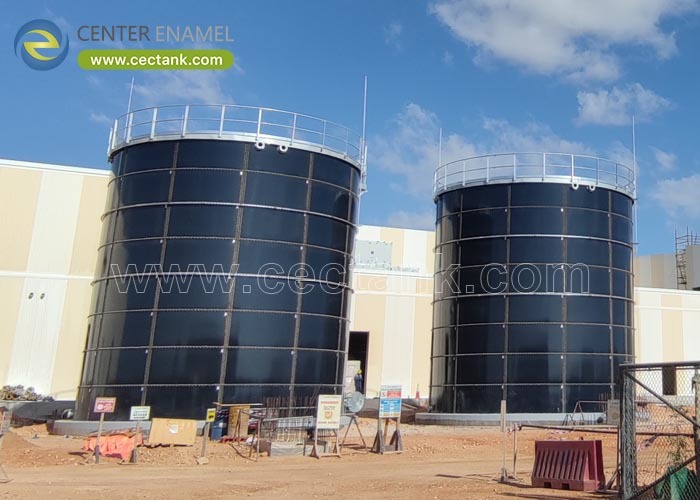
18000 m3 Drinking Water Tanks: Holding Water Quality at Scale
| Place of Origin: | China |
| Brand Name: | CEC TANKS |
| Certification: | ISO 9001:2008, AWWA D103 , OSHA , BSCI |
| Model Number: | W |
| Minimum Order Quantity: | 1set |
| Price: | $5000~$20000 one set |
| Packaging Details: | PE poly-foam between each two steel plates ; wooden pallet and wooden |
| Delivery Time: | 10-30 days after deposit received |
| Payment Terms: | L/C,T/T |
| Supply Ability: | 60 sets per month |
|
Detail Information |
|||
| Place of Origin | China | Brand Name | CEC TANKS |
|---|---|---|---|
| Certification | ISO 9001:2008, AWWA D103 , OSHA , BSCI | Model Number | W |
| Tank Material: | Glass Fused To Steel | Foundation: | Concrete Or Glass Fused Steel |
| Steel Plates Thickness: | 3mm To 12mm , Depends On The Tank Structure | Size Of Panel: | 2.4M * 1.2M |
| Easy To Clean: | Smooth, Glossy, Inert, Anti-adhesion | Permeability: | Gas / Liquid Impermeable |
| Highlight: | 18000 m3 drinking water tanks,glass fused to steel water tanks,large capacity drinking water storage |
||
Product Description
At small scale, a drinking water tank is a volume problem: store enough to cover the peak and the emergency. At 18000 m3 it becomes a water quality problem as well. The volume that gives an operator real resilience also gives the water time - time for disinfectant residual to decay, for temperature layers to form, and for pockets of water to sit still while the rest of the tank turns over. Capacity bought as security can quietly become a quality liability.
The design response is to shape how water moves through the tank rather than simply how much it holds. Shijiazhuang Zhengzhong Technology Co., Ltd. (Center Enamel) supplies large potable storage engineered to AWWA D103-09 with product contact approval, and treats residence time and turnover as design parameters alongside shell thickness.
Water quality in storage is a function of time and of movement. Both behave differently in a tank this large, and both are manageable once they are treated as design inputs rather than as consequences.
- Residence Time: The longer water stands, the more disinfectant residual decays. At 18000 m3, residence is measured in days rather than hours, which makes it a design parameter.
- Disinfectant Decay: Residual declines with time, temperature and water quality. Storage volume should be matched to the demand profile so that water is not held longer than it needs to be.
- Stratification: Large volumes stratify by temperature. Layers that do not mix shield parts of the tank from the residual and complicate temperature management.
- Short-Circuiting: Without careful inlet and outlet arrangement, incoming water can reach the outlet quickly while other parts of the tank barely move, creating effectively stagnant zones.
- Inspection and Cleaning Access: A tank this size has to be inspectable and cleanable without a major outage. Access and drainage are design items, not afterthoughts.
The aim is to keep the whole volume moving rather than just the volume between the inlet and the outlet. Geometry and layout do most of the work, and they cost little at design stage.
- Inlet and Outlet Placement: Separating inlet and outlet and positioning them to promote movement through the whole volume is the cheapest and most effective measure available.
- Baffles or Separate Cells: Baffle walls or a two-cell arrangement allow one side to be taken out of service for cleaning while the other continues supplying, which also improves turnover.
- Sizing to the Demand Profile: Balance the storage components - operational balancing, fire reserve and emergency reserve - against the actual diurnal demand curve rather than against a multiple of daily use.
- Residual Management: Where residence is unavoidably long, provision for monitoring and, if needed, re-dosing keeps residual within the required band through the whole volume.
- Monitoring Points: Residual and temperature measurement at more than one level and more than one location makes stratification and stagnation visible before they become compliance issues.
At this diameter the vessel is a significant structure, and the potable duty adds a product contact requirement that is independent of the structural one.
- Shell and Foundation Design: Course-by-course shell thickness to AWWA D103-09, with a ring beam designed for the load and the local soil, and wind and seismic design for the site.
- Roof Choice: An aluminium geodesic dome gives a clear span with no internal columns, which keeps the interior unobstructed for cleaning and inspection and excludes light that would support growth.
- Product Contact Approval: NSF/ANSI 61 or WRAS depending on the market, covering what the materials contribute to the water. This is separate from, and additional to, corrosion resistance.
- Coating System: ISO 28765 for the glass-fused-to-steel system, with grade by zone and holiday testing at 1500 V across the full surface.
- Security and Access: Sealed access points, lockable manways and screened vents protect the stored water, and safe internal access provisions make inspection and cleaning practical.
| Design Question | Small Potable Tank | 18000 m3 Potable Tank |
|---|---|---|
| Governing concern | Volume to cover peak and emergency demand | Volume plus residence time and residual decay |
| Flow behaviour | Mixing is largely incidental and effective | Short-circuiting and stratification have to be designed against |
| Inlet and outlet | Position has limited effect on quality | Separation and positioning determine turnover of the whole volume |
| Cleaning strategy | Drain and clean as one operation | Cells or staged operation allow cleaning without losing supply |
| Structural design | Standard shell and foundation design | Course-by-course design, ring beam and wind and seismic provisions at scale |
Every tank delivered by Shijiazhuang Zhengzhong Technology Co., Ltd. (Center Enamel) is engineered against AWWA D103-09 and EN 1090 with finite element verification of shell, roof and nozzle loads, fused at 820-930°C under ISO 9001 and ISO 45001 control, holiday tested at 1500 V across one hundred percent of the surface, and assembled with Grade 8.8 bolts and manufacturer-certified sealant. Large potable tanks are engineered to AWWA D103-09 with course-by-course shell design, ring beam and wind and seismic provisions for the site, a clear-span aluminium dome roof, glass-fused-to-steel coating fused at 820-930 degrees Celsius and holiday tested at 1500 V, product contact approval to NSF/ANSI 61 or WRAS, coating system to ISO 28765, and a layout with inlet, outlet, monitoring and access provisions designed around turnover and inspection.
"At 18000 m3 the question stops being how much water you hold and becomes how long any of it stays still." -
By adding the storage components the system needs - operational balancing against the diurnal demand curve, fire reserve, and emergency reserve - rather than by applying a multiple of average daily demand. Matching the volume to the actual demand profile also keeps residence time short, which protects residual.
Because residual decays with time, temperature and water quality. In a tank this size water can stand for days, so the volume has to be matched to the turnover the system achieves. Where long residence is unavoidable, monitoring and provision for re-dosing keep residual within the required band.
Large volumes develop temperature layers, and layers that do not mix shield parts of the tank from the disinfectant residual and complicate temperature management. Inlet and outlet placement, and monitoring at more than one level, make stratification visible and manageable.
Yes. Capacity and geometry, inlet and outlet arrangement, cell or baffle provision, monitoring points, roof type, coating grade by zone, access and security provisions and the approvals required in your market are all configured to the system's demand profile and the site conditions.