-
Glass Fused To Steel Tanks (749)
-
Stainless Steel Tanks (434)
-
Fusion Bonded Epoxy Tanks (592)
-
Galvanized Steel Tanks (321)
-
Aluminum Dome Roofs (1336)
-
Wastewater Storage Tanks (237)
-
Welded Steel Tanks (457)
-
Pressure Vessels (295)
-
Anaerobic Digester (202)
-
Industrial Water Tanks (349)
-
Glass Lined Steel Tanks (180)
-
Bolted Steel Tanks (389)
-
Sludge Storage Tank (115)
-
Biogas Storage Tank (173)
-
Leachate Storage Tanks (133)
-
Agricultural Water Storage Tanks (179)
-
Fire Water Tank (166)
-
Grain Storage Silos (146)
-
Biogas Projects (424)
-
Wastewater Treatment Projects (1440)
-
Double Membrane Roof (223)

|
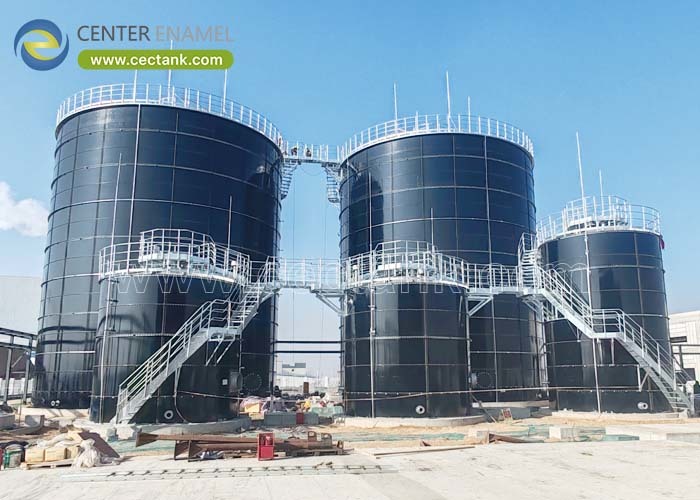
Steel Sludge Storage Tanks Made in China: What to Verify, Not Assume
| Place of Origin: | China |
| Brand Name: | CEC TANKS |
| Certification: | ISO 9001:2008, AWWA D103 , OSHA , BSCI |
| Model Number: | W |
| Minimum Order Quantity: | 1set |
| Price: | $5000~$20000 one set |
| Packaging Details: | PE poly-foam between each two steel plates ; wooden pallet and wooden |
| Delivery Time: | 10-30 days after deposit received |
| Payment Terms: | L/C,T/T |
| Supply Ability: | 60 sets per month |
|
Detail Information |
|||
| Place of Origin | China | Brand Name | CEC TANKS |
|---|---|---|---|
| Certification | ISO 9001:2008, AWWA D103 , OSHA , BSCI | Model Number | W |
| Tank Body Color: | Dark Green / Can Be Customized | Corrosion Integrity: | Excellent |
| Steel Plates Thickness: | 3mm To 12mm , Depends On The Tank Structure | Chemical Resistance: | Excellent |
| Size Of Panel: | 2.4M * 1.2M | Easy To Clean: | Smooth, Glossy, Inert, Anti-adhesion |
| Highlight: | Steel sludge storage tanks with warranty,Glass fused steel storage tanks,China-made sludge storage tanks |
||
Product Description
Sludge is where a tank specification is most likely to be quietly wrong. The liquid phase looks unremarkable, the corrosion rates in a generic materials table look manageable, and then the tank is commissioned and the roof and upper courses start working loose within a few years. The reason is that the damage does not happen where the liquid is. It happens in the vapour space, where biology produces gas that turns into acid on damp steel.
Buying from China does not change any of that, but it does add a verification step, because the buyer is usually not standing on the shop floor when the panels are fired. Shijiazhuang Zhengzhong Technology Co., Ltd. (Center Enamel) has manufactured sludge tanks since 2008 and supplies to more than 100 countries, and the checks below are the ones worth asking any supplier to satisfy.
Sludge combines several attack mechanisms that rarely coincide, and it does so while sitting still for long periods. A tank designed against immersion corrosion alone will be under-protected exactly where it fails.
- Septicity and Sulphide: Once sludge stands, sulphate-reducing bacteria generate hydrogen sulphide. On damp surfaces above the liquid line it oxidises to sulphuric acid.
- Vapour Space Attack: Acid concentrates at the roof and upper courses rather than at the floor, so the highest coating grade belongs at the top of the tank, not the bottom.
- Grit and Abrasion: Settled grit scours the floor and the lower wall during discharge, so abrasion resistance matters as much as chemical resistance in the lower zone.
- Long Standing Time: A buffer tank ahead of a dewatering line may sit for days between draws, which lets acidity build to levels a continuously fed tank never reaches.
- Odour as a Constraint: Gas escaping at a seam is a neighbourhood and regulatory problem on a sludge site, so gas tightness is part of the specification rather than a finish detail.
Match the construction to the sludge rather than to habit. Municipal and industrial sludges differ, and dewatered sludge behaves very differently from liquid sludge.
- Liquid Municipal Sludge: Glass-fused-to-steel with two-coat-two-fire above the liquid line and two-coat-one-fire in permanent immersion, with a sulphide-compatible sealant.
- Industrial Sludge: Three-coat-three-fire where the stream carries solvents, elevated chlorides or a wider pH range, and explicit confirmation of sealant compatibility.
- Dewatered Sludge Storage: Abrasion dominates once the water is removed. A hard surface and a discharge arrangement that minimises the distance material travels across the plate matter most.
- Digested Sludge: Lower sulphide generation but sustained ammonia and warmth, which suits the same vitreous system with attention to the sealant and to any metallic fittings.
- Stainless Where Justified: Stainless suits some industrial sludges, but warm chloride-bearing sludge is the case where it performs badly and a vitreous coating performs well.
Distance makes documentation more important, not less. The useful evidence is produced during manufacture, so it has to be requested before production rather than after shipment.
- In-House Coating: Ask whether the supplier fires its own enamel. Coating quality cannot be subcontracted and then certified, and a fired bond cannot be verified after the fact.
- Furnace Records: Request temperature and time charts for the production run, tied to the panels in your order through the panel marking system.
- Test Coverage: Holiday test coverage records at the specified voltage, plus thickness, adhesion and hardness results from the same batch or from witness pieces.
- Relevant References: Ask for sludge installations with a comparable sludge type and climate, and ask how long they have been in service rather than when they were shipped.
- Third-Party Inspection: Arrange pre-shipment inspection with a defined punch list. It is the last point at which a defect is inexpensive to correct.
| Sludge Type | Dominant Attack | Recommended Construction |
|---|---|---|
| Liquid municipal sludge | Sulphide, vapour space acid, odour at the seams | GFS 2C2F above liquid line, 2C1F immersed, sulphide-rated sealant |
| Industrial sludge | Wider pH, chlorides, possible solvents | GFS 3C3F with confirmed sealant and gasket compatibility |
| Dewatered sludge | Abrasion and handling damage rather than corrosion | Hard vitreous surface with a discharge path that limits drag across the plate |
| Digested sludge | Ammonia and sustained warmth | Vitreous system with attention to sealant and metallic fittings |
| Warm chloride-bearing sludge | Pitting and stress corrosion in stainless | Impermeable glass layer rather than stainless steel |
Every tank delivered by Shijiazhuang Zhengzhong Technology Co., Ltd. (Center Enamel) is engineered against AWWA D103-09 and EN 1090 with finite element verification of shell, roof and nozzle loads, fused at 820-930°C under ISO 9001 and ISO 45001 control, holiday tested at 1500 V across one hundred percent of the surface, and assembled with Grade 8.8 bolts and manufacturer-certified sealant. Sludge tanks are manufactured with coating grade selected by zone, fused at 820-930 degrees Celsius and holiday tested at 1500 V, engineered to AWWA D103-09 and EN 1090, supplied with sulphide-compatible sealants, gas-tight roof options, mixing and discharge penetrations formed before firing, and documented with mill certificates, furnace charts, test records and pre-shipment inspection for export.
Because hydrogen sulphide rises and oxidises on damp surfaces above the liquid line, forming sulphuric acid. The immersed wall sees a much milder environment, while the roof and upper courses see acid and condensation. That is why coating grade on a sludge tank is specified by zone rather than uniformly.
For liquid sludge with septicity, generally yes, because the fired vitreous surface is inert and impermeable where an organic film can blister and soften. Epoxy remains a reasonable choice for milder, dewatered or short-residence duties where the temperature and chemical limits are respected.
Ask for evidence produced during manufacture rather than certificates issued after it: furnace charts tied to panel numbers, holiday test coverage, thickness and adhesion results, and a pre-shipment inspection with a defined punch list. Confirm the supplier fires its own coating, since a fired bond cannot be checked afterwards.
Yes. Volume, coating grade by zone, sealant chemistry, roof and gas handling, mixing provision, discharge arrangement, instrumentation and access are all configured to the sludge analysis, the residence time and the site conditions, and confirmed before production.