-
Glass Fused To Steel Tanks (749)
-
Stainless Steel Tanks (434)
-
Fusion Bonded Epoxy Tanks (592)
-
Galvanized Steel Tanks (321)
-
Aluminum Dome Roofs (1336)
-
Wastewater Storage Tanks (237)
-
Welded Steel Tanks (457)
-
Pressure Vessels (295)
-
Anaerobic Digester (202)
-
Industrial Water Tanks (349)
-
Glass Lined Steel Tanks (180)
-
Bolted Steel Tanks (389)
-
Sludge Storage Tank (115)
-
Biogas Storage Tank (173)
-
Leachate Storage Tanks (133)
-
Agricultural Water Storage Tanks (179)
-
Fire Water Tank (166)
-
Grain Storage Silos (146)
-
Biogas Projects (424)
-
Wastewater Treatment Projects (1440)
-
Double Membrane Roof (223)

|
Durable Sludge Storage Tanks: The Choices That Decide Service Life
| Place of Origin: | China |
| Brand Name: | CEC TANKS |
| Certification: | ISO 9001:2008, AWWA D103 , OSHA , BSCI |
| Model Number: | W |
| Minimum Order Quantity: | 1set |
| Price: | $5000~$20000 one set |
| Packaging Details: | PE poly-foam between each two steel plates ; wooden pallet and wooden |
| Delivery Time: | 10-30 days after deposit received |
| Payment Terms: | L/C,T/T |
| Supply Ability: | 60 sets per month |
|
Detail Information |
|||
| Place of Origin | China | Brand Name | CEC TANKS |
|---|---|---|---|
| Certification | ISO 9001:2008, AWWA D103 , OSHA , BSCI | Model Number | W |
| Tank Body Color: | Dark Green / Can Be Customized | Corrosion Integrity: | Excellent |
| Steel Plates Thickness: | 3mm To 12mm , Depends On The Tank Structure | Chemical Resistance: | Excellent |
| Size Of Panel: | 2.4M * 1.2M | Easy To Clean: | Smooth, Glossy, Inert, Anti-adhesion |
| Highlight: | durable sludge storage tanks,glass fused steel sludge tanks,long service life storage tanks |
||
Product Description
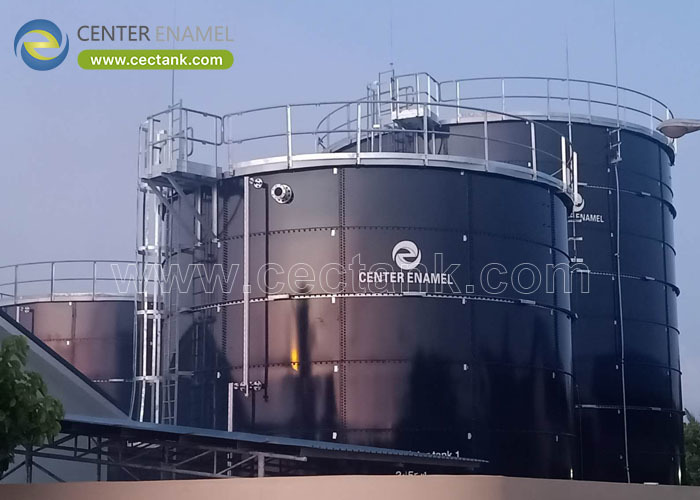
Durable Sludge Storage Tanks: The Choices That Decide Service Life
Sludge tanks do not usually fail dramatically. They deteriorate at the top, wear at the bottom, and start letting odour out at the seams somewhere in between - and by the time any of it is obvious from the ground, the useful life has already shortened considerably. Durability on this duty is not a property you buy; it is the result of a handful of choices made before the tank was built and a small amount of attention afterwards.
Those choices are worth naming, because they are the difference between a tank that needs attention in a decade and one that does not. Shijiazhuang Zhengzhong Technology Co., Ltd. (Center Enamel) has supplied sludge tanks since 2008 and specifies this duty by zone, which is the single most important decision on the list.
1. What Consumes a Sludge Tank?
Sludge attacks in several places at once, and the mechanisms are different at the top and the bottom of the same vessel. Understanding where each one acts is most of the design work.
- Vapour Space Acid: Hydrogen sulphide from septic sludge oxidises on damp surfaces above the liquid line, forming acid. The roof and upper courses corrode faster than the floor.
- Grit Abrasion: Settled grit scours the floor and lower wall during discharge. In the lower zone, mechanical wear matters as much as chemical resistance.
- Sealant Ageing: The sealant is an organic material in a chemically aggressive environment. It ages, and when it does, gas escapes at the seam before the plate shows any damage.
- Wetting and Drying Cycles: Intermittent operation repeatedly exposes fresh surface and lets acid concentrate. A tank that cycles is under more attack than one that runs continuously.
- Cleaning and Modification Damage: Abrasive cleaning and site-drilled penetrations destroy coatings that would otherwise last for decades. This is the most avoidable cause of early failure.
2. Which Design Choices Extend Service Life?
The choices are ordinary engineering items. What matters is that they are made explicitly rather than defaulted, because each one addresses a specific mechanism named above.
- Coating Grade by Zone: Two-coat-two-fire or three-coat-three-fire above the liquid line where acid forms, and a lower grade in permanent immersion where attack is mild.
- Sulphide-Compatible Sealant: Specify the sealant for the chemistry rather than taking a standard product. The coating protects the plate and the sealant protects the joint.
- Discharge Arrangement: Place the outlet so grit travels the shortest possible distance across the plate, and provide a grit removal route if the sludge carries it.
- Gas-Tight Roof and Venting: A sealed roof with properly routed venting and odour control protects the neighbourhood and keeps the vapour space from pressurising or pulling vacuum.
- Factory-Formed Penetrations: Every opening formed and coated before firing. A hole cut on site is a corrosion cell with a coating defect around its whole circumference.
3. What Maintenance Protects the Investment?
A sludge tank needs little attention, but it does need the right attention at the right intervals. Three tasks account for most of the difference between a long life and a short one.
- Seam and Bolt Inspection: Inspect and re-torque to the manufacturer's schedule. Thermal cycling and settlement relax joints, and restoring torque is inexpensive compared with a leaking seam.
- Vent and Overflow Checks: Keep vents clear and confirm the overflow can discharge. A blocked vent during draw-off can deform a tank that was designed correctly for every other load.
- Agreed Cleaning Method: Use a non-abrasive method agreed in advance and make it a site procedure. Abrasive cleaning is the fastest way to shorten a coating's life.
- External and Base Condition: Keep drainage clear and vegetation away from the shell. External corrosion at the base is the hardest location to detect and the easiest to prevent.
- Records: Keep inspection findings, photographs and any repairs with the coating records. A documented history is what makes the asset's condition defensible.
| Life-Limiting Factor | How It Acts | Design or Operational Response |
|---|---|---|
| Vapour space acid | Corrodes the roof and upper courses first | Higher coating grade by zone above the liquid line |
| Grit abrasion | Scours the floor during discharge | Abrasion resistance plus an outlet that limits sliding distance |
| Sealant ageing | Gas escapes at the seam before the plate shows damage | Sulphide-rated sealant and periodic re-torquing |
| Cleaning and modification | Destroys coating that would otherwise last decades | Factory-formed penetrations and an agreed non-abrasive method |
| External base condition | Corrodes where detection is hardest | Drainage, vegetation clearance and external specification at the splash zone |
Engineering Assurance and Project Support
Every tank delivered by Shijiazhuang Zhengzhong Technology Co., Ltd. (Center Enamel) is engineered against AWWA D103-09 and EN 1090 with finite element verification of shell, roof and nozzle loads, fused at 820-930°C under ISO 9001 and ISO 45001 control, holiday tested at 1500 V across one hundred percent of the surface, and assembled with Grade 8.8 bolts and manufacturer-certified sealant. Sludge tanks are engineered with coating grade selected by zone and fused at 820-930 degrees Celsius, holiday tested at 1500 V, supplied with sulphide-compatible sealants and grade 8.8 bolts with a defined torque sequence, gas-tight roof and odour provisions, discharges arranged to limit grit travel, penetrations formed before firing, and documentation covering coating records, inspection intervals and the cleaning method.
"On a sludge tank, the roof corrodes while the floor wears and the seam lets go in between. Design for all three or you have designed for none."
Frequently Asked Questions (FAQ)
How long should a sludge tank last?
With the coating grade specified by zone, a sulphide-compatible sealant, factory-formed penetrations and periodic bolt inspection, a glass-fused-to-steel sludge tank is a multi-decade asset. The figure shortens fastest where the vapour space was under-specified, where the sealant was not rated for sulphide, or where the tank has been cleaned abrasively or modified on site.
Why does the top of a sludge tank corrode first?
Because hydrogen sulphide rises and oxidises to sulphuric acid on damp surfaces above the liquid line. The immersed wall sees a comparatively mild environment while the roof sees acid and condensation, which is why coating grade is specified by zone rather than uniformly.
What maintenance actually matters?
Inspecting and re-torquing the seams on schedule, keeping vents and overflows clear, and cleaning with an agreed non-abrasive method. Those three protect against most of the failure modes that shorten life; everything else is secondary.
Can a durable sludge tank be customized to our sludge?
Yes. Volume, coating grade by zone, sealant chemistry, roof and odour provisions, mixing, discharge and grit arrangements, instrumentation and access are all configured to the sludge analysis, the residence time and the operating pattern, and confirmed before production.