-
Glass Fused To Steel Tanks (749)
-
Stainless Steel Tanks (434)
-
Fusion Bonded Epoxy Tanks (592)
-
Galvanized Steel Tanks (321)
-
Aluminum Dome Roofs (1336)
-
Wastewater Storage Tanks (237)
-
Welded Steel Tanks (457)
-
Pressure Vessels (295)
-
Anaerobic Digester (202)
-
Industrial Water Tanks (349)
-
Glass Lined Steel Tanks (180)
-
Bolted Steel Tanks (389)
-
Sludge Storage Tank (115)
-
Biogas Storage Tank (173)
-
Leachate Storage Tanks (133)
-
Agricultural Water Storage Tanks (179)
-
Fire Water Tank (166)
-
Grain Storage Silos (146)
-
Biogas Projects (424)
-
Wastewater Treatment Projects (1440)
-
Double Membrane Roof (223)

|
Porcelain Rainwater Storage Tanks: Harvesting Without the Contamination
| Place of Origin: | China |
| Brand Name: | CEC TANKS |
| Certification: | ISO 9001:2008, AWWA D103 , OSHA , BSCI |
| Model Number: | W |
| Minimum Order Quantity: | 1set |
| Price: | $5000~$20000 one set |
| Packaging Details: | PE poly-foam between each two steel plates ; wooden pallet and wooden |
| Delivery Time: | 10-30 days after deposit received |
| Payment Terms: | L/C,T/T |
| Supply Ability: | 60 sets per month |
|
Detail Information |
|||
| Place of Origin | China | Brand Name | CEC TANKS |
|---|---|---|---|
| Certification | ISO 9001:2008, AWWA D103 , OSHA , BSCI | Model Number | W |
| Tank Body Color: | Dark Green / Can Be Customized | Corrosion Integrity: | Excellent |
| Steel Plates Thickness: | 3mm To 12mm , Depends On The Tank Structure | Chemical Resistance: | Excellent |
| Size Of Panel: | 2.4M * 1.2M | Easy To Clean: | Smooth, Glossy, Inert, Anti-adhesion |
| Highlight: | porcelain rainwater storage tanks,glass fused steel rainwater tanks,contamination-free rainwater harvesting tanks |
||
Product Description
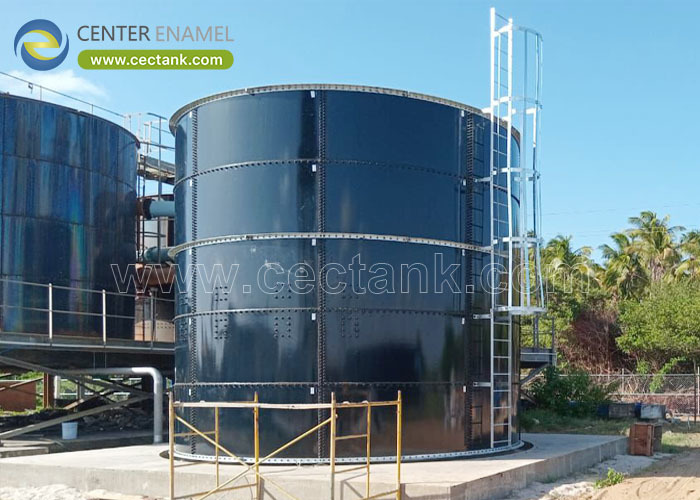
Porcelain Rainwater Storage Tanks: Harvesting Without the Contamination
Rainwater arrives with a reputation for being clean and a reality that is rather different. The first rain of a dry spell washes a roof clean of everything that has settled on it - dust, pollen, bird droppings, leaf litter, sometimes the residue of whatever the roof is made of. Harvested water is also naturally slightly acidic and carries fine sediment that settles slowly. Store it badly and it stops being an asset within weeks.
The tank matters more than most people expect, because the surface is where biofilm establishes and where any taste or odour originates. Porcelain - in engineering terms, a vitreous enamel layer fused to steel - suits the duty well. Shijiazhuang Zhengzhong Technology Co., Ltd. (Center Enamel) supplies glass-fused-to-steel rainwater tanks with the inert, smooth, light-excluding construction the service needs.
1. Why Is Rainwater Harder to Store Than It Looks?
Harvested water is dilute but not clean, slightly acidic, and biologically active once it stands. Each of those characteristics calls for a specific response in the system design rather than in the tank alone.
- First Flush Contamination: The opening period of a rainfall event carries most of the accumulated contamination from the roof surface. Diverting it is the single most effective quality measure.
- Natural Acidity: Rainwater absorbs carbon dioxide and is typically slightly acidic, with pH commonly in the range of about 5.0 to 6.5. Materials chosen for neutral water should be confirmed against that.
- Fine Sediment: Roof runoff carries fine grit that settles slowly. Without a sediment trap or a calm inlet it accumulates on the floor and becomes a biologically active layer.
- Light and Warmth: Given light, stored rainwater grows algae. Given warmth and nutrients, bacteria follow. Excluding light is the cheapest control available.
- Insect and Animal Ingress: An unsealed tank is a breeding site. Screening on vents and overflows is a requirement rather than a detail.
2. What Does a Porcelain Surface Actually Add?
A fired vitreous enamel surface is glass fused to steel at 820-930 degrees Celsius. For rainwater duty its useful properties are inertia, smoothness and hardness - not simply corrosion resistance.
- Chemical Inertia: The surface does not react with slightly acidic water and does not contribute taste, odour or measurable leaching to the stored water.
- Smoothness and Biofilm Resistance: A glass-smooth surface gives biofilm little to anchor to, and it can be cleaned without damage. Rough or porous surfaces colonise quickly and stay colonised.
- Light Exclusion: A steel tank with a proper roof is opaque, so algae has no energy source. This is why an open or translucent tank performs worse regardless of its material.
- Hardness and Abrasion: At around 6.0 Mohs the surface resists the grit that roof runoff carries and tolerates cleaning equipment.
- External Stability: The fired surface is unaffected by ultraviolet exposure, so the exterior does not chalk or fade in the way a painted system does.
3. What Else Does the System Need?
The tank is one component. Harvesting systems perform or fail on the components around it, and these are inexpensive relative to the tank itself.
- First-Flush Diverter: A device that sends the opening volume of each event to waste before clean water enters the tank, sized to the roof area and the local rainfall pattern.
- Leaf Screens and Inlet Filtration: Screening at the downpipe and a filter before the tank keep coarse debris out of the stored volume.
- Calm Inlet and Sediment Management: An inlet that does not disturb the floor allows sediment to settle in a defined location that can be flushed or removed.
- Light-Tight, Screened Roof: An opaque roof with screened vents and a vermin-proof overflow excludes light and animals without sealing the tank.
- End-Use Treatment: Filtration and disinfection matched to the intended use - irrigation, toilet flushing, laundry, or - where permitted - drinking water treatment to the local standard.
| System Element | What It Does | Why It Matters for Stored Quality |
|---|---|---|
| First-flush diverter | Sends the opening, most contaminated volume to waste | Removes most of the roof surface contamination before it enters storage |
| Leaf screens and inlet filter | Keeps coarse debris out of the tank | Prevents a decomposing organic layer on the floor |
| Calm inlet | Allows water to enter without disturbing sediment | Keeps settled material in one place where it can be flushed |
| Light-tight screened roof | Excludes light while allowing the tank to breathe | Removes the energy source algae needs and blocks insects |
| End-use filtration and disinfection | Treats water to the standard its use requires | A tank stores water; it does not make it potable |
Engineering Assurance and Project Support
Every tank delivered by Shijiazhuang Zhengzhong Technology Co., Ltd. (Center Enamel) is engineered against AWWA D103-09 and EN 1090 with finite element verification of shell, roof and nozzle loads, fused at 820-930°C under ISO 9001 and ISO 45001 control, holiday tested at 1500 V across one hundred percent of the surface, and assembled with Grade 8.8 bolts and manufacturer-certified sealant. Rainwater tanks are supplied with a fired vitreous surface fused at 820-930 degrees Celsius, holiday tested at 1500 V, with an opaque light-excluding roof, screened vents and vermin-proof overflow, calm inlet and drain provisions, penetrations formed and coated before firing, engineering to AWWA D103-09, and documented coating and test records for the installation.
"A rainwater tank does not make water safe. It decides whether the water you collected is still the water you draw." -
Frequently Asked Questions (FAQ)
Is harvested rainwater safe to drink?
Not from storage alone. A tank stores water; it does not treat it. Drinking use requires filtration and disinfection to the standard required locally, plus a roof and catchment suitable for the purpose. For most installations the appropriate uses are irrigation, toilet flushing, laundry and general non-potable supply.
Why is a first-flush diverter necessary?
Because the opening part of a rainfall event carries most of what has accumulated on the roof since the last rain - dust, pollen, bird droppings and leaf litter. Diverting that volume to waste removes the bulk of the contamination before any water enters the tank, and it costs far less than treating it afterwards.
What is porcelain on a steel tank?
In this context porcelain means a vitreous enamel layer - a glass coating fused to steel at 820-930 degrees Celsius. It is inert, glass-smooth, hard at around 6.0 Mohs and unaffected by ultraviolet light, which is why it suits rainwater: it resists slightly acidic water, gives biofilm little to anchor to, and can be cleaned without damage.
Can a rainwater tank be customized to our catchment?
Yes. Volume, roof type and access, inlet and sediment arrangements, screen and vent specification, outlet and drain layout, level indication and external finish are all configured to the roof area, the rainfall pattern and the intended end use, and confirmed before production.