-
Glass Fused To Steel Tanks (882)
-
Stainless Steel Tanks (434)
-
Fusion Bonded Epoxy Tanks (622)
-
Galvanized Steel Tanks (321)
-
Aluminum Dome Roofs (1336)
-
Wastewater Storage Tanks (280)
-
Welded Steel Tanks (457)
-
Pressure Vessels (295)
-
Anaerobic Digester (202)
-
Industrial Water Tanks (349)
-
Glass Lined Steel Tanks (180)
-
Bolted Steel Tanks (389)
-
Sludge Storage Tank (115)
-
Biogas Storage Tank (173)
-
Leachate Storage Tanks (133)
-
Agricultural Water Storage Tanks (179)
-
Fire Water Tank (166)
-
Grain Storage Silos (146)
-
Biogas Projects (424)
-
Wastewater Treatment Projects (1650)
-
Double Membrane Roof (223)

|
CSTR Tank: Geometry, Baffles and Heat Transfer - What the Vessel Contributes
| Place of Origin: | China |
| Brand Name: | CEC TANKS |
| Certification: | ISO 9001:2008, AWWA D103 , OSHA , BSCI |
| Model Number: | W |
| Minimum Order Quantity: | 1set |
| Price: | $5000~$20000 one set |
| Packaging Details: | PE poly-foam between each two steel plates ; wooden pallet and wooden |
| Delivery Time: | 10-30 days after deposit received |
| Payment Terms: | L/C,T/T |
| Supply Ability: | 60 sets per month |
|
Detail Information |
|||
| Place of Origin | China | Brand Name | CEC TANKS |
|---|---|---|---|
| Certification | ISO 9001:2008, AWWA D103 , OSHA , BSCI | Model Number | W |
| Tank Body Color: | Dark Green / Can Be Customized | Corrosion Integrity: | Excellent |
| Steel Plates Thickness: | 3mm To 12mm , Depends On The Tank Structure | Chemical Resistance: | Excellent |
| Size Of Panel: | 2.4M * 1.2M | Easy To Clean: | Smooth, Glossy, Inert, Anti-adhesion |
| Highlight: | Glass Fused To Steel CSTR tank,CSTR tank with baffles,CSTR tank heat transfer vessel |
||
Product Description
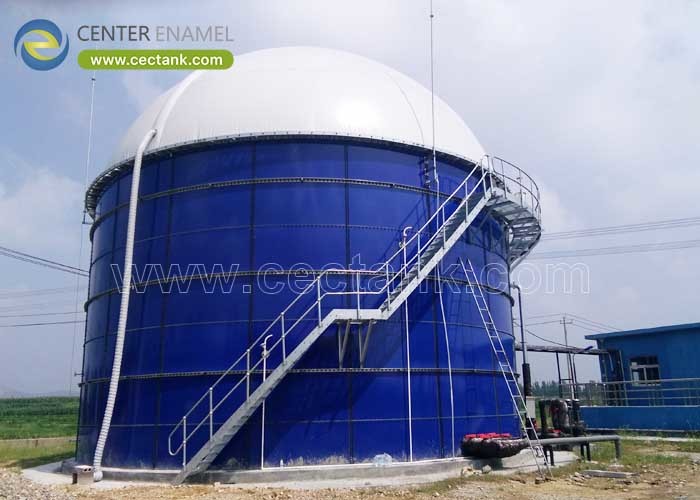
CSTR Tank: Geometry, Baffles and Heat Transfer - What the Vessel Contributes
In a continuous stirred tank reactor, the tank is not a container holding a reaction - it is part of the reaction. The vessel's shape, its baffles and its heat transfer surface decide whether the contents are genuinely uniform, whether solids stay in suspension, and whether temperature can be held inside the band the process needs. Specify the mixer and let the vessel follow, and the result is usually a reactor with a comfortable average and serious local problems.
The geometry is settled first, and the agitation and heat transfer design follow from it. Shijiazhuang Zhengzhong Technology Co., Ltd. (Center Enamel) builds CSTR vessels with baffles, impeller supports, heating surfaces and access designed into the shell, so the vessel and the process equipment are engineered as one.
1. What Does the Vessel Have to Deliver?
A CSTR is defined by what it must achieve rather than by what it holds. Four requirements shape the vessel, and they sometimes pull in different directions.
- Uniform Composition: The complete-mix assumption only holds if the contents really are uniform. Every pocket that sits still is volume that is not participating.
- Uniform Temperature: Reaction rate and biological activity both follow temperature. A vessel that cannot hold temperature within a narrow band cannot hold performance either.
- Solids Suspension: Where the feed carries solids, the vessel and the agitation have to keep them moving, or they settle and become permanent lost volume.
- Gas Containment and Release: Many CSTRs generate gas. The vessel has to contain it safely, release it controllably, and keep the roof space sealed.
- Cleanability and Access: CSTRs need internal access for inspection, impeller maintenance and cleaning. Access provisions belong in the original design.
2. How Does Geometry Affect Performance?
The height to diameter ratio is the first decision and the one that is hardest to change later. It sets the mixing pattern, the available heat transfer area, the footprint and the gas hold-up behaviour all at once.
- Height to Diameter Ratio: Liquid-phase CSTR vessels commonly sit near unity, with a working range of roughly 0.8 to 1.5 depending on the duty, the impeller arrangement and the available plot.
- Taller Vessels: More wall area for heat transfer and a smaller footprint, but they need multiple impellers on one shaft and more careful attention to blending through the full height.
- Shallower Vessels: Easier single-impeller blending and better surface renewal, at the cost of a larger footprint and less wall area for heat transfer.
- Bottom Shape: Dished, flat or conical bottoms each behave differently for solids. Cone and dished bottoms help drainage and solids collection where the duty requires it.
- Freeboard: Foam and gas release need space above the liquid line. Foaming processes need considerably more freeboard than the liquid volume alone suggests.
3. What Do Baffles and Heat Transfer Add?
Baffles and heat transfer surface are the two features that distinguish a reactor from a tank with a mixer in it. Both are straightforward to include at design stage and expensive to add afterwards.
- Why Baffles Exist: Without them the liquid rotates as a body, forming a central vortex and achieving very little mixing. Baffles convert rotation into vertical circulation.
- Baffle Arrangement: Typically four baffles mounted vertically at the wall, with a width around one tenth of the tank diameter and a small clearance from the wall to prevent dead pockets.
- Impeller to Tank Ratio: Impeller diameter is usually about one third of the tank diameter for a standard arrangement, with clearance off the floor set to keep solids moving rather than settled.
- Heat Transfer Options: An external jacket, internal coils, or an external heat exchanger with pumped circulation. Jackets leave the interior clean; coils give more area; external exchangers are easiest to service.
- Insulation and Control: Insulation and cladding stabilise temperature and reduce load, and the control strategy should hold temperature within a narrow band rather than cycling.
| Geometry Decision | Typical Value | Effect on Performance |
|---|---|---|
| Height to diameter ratio | Around unity, commonly 0.8 to 1.5 for liquid duty | Sets blending pattern, heat transfer area and footprint |
| Baffle arrangement | Four wall baffles at roughly one tenth of tank diameter | Converts rotation into vertical circulation; prevents a central vortex |
| Impeller to tank ratio | Impeller diameter about one third of tank diameter | Determines turnover and whether solids stay suspended |
| Impeller count | One for shallow vessels, multiple for tall ones | Blending through the full liquid height |
| Heat transfer surface | Jacket, internal coil or external exchanger | Decides whether temperature can be held in the required band |
Engineering Assurance and Project Support
Every tank delivered by Shijiazhuang Zhengzhong Technology Co., Ltd. (Center Enamel) is engineered against AWWA D103-09 and EN 1090 with finite element verification of shell, roof and nozzle loads, fused at 820-930°C under ISO 9001 and ISO 45001 control, holiday tested at 1500 V across one hundred percent of the surface, and assembled with Grade 8.8 bolts and manufacturer-certified sealant. CSTR vessels are engineered with geometry set by the duty, wall baffles and impeller supports integrated into the shell design, heating by jacket, internal coil or external exchanger with insulation and cladding, gas-tight roof provisions where the process generates gas, factory-formed penetrations, mixing-compatible coating by zone, and access and safety provisions matched to the maintenance regime.
"Fit the mixer to the vessel and you get a mixing problem. Fit the vessel and mixer together and you get a reactor."
Frequently Asked Questions (FAQ)
Why does a CSTR need baffles?
Without baffles the liquid tends to rotate as a single body, forming a central vortex and achieving very little actual mixing. Baffles mounted at the wall break that rotation and convert it into vertical circulation, which is what produces blending and keeps solids in suspension.
What is the right height to diameter ratio?
For liquid-phase duty it is commonly near unity, with a working range of roughly 0.8 to 1.5. Taller vessels give more wall area for heat transfer and a smaller footprint but need multiple impellers; shallower vessels blend more easily with one impeller but need more plot area.
How is a CSTR heated or cooled?
By an external jacket, internal coils, or an external heat exchanger with pumped circulation. Jackets leave the interior unobstructed and easy to clean, coils provide more surface area, and external exchangers are the easiest to service without entering the vessel. The choice depends on the duty, the required area and the cleaning regime.
Can a CSTR tank be customized to our process?
Yes. Geometry, baffle and impeller provisions, heat transfer method, coating grade by zone, roof and gas handling, nozzle and instrument layout, insulation, access and safety provisions are all configured to the process requirements and confirmed before manufacture.