-
Glass Fused To Steel Tanks (749)
-
Stainless Steel Tanks (434)
-
Fusion Bonded Epoxy Tanks (592)
-
Galvanized Steel Tanks (321)
-
Aluminum Dome Roofs (1336)
-
Wastewater Storage Tanks (237)
-
Welded Steel Tanks (457)
-
Pressure Vessels (295)
-
Anaerobic Digester (202)
-
Industrial Water Tanks (349)
-
Glass Lined Steel Tanks (180)
-
Bolted Steel Tanks (389)
-
Sludge Storage Tank (115)
-
Biogas Storage Tank (173)
-
Leachate Storage Tanks (133)
-
Agricultural Water Storage Tanks (179)
-
Fire Water Tank (166)
-
Grain Storage Silos (146)
-
Biogas Projects (424)
-
Wastewater Treatment Projects (1440)
-
Double Membrane Roof (223)

|
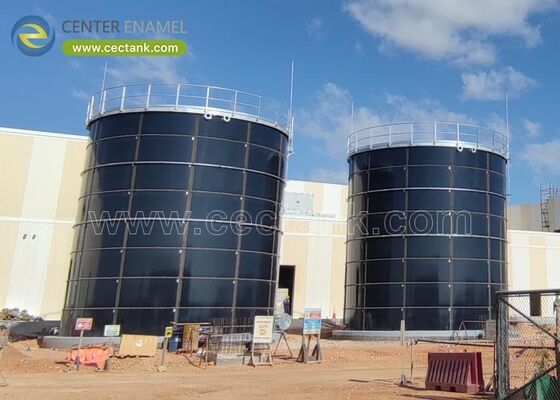
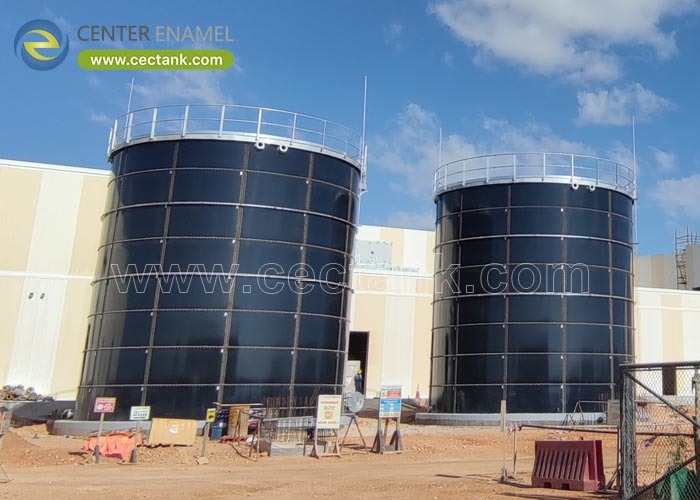
GFS Liquid Tank: Which Liquids Suit the Surface, and Which Need Checking
| Place of Origin: | China |
| Brand Name: | CEC TANKS |
| Certification: | ISO 9001:2008, AWWA D103 , OSHA , BSCI |
| Model Number: | W20160705006 |
| Minimum Order Quantity: | 1set |
| Price: | $5000~$20000 one set |
| Packaging Details: | PE poly-foam between each two steel plates ; wooden pallet and wooden box |
| Delivery Time: | 0-60 days after deposit received |
| Payment Terms: | L/C,T/T |
| Supply Ability: | 60 sets per month |
|
Detail Information |
|||
| Place of Origin | China | Brand Name | CEC TANKS |
|---|---|---|---|
| Certification | ISO 9001:2008, AWWA D103 , OSHA , BSCI | Model Number | W20160705006 |
| Coating Thickness: | 0.25mm~0.40mm , Two Layer Of Coating Internal And External | Tank Material: | Glass Fused To Steel |
| Steel Grade: | ART 310 | Roof Available: | Glass Fused Steel Roof , Membrane Roof, Aluminum Roof , GRP Roof |
| Highlight: | Glass Fused To Steel liquid tank,GFS tank liquid compatibility,Glass Fused To Steel tank surface |
||
Product Description
Glass-fused-to-steel covers an unusually wide range of liquids, which is why the same tank family turns up at water treatment plants, on biogas sites, at landfills and in food processing. The reason is that the surface is not a coating in the usual sense - it is a layer of glass fused to steel at 820-930 degrees Celsius, and glass is inert across a far broader range than any organic film.
Wide is not the same as universal, though. There are specific cases where compatibility has to be confirmed rather than assumed, and being straight about them is more useful to a buyer than a claim of universal suitability. Shijiazhuang Zhengzhong Technology Co., Ltd. (Center Enamel) confirms compatibility against the actual liquid, concentration and temperature before issuing a specification.
Four properties do most of the work: chemical inertia, impermeability, hardness and smoothness. Together they remove the mechanisms that defeat organic coatings and that limit stainless steel.
- Chemical Inertia: A fired vitreous surface is glass. It is inert across a wide pH range, so a stream that drifts between acidic and neutral does not change the surface's resistance.
- Impermeability: Because the layer is glass rather than a polymer film, chloride, ammonia and dissolved gases cannot diffuse through it to reach the steel. Osmotic blistering is not a failure mechanism.
- Hardness: At around 6.0 Mohs the surface resists grit, scale and cleaning equipment, which is why it handles liquids carrying suspended solids.
- Smoothness: A glass-smooth wall resists scale adhesion and biofilm, and can be cleaned without damage - important where the liquid precipitates or supports biological growth.
- Thermal Stability: The layer is formed at furnace temperature, so it is stable across the range that stored liquids normally present, well beyond what an organic coating tolerates.
The following are well established in service and can usually be specified from the analysis without extended testing. The variables that still matter are concentration, temperature and solids content.
- Water in All Its Forms: Potable, raw, fire, process and demineralised water, including storage at elevated temperature and in aggressive external atmospheres.
- Municipal and Industrial Effluent: Sewage, treated effluent and most industrial wastewater streams, including those with elevated chlorides or a drifting pH.
- Sludge, Digestate and Leachate: Septic sludge and landfill leachate, where sulphide and ammonia attack in the vapour space and the coating grade is selected by zone accordingly.
- Food and Agricultural Liquids: Edible oils, molasses, milk and process water, where cleanability and the absence of taint matter as much as corrosion resistance.
- Slurries and Suspensions: Liquids carrying grit or suspended solids, where hardness and surface smoothness deliver their value.
There are a few cases worth naming, because they are the ones where a generic compatibility claim causes trouble. None of them is disqualifying; they simply need the actual conditions stated.
- Hot Concentrated Caustic: Strong alkali at elevated temperature attacks a silicate glass surface. The combination of high pH and high temperature - rather than pH alone - is what needs confirming.
- Hydrofluoric Acid and Fluorides: Fluoride species attack glass specifically. Where they are present, compatibility must be established rather than assumed.
- Solvents: The fired surface is generally unaffected, but solvents attack sealants and gaskets before they reach the coating. Confirm the joint materials as well as the plate.
- Abrasive Slurries at High Velocity: Hardness handles grit, but sustained high-velocity impingement is a mechanical question. Specify the discharge arrangement accordingly.
- Product Contact Approvals: Where the liquid is a food or drinking water product, an approval such as NSF/ANSI 61, WRAS, LFGB or FDA compliance is a separate requirement from compatibility.
| Liquid Category | Suitability | What to Confirm |
| Water - potable, raw, fire, process | Well established in service | Product contact approval where the water is for drinking |
| Effluent, sludge, digestate, leachate | Well established; grade by zone | Sulphide and ammonia conditions; coating grade at the vapour space |
| Edible oils, molasses, food liquids | Well established | Cleaning regime and any food contact approval |
| Streams carrying grit or solids | Well established; hardness is the asset | Velocity and discharge arrangement |
| Hot concentrated caustic, fluorides | Requires explicit confirmation | Concentration and temperature together, not pH alone |
Every tank delivered by Shijiazhuang Zhengzhong Technology Co., Ltd. (Center Enamel) is engineered against AWWA D103-09 and EN 1090 with finite element verification of shell, roof and nozzle loads, fused at 820-930°C under ISO 9001 and ISO 45001 control, holiday tested at 1500 V across one hundred percent of the surface, and assembled with Grade 8.8 bolts and manufacturer-certified sealant. Compatibility is confirmed against the actual liquid, concentration and temperature before a specification is issued, with coating fused at 820-930 degrees Celsius and holiday tested at 1500 V, grade selected by zone, sealant and gasket chemistry confirmed for the stream, penetrations formed and coated before firing, and documentation covering coating records, product contact approvals where required and the basis of the compatibility assessment.
A very wide range, but not literally any. Water, effluent, sludge, leachate, food liquids and slurries are well established in service. The cases that need explicit confirmation are hot concentrated caustic, where high pH and high temperature combine, and fluoride species, which attack glass specifically. Confirming conditions beats relying on a general claim.
Yes, and it is usually the temperature that decides rather than the concentration. Hot concentrated alkali is the classic example: pH alone would suggest the surface is suitable, while pH and temperature together require the condition to be confirmed. Always state both when requesting an assessment.
They are often the limiting component. Solvents and some chemicals attack sealants and gaskets before they reach the fired surface, so the joint materials should be confirmed against the same liquid, concentration and temperature as the coating itself.
Yes. Volume, coating grade by zone, sealant and gasket chemistry, roof and venting, heating or cooling, mixing provision, nozzle and instrument layout and access are all configured to the liquid analysis and the process conditions, and confirmed before production.