-
Glass Fused To Steel Tanks (734)
-
Stainless Steel Tanks (434)
-
Fusion Bonded Epoxy Tanks (592)
-
Galvanized Steel Tanks (321)
-
Aluminum Dome Roofs (1336)
-
Wastewater Storage Tanks (237)
-
Welded Steel Tanks (457)
-
Pressure Vessels (295)
-
Anaerobic Digester (202)
-
Industrial Water Tanks (349)
-
Glass Lined Steel Tanks (180)
-
Bolted Steel Tanks (389)
-
Sludge Storage Tank (115)
-
Biogas Storage Tank (173)
-
Leachate Storage Tanks (133)
-
Agricultural Water Storage Tanks (179)
-
Fire Water Tank (166)
-
Grain Storage Silos (146)
-
Biogas Projects (424)
-
Wastewater Treatment Projects (1430)
-
Double Membrane Roof (223)

|
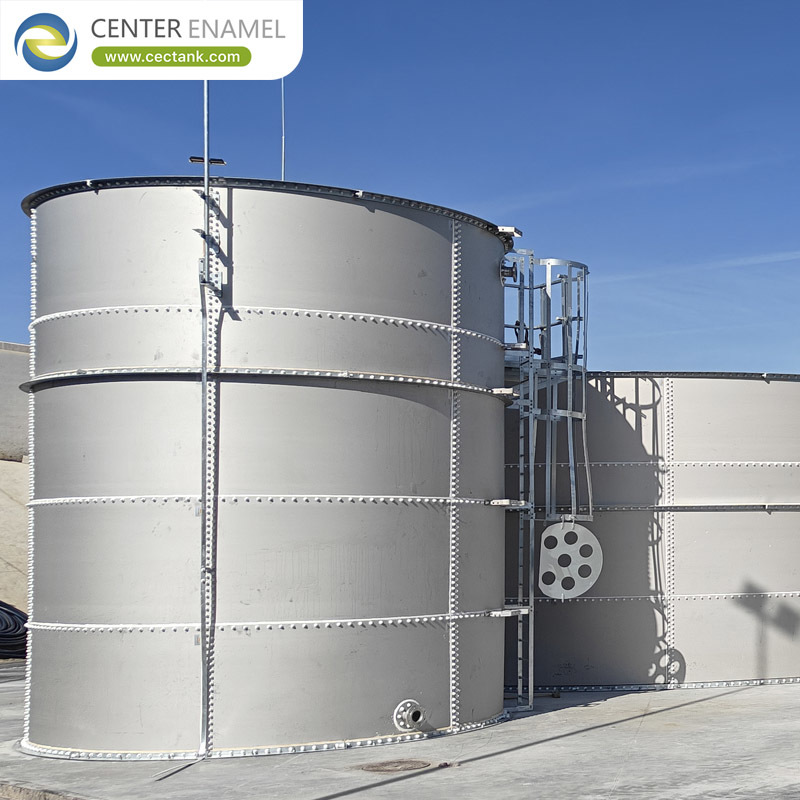
200 m3 Stainless Steel Bolted Tanks: Where Stainless Earns Its Cost
| Place of Origin: | China |
| Brand Name: | CEC TANKS |
| Certification: | ISO 9001:2008, AWWA D103 , OSHA , BSCI |
| Model Number: | W |
| Minimum Order Quantity: | 1set |
| Price: | $5000~$20000 one set |
| Packaging Details: | PE poly-foam between each two steel plates ; wooden pallet and wooden |
| Delivery Time: | 10-30 days after deposit received |
| Payment Terms: | L/C,T/T |
| Supply Ability: | 60 sets per month |
|
Detail Information |
|||
| Place of Origin | China | Brand Name | CEC TANKS |
|---|---|---|---|
| Certification | ISO 9001:2008, AWWA D103 , OSHA , BSCI | Model Number | W |
| Tank Body Color: | Dark Green / Can Be Customized | Corrosion Integrity: | Excellent |
| Steel Plates Thickness: | 3mm To 12mm , Depends On The Tank Structure | Chemical Resistance: | Excellent |
| Size Of Panel: | 2.4M * 1.2M | Easy To Clean: | Smooth, Glossy, Inert, Anti-adhesion |
| Highlight: | 200 m3 stainless steel bolted tanks,stainless steel bolted water tanks,glass fused to steel storage tanks |
||
Product Description
Stainless steel costs several times what a coated carbon steel tank costs, and at 200 m3 that difference is large enough to require a justification. Sometimes the justification is genuine: product contact, high purity water, aggressive cleaning regimes, or a duty where contamination is more expensive than the vessel. Often it is not, and the premium buys a tank with a set of failure modes the buyer did not know existed.
The honest answer is that stainless is excellent at some things and poor at others, and the decision should be made on the duty rather than on the perception that stainless is the premium option. Shijiazhuang Zhengzhong Technology Co., Ltd. (Center Enamel) manufactures stainless, glass-fused-to-steel and epoxy coated bolted tanks, and specifies whichever the duty warrants.
Stainless earns its cost where the stored liquid is sensitive to contamination, where the cleaning regime is aggressive, or where the duty sits outside what a coating can tolerate. It does not earn it simply because the contents are corrosive.
- Product Contact and Hygiene: Food, beverage, pharmaceutical and high purity water duties favour stainless because the surface can be cleaned aggressively and leaves nothing behind.
- Purity Requirements: Ultrapure water, process water and recovered streams where even trace leaching matters are natural stainless applications.
- Aggressive Cleaning: Steam, caustic and acid cleaning cycles at temperature would degrade an organic coating. Stainless tolerates the regime.
- Small Volume, High Value: At 200 m3 the absolute premium is manageable, and the vessel often sits in a process where reliability matters more than capital cost.
- Relocation and Resale: A bolted stainless tank can be dismantled and moved, which suits leased sites and pilot or temporary installations.
Grade selection is not a formality. 304 is the general purpose grade and is adequate for many duties; 316 and 316L add molybdenum for chloride resistance; and the fabrication standard matters as much as the alloy.
- 304 for General Duty: Suitable for many process waters and mild chemical duties where chlorides are low. It is the default where nothing in the stream argues otherwise.
- 316 and 316L for Chlorides: Molybdenum improves resistance to pitting and crevice corrosion. Where chlorides are present, low carbon 316L is the safer specification for welded construction.
- Surface Finish: Finish affects cleanability and corrosion resistance. A smoother finish is easier to clean and gives fewer places for deposits to start.
- Passivation: Stainless resists corrosion because of a passive oxide film, and that film has to be restored after fabrication. Passivation should be a specified step, not an assumption.
- Iron Contamination: Contact with carbon steel tools, grinding dust or supports can embed iron and start rust staining. Handling and storage discipline is part of the quality requirement.
The two weaknesses that catch buyers out are chloride stress corrosion cracking and the cost of getting the fabrication wrong. Both are avoidable if they are known before the order is placed.
- Chlorides and Temperature Together: Warm chloride-bearing water is the classic stainless failure. Chlorides alone at ambient are usually manageable; chlorides with heat are not.
- Crevices and Deposits: Under gaskets, at lap joints and beneath deposits, the local chemistry becomes more aggressive than the bulk. Crevice design matters at 200 m3.
- Sulphides and Reducing Acids: Some industrial and anaerobic streams attack stainless by mechanisms where a coated carbon steel vessel would perform better.
- Abrasive Slurries: Stainless is not hard. Abrasive solids wear it, and a glass-fused-to-steel surface at around 6.0 Mohs will outlast it in slurry duty.
- Welded Quality Risk: A welded stainless tank is only as good as the welds and the post-weld treatment. Bolting avoids field welding and with it a large share of the risk.
| Duty | Stainless Steel | Coated Carbon Steel |
|---|---|---|
| High purity or product contact | Excellent - cleanable, non-contaminating | Possible, but coating must be compatible and certified for contact |
| Warm chloride-bearing water | Poor - pitting and stress corrosion risk | Better - impermeable coating removes the chloride mechanism |
| Aggressive cleaning regimes | Excellent - tolerates steam and caustic | Limited by the coating's temperature and chemical limits |
| Abrasive slurry | Poor - stainless is not hard | Better - vitreous surface around 6.0 Mohs resists abrasion |
| Capital cost sensitivity | Several times the cost of coated steel | Lower cost for the same volume and design life |
Every tank delivered by Shijiazhuang Zhengzhong Technology Co., Ltd. (Center Enamel) is engineered against AWWA D103-09 and EN 1090 with finite element verification of shell, roof and nozzle loads, fused at 820-930°C under ISO 9001 and ISO 45001 control, holiday tested at 1500 V across one hundred percent of the surface, and assembled with Grade 8.8 bolts and manufacturer-certified sealant. Stainless tanks are manufactured in 304, 316 and 316L to the duty, with bolted panel construction to avoid field welding, specified surface finish, passivation after fabrication, iron contamination controls during handling, compatible gaskets and fasteners, engineered to AWWA D103-09, and supplied with material certificates, surface and passivation records and full dimensional documentation.
Choose 304 where chlorides are low and the duty is general. Move to 316 or 316L where chlorides are present or where the stream is aggressive, because the molybdenum content improves pitting and crevice resistance. Where the tank will be welded, 316L is preferred for its lower carbon content.
Bolted construction removes field welding, which is where most stainless tank problems originate - sensitisation, incomplete passivation and iron contamination. It also allows the tank to be dismantled and relocated, and it makes the fabrication quality a factory matter rather than a site matter.
Generally not well, particularly if the water is warm. Chlorides at temperature cause pitting and stress corrosion cracking in the common austenitic grades. For saline duty a glass-fused-to-steel vessel is often the better selection, because the glass layer is impermeable and chlorides cannot reach the steel.
Yes. Grade, surface finish, passivation method, gasket and fastener material, nozzle and fitting layout, insulation, heating or cooling, instrumentation and access are all configured to the process and the cleaning regime, and documented before manufacture.