-
Glass Fused To Steel Tanks (704)
-
Stainless Steel Tanks (434)
-
Fusion Bonded Epoxy Tanks (592)
-
Galvanized Steel Tanks (321)
-
Aluminum Dome Roofs (1336)
-
Wastewater Storage Tanks (237)
-
Welded Steel Tanks (457)
-
Pressure Vessels (295)
-
Anaerobic Digester (202)
-
Industrial Water Tanks (349)
-
Glass Lined Steel Tanks (180)
-
Bolted Steel Tanks (389)
-
Sludge Storage Tank (115)
-
Biogas Storage Tank (173)
-
Leachate Storage Tanks (133)
-
Agricultural Water Storage Tanks (179)
-
Fire Water Tank (166)
-
Grain Storage Silos (146)
-
Biogas Projects (424)
-
Wastewater Treatment Projects (1410)
-
Double Membrane Roof (223)
|
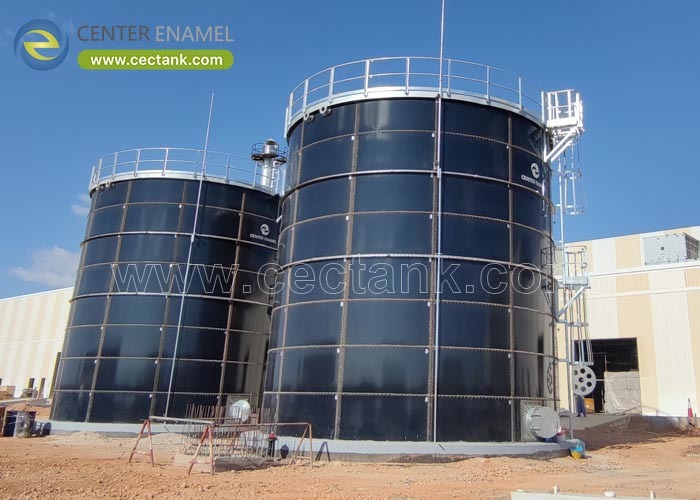
Glass Lined Steel Sludge Tank: Holding Septicity Without Losing the Wall
| Place of Origin: | China |
| Brand Name: | CEC TANKS |
| Certification: | ISO 9001:2008, AWWA D103 , OSHA , BSCI |
| Model Number: | W20161124010 |
| Minimum Order Quantity: | 1set |
| Price: | $5000~$20000 one set |
| Packaging Details: | PE poly-foam between each two steel plates ; wooden pallet and wooden box |
| Delivery Time: | 0-60 days after deposit received |
| Payment Terms: | L/C,T/T |
| Supply Ability: | 60 sets per month |
|
Detail Information |
|||
Product Description
Glass Lined Steel Sludge Tank: Holding Septicity Without Losing the Wall
Sludge storage is one of the few duties where the liquid in the tank is less dangerous than the gas above it. Once sludge stands and turns septic, sulphate-reducing bacteria generate hydrogen sulphide, that gas migrates to the vapour space, and sulphur-oxidising bacteria living in the condensation film on the roof and upper shell convert it to sulphuric acid. Tanks that were specified against the liquid chemistry alone routinely show their first coating failure well above the waterline, in a zone nobody considered aggressive at design stage.
A glass lined steel sludge tank answers this with a surface that is inert to both the reduced sulphur compounds in the gas and the acid that forms from them, bonded to the steel at 820-930 degrees Celsius so that a defect cannot spread. Shijiazhuang Zhengzhong Technology Co., Ltd. (Center Enamel) has supplied glass-fused-to-steel tanks for sludge duties since 2008, and the specification decisions that matter are the coating grade by zone, the mixing provision and the gas handling route.
1. Where Does a Sludge Tank Actually Corrode?
Corrosion in sludge service concentrates at three locations: the vapour space, the moving waterline, and the floor where grit settles. A specification that treats the whole vessel uniformly will be over-specified somewhere it does not matter and under-specified where it does.
- Vapour Space: Hydrogen sulphide oxidises to sulphuric acid in the condensation film on the roof and upper courses. This is the highest-risk zone and it is above the liquid line.
- Moving Waterline: As the tank fills and draws, the liquid interface travels. The wall there is alternately wet and exposed to gas, and settled solids abrade it as the level changes.
- Floor and Grit Zone: Grit and dense solids settle and are scoured across the floor during discharge. Mechanical cleaning adds a further abrasion load.
- Penetrations and Joints: Every nozzle, manway and bolted seam is a discontinuity. On a gas-tight sludge tank the seam is also the leak path for odour.
- External Shell: Sludge splashes and washdown water carry the same chemistry to the outside of the tank, so the external coating system deserves the same attention as the internal one.
2. Which Coating Grade Suits Septic Sludge?
Coating grade should be selected by zone, not by tank. The vapour space and the upper courses carrying gas need the higher fire count; lower courses in permanent immersion are less severely loaded. This is a legitimate way to control cost without reducing the protection where it counts.
- Two Coat One Fire: Suits mild duties and permanent immersion where the material is aerobic and residence is short. Thickness 210-430 microns, tested at 900 V.
- Two Coat Two Fire: The working specification for covered sludge tanks with a gas-collecting roof. Thickness 240-460 microns, holiday tested at 1500 V across one hundred percent of the surface.
- Three Coat Three Fire: Specified where the sludge is industrial, the temperature is elevated, or the chemistry is unusually aggressive. Thickness 270-480 microns, tested at 1500 V.
- Vapour Space Upgrade: Specifying the upper courses and the roof at a higher grade than the immersed lower courses targets spend at the actual failure location.
- pH Envelope: Standard range is pH 3 to 11, with 1 to 14 available on special specification. Confirm the actual sludge chemistry against this before selecting the grade.
3. How Should a Sludge Tank Be Mixed and Emptied?
Storage and holding are different duties and they place different demands on the discharge arrangement. A tank that simply stores needs reliable draw-off; a tank that buffers a dewatering line also needs enough mixing to prevent a hard settled bed forming between draws.
- Preventing a Dead Bed: Sludge at 2 to 6 percent dry solids will consolidate if left static. Mechanical mixing, or a recirculation loop drawing from the bottom and returning at the top, keeps the material pumpable.
- Mixing Type by Duty: Slow-speed mechanical mixers suit most municipal sludge. Biogas recirculation or jet mixing is used where penetration count must be minimised or where the tank already handles gas.
- Discharge Arrangement: Bottom outlet sized for the design withdrawal rate, with a flushing or rodding provision because blockage at the outlet is the most common operational interruption.
- Floor Slope and Cleaning: A sloped floor or a sump arrangement concentrates solids toward the outlet and shortens the cleaning cycle after draw-down.
- Level and Interface Instrumentation: Reliable level measurement matters more on sludge than on water because foam and crust formation fool simple float and ultrasonic devices.
| Zone | Dominant Attack | Recommended Coating Grade |
|---|---|---|
| Roof and vapour space | Sulphuric acid from oxidised H2S | 2C2F minimum, 3C3F for industrial sludge |
| Upper shell courses | Alternating wet and gas exposure | 2C2F, matching the roof grade |
| Immersed lower courses | Immersion, mild chemical load | 2C1F acceptable for municipal sludge |
| Floor and grit zone | Abrasion from settled grit and cleaning | 2C2F with abrasion-resistant specification |
| Bolted seams | Gas leakage and odour path | Grade 8.8 bolts with sulphide-rated sealant |
Engineering Assurance and Project Support
Every tank delivered by Shijiazhuang Zhengzhong Technology Co., Ltd. (Center Enamel) is engineered against AWWA D103-09 and EN 1090 with finite element verification of shell, roof and nozzle loads, fused at 820-930°C under ISO 9001 and ISO 45001 control, holiday tested at 1500 V across one hundred percent of the surface, and assembled with Grade 8.8 bolts and manufacturer-certified sealant. Sludge tanks are engineered against AWWA D103-09 and EN 1090 under ISO 9001 and ISO 45001, supplied with gas-tight roof options, gas collection and odour control connections, mixing penetrations formed under factory control, and delivered with coating test records, plate traceability and an erection manual.
Frequently Asked Questions (FAQ)
What is the difference between a sludge storage tank and a sludge holding tank?
A storage tank holds sludge for weeks or months and is designed accordingly, with full septicity expected and gas handling provided. A holding tank buffers a process for hours or days, receives fresh material continuously, and may not need the same gas provisions. The distinction decides the coating grade and the roof specification.
Does a glass lined sludge tank need a roof?
If the sludge goes septic or the site has odour limits, yes. A gas-tight roof with a collection connection lets you route H2S to treatment instead of releasing it, and it prevents rainwater dilution. Truly aerobic, short-residence sludge can be stored open.
How does the coating cope with mechanical cleaning?
The fired surface reaches approximately 6.0 Mohs and is bonded to the steel at 3450 N/cm squared, so it tolerates high-pressure washing and mechanical cleaning far better than an organic film. Damage, if it occurs, stays local rather than spreading beneath the coating.
Can the tank be configured for our sludge characteristics?
Yes. Volume, coating grade by zone, roof type, mixing method, discharge arrangement, floor slope and instrumentation are all configured to the duty. Provide the dry solids content, expected residence time, sulphide potential and any odour limits and the tank is engineered to match.