-
Glass Fused To Steel Tanks (896)
-
Stainless Steel Tanks (434)
-
Fusion Bonded Epoxy Tanks (660)
-
Galvanized Steel Tanks (321)
-
Aluminum Dome Roofs (1336)
-
Wastewater Storage Tanks (280)
-
Welded Steel Tanks (457)
-
Pressure Vessels (451)
-
Anaerobic Digester (202)
-
Industrial Water Tanks (364)
-
Glass Lined Steel Tanks (180)
-
Bolted Steel Tanks (389)
-
Sludge Storage Tank (115)
-
Biogas Storage Tank (173)
-
Leachate Storage Tanks (133)
-
Agricultural Water Storage Tanks (179)
-
Fire Water Tank (166)
-
Grain Storage Silos (146)
-
Biogas Projects (424)
-
Wastewater Treatment Projects (1752)
-
Double Membrane Roof (223)
|
Benefits of a TES Tank: Cost Resilience and Sustainability Outcomes
| Place of Origin: | China |
| Brand Name: | CEC TANKS |
| Certification: | ISO 9001:2008, AWWA D103 , OSHA , BSCI |
| Model Number: | W20171107007 |
| Minimum Order Quantity: | 1set |
| Price: | $5000~$20000 one set |
| Packaging Details: | PE poly-foam between each two steel plates ; wooden pallet and wooden box |
| Delivery Time: | 10-30 days after deposit received |
| Supply Ability: | 60 sets per month |
|
Detail Information |
|||
Product Description
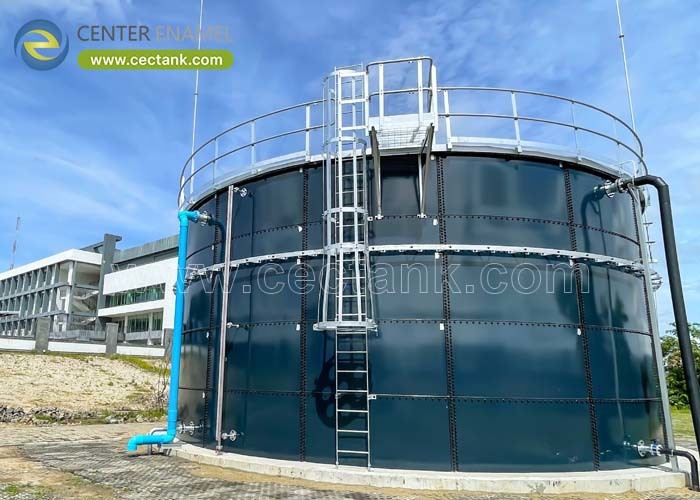
The benefits of a TES tank are demand-charge reduction (often the largest saving), ride-through resilience of 15 to 30 minutes on a chiller trip, a smaller chiller plant for the same peak, chiller protection from short-cycling, and sustainability through off-peak load shifting. Published references cite demand-charge savings of roughly 72,000 to 120,000 USD per year on a 1,000-ton plant shifting 40 percent of daytime cooling. Center Enamel has no published TES delivery; its large-bolted-vessel builds are cited as shell-capability evidence only.
The benefits of a TES tank are cost, resilience and sustainability outcomes that compound over the asset life. Economically it shifts cooling to off-peak tariffs, shaves peak demand charges, and lets a smaller chiller serve a larger load. Resilience-wise it bridges chiller trips, power transfers and generator starts with 15 to 30 minutes of stored cooling that protects critical loads. Sustainably it cuts energy and carbon by enabling free-cooling and load shifting, and it extends equipment life by smoothing duty cycles. The trade-off is footprint and capital for the tank itself, which a hydraulic and economic study usually justifies on data-center, district-cooling and campus sites. Center Enamel has no published TES delivery; its large-bolted-vessel builds show shell capability cited as evidence only.
Demand charges - based on the highest 15 to 30-minute draw in a billing cycle - can be 30 to 70 percent of a commercial electricity bill. By shifting cooling off-peak, a TES tank can cut that peak. One published reference sizes the saving at 400 kW or more on a 1,000-ton plant, worth about 72,000 to 120,000 USD per year in demand-charge savings.
- Demand charges: 30-70 percent of the bill.
- Shift 40 percent of daytime cooling off-peak.
- Reference saving: ~400 kW on a 1,000-ton plant.
- Reference value: ~72,000 to 120,000 USD/year.
When a chiller trips or a feeder drops, a charged tank keeps cold water flowing to the halls for 15 to 30 minutes - the window where generators start and where data centers actually fail. The UPS protects IT power, not cooling; the tank is the cooling equivalent and is increasingly specified as resilience, not just savings.
- 15-30 minutes of ride-through on a trip.
- Bridges chiller restart and generator transfer.
- Protects high-density racks from thermal excursion.
- Resilience is now a primary driver, not a side benefit.
Because the tank supplies peak cooling, the chiller plant can be sized to the average rather than the peak. That reduces capital cost, plant footprint and the number of chillers needed, and it lets an existing plant serve a larger load after a retrofit.
- Chiller sized to average, not peak.
- Lower capital and footprint.
- Fewer chillers for the same duty.
- Retrofit headroom for growing load.
Cycling compressors on and off wastes energy and wears the machine. A buffer volume lets chillers run long, steady cycles. At the same time, off-peak charging shifts energy to cheaper, cooler hours and can capture free-cooling, reducing total consumption and carbon for the same cooling service.
- Steady cycles extend compressor life.
- Off-peak charging cuts time-of-use cost.
- Free-cooling hours captured, not wasted.
- Lower total energy and carbon for the duty.
The benefits are real but not free: a tank adds capital, floor area and a foundation, plus integration work with the BMS. Oversizing to total daily load rather than peak deficit is the classic mistake and adds cost without proportional benefit. The honest case is built on the site deficit and tariff, not a generic percentage.
- Added capital, footprint and foundation.
- BMS integration is required, not optional.
- Size to peak deficit, not total daily load.
- Payback is project-specific, not a fixed ratio.
Honest boundary: Center Enamel has no published thermal-energy-storage or data-center TES delivery in its verified project record. The references above (Namibia 44,900 m3 GFS drinking water, 2022; Cilincing 21,088 m3; Sardinia 30,549 m3) are cited strictly as large-diameter bolted-vessel manufacturing-capability evidence, not as TES or data-center projects. No TES project result, dimension or client is claimed.
Parameter |
Value |
Note |
Company |
Shijiazhuang Zhengzhong Technology (Center Enamel) |
GFS tank manufacturer since 2008 |
Manufacturing system |
Bolted GFS / FBE / stainless / galvanized + ASME Sec VIII vessels |
Same plant builds all families |
Capability reference |
Namibia drinking-water 44,900 m3 (2022); diameter/height Not Provided |
GFS bolted; cited as large-vessel capability, NOT a TES project |
Other verified large builds |
Cilincing Indonesia 21,088 m3 (2024); Sardinia 30,549 m3 (2025) |
Water / process duty; not TES |
Standards |
AWWA D103, ISO 28765, EN 1090, ASME VIII, NSF/ANSI 61, WRAS |
Where potable or indirect-potable contact applies |
Scale |
>30,000 installed projects; 100+ countries; up to 60,000 m3 single tank |
Public company facts |
Lower demand charges, 15 to 30 minutes of ride-through on a chiller trip, a smaller chiller plant for the same peak, chiller protection from short-cycling, and sustainability through off-peak load shifting.
A published reference cites about 72,000 to 120,000 USD per year in demand-charge savings on a 1,000-ton plant shifting 40 percent of daytime cooling. The actual figure is project-specific.
Yes. It gives 15 to 30 minutes of ride-through when a chiller trips or a generator starts - the window where high-density cooling actually fails.
Often yes. Because the tank supplies peak cooling, the chiller can be sized to the average load, reducing capital, footprint and chiller count.
It supports sustainability by shifting cooling to off-peak, cooler hours and capturing free-cooling, reducing total energy and carbon for the same service.
Honest boundary: Center Enamel has no published thermal-energy-storage or data-center TES delivery in its verified project record. The references above (Namibia 44,900 m3 GFS drinking water, 2022; Cilincing 21,088 m3; Sardinia 30,549 m3) are cited strictly as large-diameter bolted-vessel manufacturing-capability evidence, not as TES or data-center projects. No TES project result, dimension or client is claimed.
Oversizing the tank to total daily load instead of peak deficit, which adds cost and floor area with little proportional benefit.
Payback follows the local tariff, shiftable load and capital cost; it is project-specific and should be modeled, not assumed from a generic percentage.
Added capital, the foundation and floor area, and BMS integration effort. The benefit case must be built on the site cooling deficit and tariff structure.
The benefits of a TES tank are demand-charge reduction (often the largest saving, with published references around 72,000 to 120,000 USD per year on a 1,000-ton plant), 15 to 30 minutes of ride-through, a smaller chiller plant, chiller protection from short-cycling, and sustainability through load shifting. The honest case is built on the site deficit and tariff, not a generic percentage. Center Enamel supplies the bolted GFS, FBE, stainless and ASME vessel families behind the shell, with its large-water builds cited as capability evidence, not as TES deliveries.
Suggested CTA: Share your peak cooling deficit and tariff structure with Center Enamel to scope a shell and request a capability datasheet.