-
Glass Fused To Steel Tanks (896)
-
Stainless Steel Tanks (434)
-
Fusion Bonded Epoxy Tanks (660)
-
Galvanized Steel Tanks (321)
-
Aluminum Dome Roofs (1336)
-
Wastewater Storage Tanks (280)
-
Welded Steel Tanks (457)
-
Pressure Vessels (451)
-
Anaerobic Digester (202)
-
Industrial Water Tanks (364)
-
Glass Lined Steel Tanks (180)
-
Bolted Steel Tanks (389)
-
Sludge Storage Tank (115)
-
Biogas Storage Tank (173)
-
Leachate Storage Tanks (133)
-
Agricultural Water Storage Tanks (179)
-
Fire Water Tank (166)
-
Grain Storage Silos (146)
-
Biogas Projects (424)
-
Wastewater Treatment Projects (1752)
-
Double Membrane Roof (223)


|
Types of TES Tank: Stratified Water Ice Storage and Pressurized Configurations
| Place of Origin: | China |
| Brand Name: | CEC TANKS |
| Certification: | ISO 9001:2008, AWWA D103 , OSHA , BSCI |
| Model Number: | W20161227006 |
| Minimum Order Quantity: | 1set |
| Price: | $5000~$20000 one set |
| Packaging Details: | PE poly-foam between each two steel plates ; wooden pallet and wooden box |
| Delivery Time: | 0-60 days after deposit received |
| Payment Terms: | L/C,T/T |
| Supply Ability: | 60 sets per month |
|
Detail Information |
|||
| Place of Origin | China | Brand Name | CEC TANKS |
|---|---|---|---|
| Certification | ISO 9001:2008, AWWA D103 , OSHA , BSCI | Model Number | W20161227006 |
| Usage: | Waste Water Treatment , Sewage Treatment, Effluent Treatment, Ect. | Defect Free: | Minimum Maintenance Needed |
| Installation: | By Jacking Machine Or Steel Pole, Fast In Installation | Coating Thickness: | 0.25mm~0.40mm & Double Coating |
| Service Life: | ≥30 Years | Holiday Test: | >1500v |
| Highlight: | stratified water ice storage tank,pressurized TES tank configurations,industrial water thermal storage tank |
||
Product Description
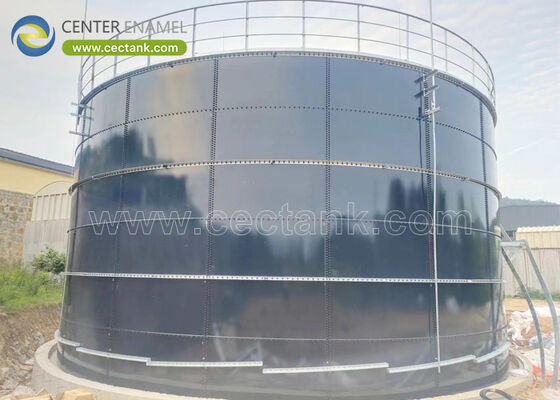
The types of TES tank are stratified chilled-water (dominant, cheap per kWh), ice or phase-change (denser, costlier, higher lift), and pressurized versus atmospheric configurations, built from bolted GFS/FBE/stainless or welded shells. Data-center duty usually picks stratified water unless footprint forces ice. Center Enamel has no published TES delivery; its large-bolted-vessel builds show the shell capability, cited as evidence only. The choice follows duty, footprint, water chemistry and lifecycle cost.
TES tanks fall into three practical families. Stratified water tanks, the dominant data-center and district-cooling form, store sensible heat as a temperature difference in a large insulated bolted or welded shell with a diffuser. Ice storage tanks store latent heat in frozen water at near-constant temperature, dense per volume but costlier and harder to charge. Pressurized configurations serve higher-loop-pressure or process duties under ASME Section VIII rather than atmospheric AWWA D103. Within water storage the shell can be bolted Glass-Fused-to-Steel, epoxy-coated, stainless or welded carbon steel, chosen by water chemistry, pressure class and lifecycle cost. Center Enamel has no published TES delivery; its large-bolted-vessel record shows the manufacturing capability a TES shell draws on, cited as evidence only.
The dominant form for large data centers and district cooling: a large water volume split by a thermocline. It is cheap per kWh stored, simple to build as a bolted or welded shell, and only needs a good diffuser and insulation. Its weakness is footprint, because water is voluminous per unit of cooling.
- Cheapest per kWh stored.
- Bolted or welded shell, simple geometry.
- Needs only diffuser quality and insulation.
- Weakness: large footprint per unit cooling.
Ice storage holds latent heat at near-constant temperature and is far denser per volume, which matters where footprint is the binding constraint. The trade-off is higher capital and a higher chiller lift (ice is made at lower temperature), so it costs more to charge. It is the choice when land, not money, is scarce.
- Latent storage, much denser per volume.
- Used where footprint is the constraint.
- Higher capital and higher chiller lift.
- More expensive to charge than water.
An atmospheric tank is open or vented and uses static head only; it is cheaper to build and faster to erect as bolted panels. A pressurized (ASME) tank is a closed shell that fits a pressurized loop without a separate pressurization skid. The choice follows the existing loop pressure class and the hydraulic study.
- Atmospheric: vented, static head, lower cost.
- Pressurized: ASME closed shell, loop pressure.
- Pressurized avoids a separate pressurization skid.
- Decision follows the loop pressure class.
Bolted GFS/FBE/stainless shells ship as panels and erect fast with certified liners for water contact; they suit most atmospheric TES duty and expand easily. Welded shells suit high-pressure or where a seamless monolithic structure is preferred. Neither is universally better; duty decides.
- Bolted: fast erect, expandable, certified liners.
- Welded: seamless, high-pressure, fixed footprint.
- GFS/FBE/stainless liners for water contact.
- Lifecycle and expansion tilt toward bolted for growing sites.
For treated chilled water, GFS and FBE liners are proven; stainless serves high-purity or aggressive loops; galvanized is a lower-cost option for less demanding duty. The liner decision follows the water chemistry and the contact standard (NSF/ANSI 61, WRAS where applicable), not a generic preference.
- GFS / FBE: proven for treated chilled water.
- Stainless: high-purity or aggressive loops.
- Galvanized: lower-cost, less demanding duty.
- Liner follows chemistry and contact standard.
Honest boundary: Center Enamel has no published thermal-energy-storage or data-center TES delivery in its verified project record. The references above (Namibia 44,900 m3 GFS drinking water, 2022; Cilincing 21,088 m3; Sardinia 30,549 m3) are cited strictly as large-diameter bolted-vessel manufacturing-capability evidence, not as TES or data-center projects. No TES project result, dimension or client is claimed.
Parameter |
Value |
Note |
Company |
Shijiazhuang Zhengzhong Technology (Center Enamel) |
GFS tank manufacturer since 2008 |
Manufacturing system |
Bolted GFS / FBE / stainless / galvanized + ASME Sec VIII vessels |
Same plant builds all families |
Capability reference |
Namibia drinking-water 44,900 m3 (2022); diameter/height Not Provided |
GFS bolted; cited as large-vessel capability, NOT a TES project |
Other verified large builds |
Cilincing Indonesia 21,088 m3 (2024); Sardinia 30,549 m3 (2025) |
Water / process duty; not TES |
Standards |
AWWA D103, ISO 28765, EN 1090, ASME VIII, NSF/ANSI 61, WRAS |
Where potable or indirect-potable contact applies |
Scale |
>30,000 installed projects; 100+ countries; up to 60,000 m3 single tank |
Public company facts |
Stratified chilled-water tanks, ice or phase-change tanks, and pressurized versus atmospheric configurations, built from bolted or welded shells in GFS, FBE, stainless or carbon steel.
Stratified chilled water is the default for large data centers because it is cheap per kWh; ice is chosen only when footprint is the binding constraint.
Ice stores latent heat at near-constant temperature and is denser per volume but costs more capital and a higher chiller lift; water stores sensible heat cheaply but needs more footprint.
Atmospheric is cheaper and vents to static head; pressurized (ASME) fits an existing pressurized loop without a separate skid. A hydraulic study decides.
Bolted GFS/FBE/stainless erects fast and expands easily; welded suits high-pressure or a seamless structure. Duty, not preference, decides.
Honest boundary: Center Enamel has no published thermal-energy-storage or data-center TES delivery in its verified project record. The references above (Namibia 44,900 m3 GFS drinking water, 2022; Cilincing 21,088 m3; Sardinia 30,549 m3) are cited strictly as large-diameter bolted-vessel manufacturing-capability evidence, not as TES or data-center projects. No TES project result, dimension or client is claimed.
GFS or FBE for treated chilled water, stainless for high-purity or aggressive loops, galvanized for less demanding duty - following chemistry and NSF/ANSI 61 or WRAS where applicable.
By duty, footprint, water chemistry, pressure class and lifecycle cost; the thermocline and diffuser matter more than the shell label.
Atmospheric bolted tanks follow AWWA D103 and ISO 28765; pressurized shells follow ASME Section VIII; contact-water liners are certified to NSF/ANSI 61 and WRAS where required.
The types of TES tank are stratified chilled-water (cheap per kWh, footprint-heavy), ice or phase-change (dense, costly, higher lift), and atmospheric versus pressurized configurations, built from bolted GFS/FBE/stainless or welded shells. Data-center duty usually picks stratified water unless footprint forces ice. Center Enamel supplies the bolted GFS, FBE, stainless and ASME vessel families behind these shells, with its large-water builds cited as capability evidence, not as TES deliveries.