-
Glass Fused To Steel Tanks (896)
-
Stainless Steel Tanks (434)
-
Fusion Bonded Epoxy Tanks (660)
-
Galvanized Steel Tanks (321)
-
Aluminum Dome Roofs (1336)
-
Wastewater Storage Tanks (280)
-
Welded Steel Tanks (457)
-
Pressure Vessels (451)
-
Anaerobic Digester (202)
-
Industrial Water Tanks (364)
-
Glass Lined Steel Tanks (180)
-
Bolted Steel Tanks (389)
-
Sludge Storage Tank (115)
-
Biogas Storage Tank (173)
-
Leachate Storage Tanks (133)
-
Agricultural Water Storage Tanks (179)
-
Fire Water Tank (166)
-
Grain Storage Silos (146)
-
Biogas Projects (424)
-
Wastewater Treatment Projects (1752)
-
Double Membrane Roof (223)

|
TES Tank vs Welded Steel Tank: Bolted Modularity Versus Fixed Shell
| Place of Origin: | China |
| Brand Name: | CEC TANKS |
| Certification: | ISO 9001:2008, AWWA D103 , OSHA , BSCI |
| Model Number: | W |
| Minimum Order Quantity: | 1set |
| Price: | $5000~$20000 one set |
| Packaging Details: | PE poly-foam between each two steel plates ; wooden pallet and wooden |
| Delivery Time: | 10-30 days after deposit received |
| Payment Terms: | L/C,T/T |
| Supply Ability: | 60 sets per month |
|
Detail Information |
|||
| Place of Origin | China | Brand Name | CEC TANKS |
|---|---|---|---|
| Certification | ISO 9001:2008, AWWA D103 , OSHA , BSCI | Model Number | W |
| Tank Material: | Glass Fused To Steel | Foundation: | Concrete Or Glass Fused Steel |
| Steel Plates Thickness: | 3mm To 12mm , Depends On The Tank Structure | Size Of Panel: | 2.4M * 1.2M |
| Easy To Clean: | Smooth, Glossy, Inert, Anti-adhesion | Permeability: | Gas / Liquid Impermeable |
| Highlight: | bolted modular industrial water tanks,welded steel industrial water tanks,modular vs welded tank comparison |
||
Product Description
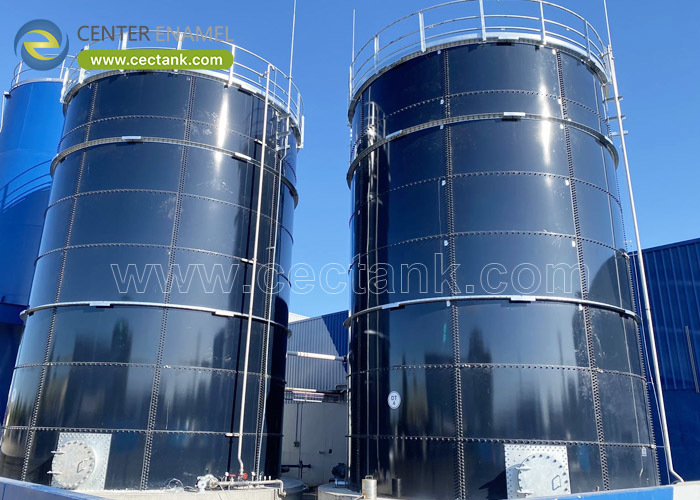
For TES duty, a bolted tank (GFS/FBE/stainless) is modular, ships as panels and erects fast, with certified liners for water contact and easy expansion; a welded steel tank is a shop- or field-welded shell, often used where the seamless structure or a pressurized class is needed. Neither is universal; duty, footprint, water chemistry and lifecycle decide. Center Enamel has no published TES delivery; its large-bolted-vessel builds show shell capability, cited as evidence only.
A TES tank is most often a bolted modular vessel, and the comparison with welded steel comes down to modularity versus a fixed shell. Bolted Glass-Fused-to-Steel, FBE or stainless tanks ship as panels, erect faster on site, allow later capacity expansion by adding rings, and suit large diameters and remote sites; they follow AWWA D103 and ISO 28765. Welded steel suits high-pressure, seamless or very-large single-volume duty and follows ASME Section VIII or AWWA D100, but is slower and harder to modify. For thermal storage the bolted shell is usually preferred for speed, expandability and transport, while welded wins where pressure or a fixed giant volume governs. Center Enamel has no published TES delivery; its large-bolted-vessel builds show the capability cited as evidence only.
A welded steel tank is a single continuous shell, often used where a seamless structure or a pressurized class suits the site. A bolted TES tank is modular, erected from panels, easier to ship to a constrained site and expand as load grows, with certified liners for water contact. The right choice follows duty, footprint, water chemistry and lifecycle cost, not a generic preference.
- Welded: seamless, fixed-shell structure.
- Bolted: modular, panel-shipped, expandable.
- Both serve water and thermal duty.
- Duty, footprint, chemistry, lifecycle decide.
Bolted panels ship in containers and erect without heavy field welding, which shortens the schedule on a tight or remote site and avoids the welding quality control of a field-welded shell. Welded shells ship as plates or a fabricated unit and need more on-site welding and inspection.
- Bolted: containerised panels, fast erect.
- Welded: plates or unit, more site welding.
- Bolted shortens schedule on tight/remote sites.
- Welded needs more on-site QA.
For a growing site, bolted tanks score well: add panels to expand without rebuilding the shell. Welded shells are fixed and harder to enlarge. Over a 20-plus-year life, expansion and refurbishment cost tilt the maths toward bolted for sites that will grow.
- Bolted: add panels to expand.
- Welded: fixed, hard to enlarge.
- 20-plus-year lifecycle favours bolted for growth.
- Lifecycle cost, not capital, decides.
Choose welded when its specific advantage - pressure class, a seamless structure for a contained loop, or a site where panel joints are undesirable - is the binding constraint. For most atmospheric chilled-water TES duty the bolted shell is the common default unless footprint or loop pressure forces the alternative.
- Welded when pressure class binds.
- Welded for seamless contained loops.
- Welded where joints are undesirable.
- Bolted is the default for atmospheric TES.
Bolted TES shells use GFS or FBE liners (or stainless) certified for water contact; welded shells use coated or stainless plate. The liner decision follows the water chemistry and the contact standard (NSF/ANSI 61, WRAS where applicable), and it is independent of the bolted-versus-welded structural choice.
- Bolted: GFS/FBE/stainless liners.
- Welded: coated or stainless plate.
- Liner follows chemistry and contact standard.
- Independent of structural choice.
Honest boundary: Center Enamel has no published thermal-energy-storage or data-center TES delivery in its verified project record. The references above (Namibia 44,900 m3 GFS drinking water, 2022; Cilincing 21,088 m3; Sardinia 30,549 m3) are cited strictly as large-diameter bolted-vessel manufacturing-capability evidence, not as TES or data-center projects. No TES project result, dimension or client is claimed.
Parameter |
Value |
Note |
Company |
Shijiazhuang Zhengzhong Technology (Center Enamel) |
GFS tank manufacturer since 2008 |
Manufacturing system |
Bolted GFS / FBE / stainless / galvanized + ASME Sec VIII vessels |
Same plant builds all families |
Capability reference |
Namibia drinking-water 44,900 m3 (2022); diameter/height Not Provided |
GFS bolted; cited as large-vessel capability, NOT a TES project |
Other verified large builds |
Cilincing Indonesia 21,088 m3 (2024); Sardinia 30,549 m3 (2025) |
Water / process duty; not TES |
Standards |
AWWA D103, ISO 28765, EN 1090, ASME VIII, NSF/ANSI 61, WRAS |
Where potable or indirect-potable contact applies |
Scale |
>30,000 installed projects; 100+ countries; up to 60,000 m3 single tank |
Public company facts |
A bolted tank is modular, panel-shipped and expandable with certified liners; a welded tank is a seamless field- or shop-welded shell, often for pressure class or a fixed structure.
Bolted, because panels ship in containers and erect without heavy field welding, shortening the schedule on tight or remote sites.
Bolted - you add panels to expand without rebuilding the shell, which matters over a 20-plus-year lifecycle.
When pressure class, a seamless contained loop, or a site where panel joints are undesirable is the binding constraint; otherwise bolted is the atmospheric TES default.
No - both can use GFS, FBE or stainless certified for water contact; the liner follows chemistry and NSF/ANSI 61 or WRAS, independent of the structural choice.
Honest boundary: Center Enamel has no published thermal-energy-storage or data-center TES delivery in its verified project record. The references above (Namibia 44,900 m3 GFS drinking water, 2022; Cilincing 21,088 m3; Sardinia 30,549 m3) are cited strictly as large-diameter bolted-vessel manufacturing-capability evidence, not as TES or data-center projects. No TES project result, dimension or client is claimed.
Bolted tends to win on expansion and refurbishment for growing sites; welded wins where its structural or pressure advantage is required.
Atmospheric bolted tanks follow AWWA D103 and ISO 28765; pressurized or welded shells follow ASME Section VIII; liners certified to NSF/ANSI 61 and WRAS where contact applies.
No. The decision follows duty, footprint, water chemistry, pressure class and lifecycle cost; neither is universally superior.
A TES tank as a bolted Glass-Fused-to-Steel, FBE or stainless shell versus a welded steel shell is a trade-off of modularity, shipping and expansion against a seamless fixed structure. Bolted wins for fast erection and growing sites; welded wins where pressure class or a seamless loop binds. Center Enamel supplies both bolted and welded families and has no published TES delivery; its large-water builds are cited as capability evidence only.
Suggested CTA: Share your duty, footprint and pressure class with Center Enamel to receive a bolted-versus-welded recommendation and capability datasheet.