-
Glass Fused To Steel Tanks (837)
-
Stainless Steel Tanks (434)
-
Fusion Bonded Epoxy Tanks (622)
-
Galvanized Steel Tanks (321)
-
Aluminum Dome Roofs (1336)
-
Wastewater Storage Tanks (280)
-
Welded Steel Tanks (457)
-
Pressure Vessels (295)
-
Anaerobic Digester (202)
-
Industrial Water Tanks (349)
-
Glass Lined Steel Tanks (180)
-
Bolted Steel Tanks (389)
-
Sludge Storage Tank (115)
-
Biogas Storage Tank (173)
-
Leachate Storage Tanks (133)
-
Agricultural Water Storage Tanks (179)
-
Fire Water Tank (166)
-
Grain Storage Silos (146)
-
Biogas Projects (424)
-
Wastewater Treatment Projects (1610)
-
Double Membrane Roof (223)
|
Emergency Chilled Water Storage Tanks: N+1 Reserve and Fail-Safe Capacity
| Brand Name: | Shijiazhuang Zhengzhong Technology Co.,Ltd |
|
Detail Information |
|||
Product Description
An emergency chilled water storage tank is the reserve asset that lets a data center keep cooling when a chiller trips, a power transfer stumbles, or a pump fails. It is not the same as the everyday TES used for tariff shifting; it is sized and configured for fail-safe continuity. This article covers the tank as a resilience asset.
Key TakeawayAn emergency chilled water storage tank for a data center is a reserve volume, sized as an N+1 buffer, that sustains cooling through a defined failure window (often 15 to 60 minutes) while backup chillers or power come online. The key decisions are the reserve duration, the fail-safe fill and draw path, and the isolation valves that keep the reserve dedicated to the cooling loop.
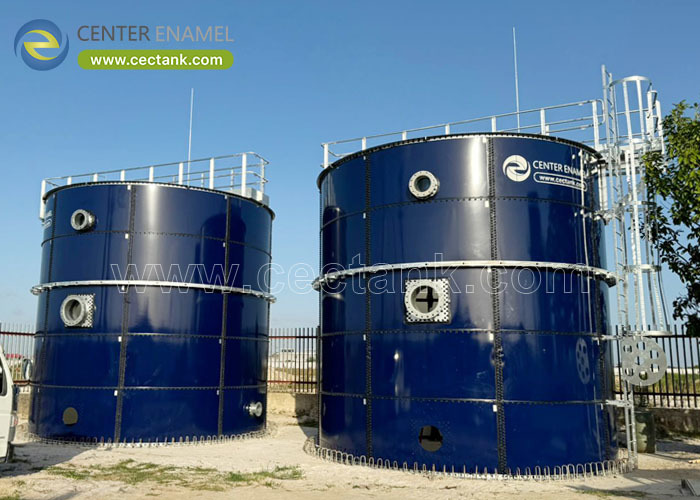
The tank volume follows the cooling load you must carry times the failure window you must bridge. A 30-minute bridge at a given kW load gives a target cubic-meter figure once you fix the allowable temperature rise. Size for the worst credible single failure, not the average dip. The Dubai fire-water tank (2025, 652 m3) and the Indonesia Cilincing water tank (2024, 21,088 m3) are reserve and large water tanks we delivered for other critical sites, cited as analogous capability, not data-center projects.
- Volume = load x bridge window / usable delta-T.
- Size for worst single failure.
- 15-60 minute bridge is common.
- Keep reserve dedicated to cooling.
An emergency tank must fill and draw without operator action during a fault. That means a normally-open make-up path and a gravity or pump-assisted draw that activates on low header pressure. The isolation valves should prevent the reserve from being quietly consumed for routine top-up.
- Automatic fill on normal operation.
- Draw triggers on low header pressure.
- Isolation prevents routine consumption.
- No manual step during a fault.
Place the reserve where it serves the cooling loop with the shortest, most protected path, and consider duplicating small tanks rather than one large one so a single leak cannot wipe out the reserve. Redundant arrays also ease maintenance. Our Namibia installation delivered six tanks (6 x 11,230 m3) as a coordinated array, analogous to a redundant multi-tank strategy.
- Short, protected path to cooling loop.
- Consider duplicated small tanks.
- Redundant array eases maintenance.
- Single leak should not erase reserve.
The reserve stays wet and must stay clean. GFS or FBE linings give an inert, holiday-tested surface; stainless suits compact or high-purity loops. The tank should carry a level and temperature sensor tied to the BMS so the reserve is monitored, not assumed.
- GFS / FBE inert lining, holiday tested.
- Stainless for compact or pure loops.
- Level and temperature to BMS.
- Reserve must be monitored, not assumed.
| Decision | Options | Driver |
| Duration | 15-60 min bridge | Worst single failure |
| Topology | Single large / multi small | Leak isolation |
| Lining | GFS / FBE / SS | Water cleanliness |
| Control | BMS auto draw | Fail-safe |
We have no data-center emergency tank in this library. The reserve and large water tanks cited (Dubai 652 m3, Indonesia 21,088 m3, Namibia array) are analogous critical-infrastructure deliveries, not data-center projects, and are offered as evidence of our ability to build large, monitored, coated reserve tanks.
- No data-center reserve in library.
- Citations analogous, not claims.
- Large monitored tank capability real.
- Specify your bridge window for design.
Commonly 15 to 60 minutes, enough to start backup chillers or transfer power. The right window follows your redundancy and recovery time objective.
Is an emergency tank the same as TES?No. Emergency storage is sized for fail-safe continuity over a short window; TES is sized for hours of tariff or peak shifting. They can share a tank but serve different logic.
Should I use one large or several small tanks?Several small tanks isolate a single leak and ease maintenance, at higher cost; one large tank is cheaper per cubic meter but a leak is a bigger single point of failure.
What lining is best for reserve water?GFS or FBE for corrosion resistance and cleanliness in continuous wet service; stainless for compact or high-purity loops.
How is the reserve kept from being used up?Isolation valves and a BMS draw trigger keep the reserve dedicated; routine top-up draws from a separate make-up source.
Have you delivered this for data centers?Not in our project library. We cite large water and reserve tanks at other critical sites as analogous capability, not data-center deliveries.
An emergency chilled water storage tank is a fail-safe reserve, sized to bridge a defined failure window with an automatic fill and draw path and dedicated isolation. Volume follows the worst credible single failure, not the average dip, and redundant topology protects against a single leak. Treat it as a resilience asset distinct from everyday TES, and monitor it through the BMS rather than assuming it is full.
Suggested CTA: Share your cooling load and recovery window and we will size a monitored, coated emergency reserve tank or array for your site.