-
Glass Fused To Steel Tanks (837)
-
Stainless Steel Tanks (434)
-
Fusion Bonded Epoxy Tanks (622)
-
Galvanized Steel Tanks (321)
-
Aluminum Dome Roofs (1336)
-
Wastewater Storage Tanks (280)
-
Welded Steel Tanks (457)
-
Pressure Vessels (295)
-
Anaerobic Digester (202)
-
Industrial Water Tanks (349)
-
Glass Lined Steel Tanks (180)
-
Bolted Steel Tanks (389)
-
Sludge Storage Tank (115)
-
Biogas Storage Tank (173)
-
Leachate Storage Tanks (133)
-
Agricultural Water Storage Tanks (179)
-
Fire Water Tank (166)
-
Grain Storage Silos (146)
-
Biogas Projects (424)
-
Wastewater Treatment Projects (1610)
-
Double Membrane Roof (223)
|
Chilled Water TES Systems: Stratified, Ice, and Chilled-Water Comparison
| Brand Name: | Shijiazhuang Zhengzhong Technology Co.,Ltd |
|
Detail Information |
|||
Product Description
Chilled Water TES Systems: Stratified, Ice, and Chilled-Water Comparison
Not all TES is a big water tank. Data center cooling can use stratified chilled-water storage, ice storage, or a chilled-water system with partial storage, and the choice changes the tank, the chiller, and the footprint. This article compares the system types so you can pick the right one before sizing the vessel.
Chilled water TES systems for data centers fall into three main types: stratified chilled-water tanks (large, simple, cheap per kWh), ice storage (compact, needs lower temperature and more chiller lift), and partial-storage chilled-water systems (smaller tank, more chiller hours). Stratified water is usually the default for data centers; ice wins on footprint where space is scarce and the chiller can handle the lift.
Stratified chilled-water TES
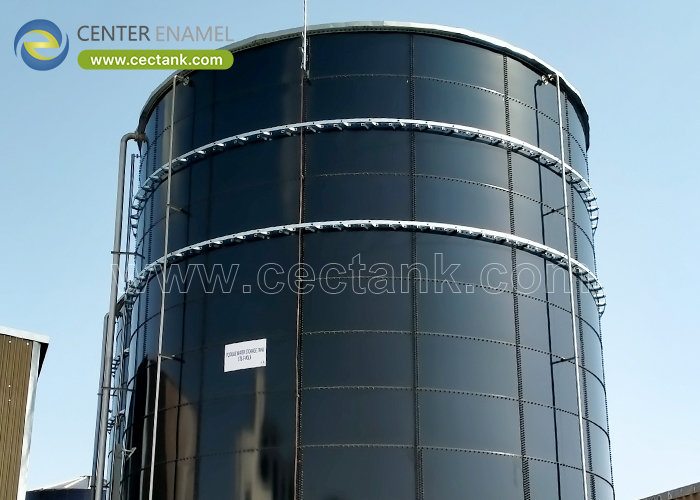
A stratified tank stores chilled water in layers, cold at the bottom, warm at the top, separated by a thermocline maintained by a diffuser. It is simple, cheap per kWh of storage, and uses the existing chiller temperature range. The Italy Sardinia chilled process water tank (2025, 30,549 m3) is a large coated water tank we delivered, analogous evidence, not a data-center project.
- Layers via diffuser thermocline.
- Cheap per kWh stored.
- Uses existing chiller range.
- Default for data centers.
Ice storage
Ice storage makes and melts ice, storing far more cooling per volume but requiring chiller water around 0 C and extra lift, which costs efficiency and compressor work. It suits sites where land or height is the constraint, not energy. The Italy warm-water storage tank (1,200 m3) we delivered is a thermal storage reference, not ice and not a data-center project.
- High density per volume.
- Needs ~0 C and extra lift.
- Costs chiller efficiency.
- Wins on footprint, not energy.
Partial vs full storage
Full storage charges completely off-peak and runs chillers little by day; partial storage keeps chillers running at a reduced peak, shrinking the tank. Partial storage often balances capital and operating cost better than either extreme.
- Full: chillers off-peak only.
- Partial: reduced daytime peak.
- Partial often best balance.
- Tank size follows strategy.
Comparison summary
The table contrasts the three on the factors that matter to a data center specifier.
- Compare on density, cost, lift.
- Stratified default; ice for space.
- Partial storage balances cost.
Type |
Density |
Chiller impact |
Best when |
Stratified water |
Low |
Minimal |
Default, cheap land |
Ice |
High |
Extra lift |
Space constrained |
Partial water |
Medium |
Reduced peak |
Balanced cost |
Honest boundaries on our references
We have no data-center TES system in this library. The large coated and thermal-storage tanks cited (Italy Sardinia 30,549 m3, Italy warm-water 1,200 m3) are analogous industrial deliveries, not data-center projects.
- No data-center TES in library.
- Citations analogous, not claims.
- Large stratified build is real.
- System choice needs your spec.
Frequently Asked Questions
Which TES type is best for data centers?
Stratified chilled water is usually the default: cheap per kWh and within the existing chiller range. Ice storage wins where footprint, not energy, is the constraint.
Does ice storage save energy?
Generally no; it needs chiller water near 0 C and extra lift, costing efficiency. It saves space, not energy.
What is partial storage?
A strategy where chillers keep running at a reduced daytime peak and the tank is smaller than full storage; it often balances capital and operating cost.
How does a stratified tank keep layers?
A diffuser at the inlet prevents mixing, maintaining a thermocline between cold bottom and warm top layers.
Does the tank type change the chiller?
Yes. Ice storage requires chillers capable of lower temperature and higher lift; stratified water uses the normal chilled-water range.
Have you built this for data centers?
Not in our project library. We cite large coated and thermal-storage tanks at other clients as analogous capability, not data-center deliveries.
Choosing a chilled water TES system starts with type: stratified water is the data-center default for low cost per kWh, ice storage trades energy for footprint, and partial storage balances capital against operating cost. The tank, chiller, and footprint all follow that first decision, so pick the system before sizing the vessel. Stratified water wins on simplicity and cost where land allows; ice is the space-constrained exception that pays in compressor work.
Suggested CTA: Tell us your space constraint and chiller range and we will compare stratified, ice, and partial TES system types for your data center.