-
Glass Fused To Steel Tanks (807)
-
Stainless Steel Tanks (434)
-
Fusion Bonded Epoxy Tanks (607)
-
Galvanized Steel Tanks (321)
-
Aluminum Dome Roofs (1336)
-
Wastewater Storage Tanks (280)
-
Welded Steel Tanks (457)
-
Pressure Vessels (295)
-
Anaerobic Digester (202)
-
Industrial Water Tanks (349)
-
Glass Lined Steel Tanks (180)
-
Bolted Steel Tanks (389)
-
Sludge Storage Tank (115)
-
Biogas Storage Tank (173)
-
Leachate Storage Tanks (133)
-
Agricultural Water Storage Tanks (179)
-
Fire Water Tank (166)
-
Grain Storage Silos (146)
-
Biogas Projects (424)
-
Wastewater Treatment Projects (1570)
-
Double Membrane Roof (223)

|
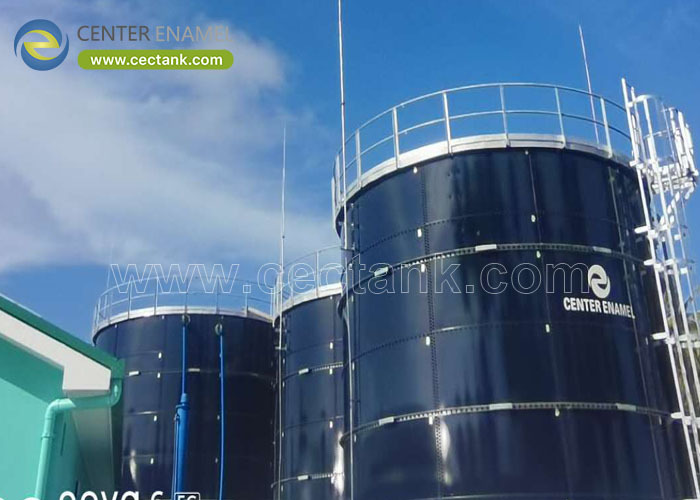
200 m³ Sludge Storage Tank: Design, Mixing, and Material Choices
| Place of Origin: | China |
| Brand Name: | CEC TANKS |
| Certification: | ISO 9001:2008, AWWA D103 , OSHA , BSCI |
| Model Number: | W |
| Minimum Order Quantity: | 1set |
| Price: | $5000~$20000 one set |
| Packaging Details: | PE poly-foam between each two steel plates ; wooden pallet and wooden |
| Delivery Time: | 10-30 days after deposit received |
| Payment Terms: | L/C,T/T |
| Supply Ability: | 60 sets per month |
|
Detail Information |
|||
| Place of Origin | China | Brand Name | CEC TANKS |
|---|---|---|---|
| Certification | ISO 9001:2008, AWWA D103 , OSHA , BSCI | Model Number | W |
| Coating Thickness: | 0.25mm~0.40mm , Two Layer Of Coating Internal And External | Adhesion: | 3,450N/cm |
| Service Life: | ≥30 Years | Steel Grade: | ART 310 |
| Size Of Panel: | 2.4M * 1.2M | Acid And Alkalinity Proof: | Standard Coating Suits For PH3 - PH11, Special Coating Suits For PH1 - PH14 |
| Capactiy Available: | 20 M3 To 18,000 M3 | Easy To Clean: | Smooth, Glossy, Inert, Anti-adhesion |
| Steel Plates Thickness: | 3mm - 12mm , Depends On The Diameter & Height | Usage: | Waste Water Treatment , Sewage Treatment, Effluent Treatment, Ect. |
| Easy To Cle: | Smooth, Glossy, Inert, Anti-adhesion | Warranty Period: | 2 Years Free Of Charge |
| Installation: | By Jacking Machine Or Steel Pole, Fast In Installation | Defect Free: | Minimum Maintenance Needed |
| Impact Resistance: | Excellent | Highlight: | 200 m³ sludge storage tank,sludge storage tank with mixing,wastewater storage tank material choices |
Product Description
200 m³ Sludge Storage Tank: Design, Mixing, and Material Choices
A 200 m3 sludge storage tank is the small end of the buffer class - large enough to equalize a process stream, small enough that geometry and mixing decide whether it works. This article covers the dimensions that actually fit a 200 m3 footprint, how to keep sludge from settling and crusting, and which material earns its place.
For a 200 m3 class sludge storage tank the practical geometry is about 5.4-6.1 m diameter x 7.2-9.0 m, and the design lives or dies on mixing: plan 5-15 W/m3 of submersible or jet mixing to stop settling and a sealed roof to control odor and gas. Glass-Fused-to-Steel (GFS) is the common choice for corrosion resistance and fast bolted erection; FBE or concrete are alternatives depending on the sludge chemistry.
Geometry of a 200 m3 Class Tank
Sludge tanks are usually taller than water tanks because land and roofing cost more than shell. A 200 m3 buffer typically lands near 5.4 m diameter x 9.0 m, or 6.11 m x 7.2 m, both of which keep the footprint modest while reaching the volume. The exact ratio is set by site height limits, mixer reach and how the tank ties into upstream/downstream process elevations.
- Typical: Ø5.35-6.11 m x 7.2-9.0 m for ~200 m3.
- Taller shells reduce footprint but challenge mixer reach.
- Match tank elevation to pump suction and process piping.
Mixing: The Difference Between a Tank and a Settling Pit
Sludge settles and forms a crust if left still. The accepted design range is about 5-15 W/m3 of installed mixing power, delivered by submersible mixers, jet mixers or a draft tube, sized to the tank volume and sludge rheology. Too little and solids drop out; too much wastes energy and re-suspends grit. The mixer must also be serviceable without emptying the tank.
- 5-15 W/m3 installed mixing power is the working range.
- Submersible or jet mixers; plan for in-tank service access.
- Higher solids / higher viscosity push toward the top of the range.
Material: GFS, FBE, or Concrete
Raw and digested sludge are corrosive and abrasive, and the gas space above the liquid is often the worst environment because of H2S. GFS bolts together from factory-fired panels with a vitreous enamel face that resists both; FBE (Fusion-Bonded Epoxy) is the alternative where a thicker organic coat is preferred; concrete is robust but slow and hard to seal at penetrations. For a single 200 m3 buffer, bolted GFS or FBE wins on schedule and leak tightness.
| Material | Corrosion resistance | Erection | Best fit |
|---|---|---|---|
| GFS (enamel) | High (inert glass face) | Bolted, fast | General sludge, odor/sealed roof. |
| FBE epoxy | High (organic coat) | Bolted, fast | Where thick coat preferred. |
| Concrete | Good (but joints) | Cast in place, slow | Very large or fixed sites. |
Project Reference
Real sludge-handling tanks delivered by the company show the family this 200 m3 class belongs to. At the HK Veolia Landfill Leachate Treatment Project (2019), sludge holding and thickened-sludge tanks were built with GFS roofs among a multi-tank leachate train - evidence of the same sludge-tank engineering at larger scale.
- HK Veolia Landfill Leachate, 2019: sludge holding + thickened-sludge tanks with GFS roofs.
- Demonstrates sealed, corrosion-resistant sludge tanks in an aggressive leachate environment.
Company Expertise
Center Enamel builds GFS and FBE sludge holding tanks with a 100% 1500 V holiday-tested shell, ISO 28765 design and bolted erection that reaches small volumes like 200 m3 without custom fabrication. The sealed-roof, mixed-sludge logic is the same whether the tank is 200 m3 or 20,000 m3.
Frequently Asked Questions
What are typical dimensions of a 200 m3 sludge tank?
Roughly 5.4-6.1 m diameter by 7.2-9.0 m. The exact ratio depends on site height limits, mixer reach and process elevations.
How much mixing does a sludge tank need?
Plan 5-15 W/m3 of installed mixing power, delivered by submersible or jet mixers, to prevent settling and crusting. Very viscous or high-solids sludge sits toward the top of that range.
Is GFS or concrete better for a small sludge tank?
For a 200 m3 buffer, bolted GFS is usually faster to erect and easier to seal at penetrations than cast concrete, with an inert enamel face that resists the corrosive gas space.
Do I need a roof on a sludge holding tank?
A sealed roof controls odor and the H2S-rich gas space that attacks the tank. Open tanks are rare for sludge except where the process explicitly calls for it.
Can a 200 m3 tank handle anaerobic sludge?
Yes, provided it is sealed, mixed and the gas is managed. Many small digester-adjacent buffers are exactly this class.
What standard applies to GFS sludge tanks?
Design to ISO 28765 with structure per AWWA D103-09; specify a 100% holiday (spark) test on the enamel.
A 200 m3 sludge storage tank succeeds on details: a compact tall geometry, enough mixing to keep solids in suspension, a sealed roof for the gas space, and a corrosion-resistant liner. GFS or FBE bolted construction delivers that combination quickly and at modest volume.
Send us your sludge type, solids content and available footprint and we will size a mixed, sealed 200 m3 class GFS or FBE buffer for your process.