-
Glass Fused To Steel Tanks (807)
-
Stainless Steel Tanks (434)
-
Fusion Bonded Epoxy Tanks (607)
-
Galvanized Steel Tanks (321)
-
Aluminum Dome Roofs (1336)
-
Wastewater Storage Tanks (280)
-
Welded Steel Tanks (457)
-
Pressure Vessels (295)
-
Anaerobic Digester (202)
-
Industrial Water Tanks (349)
-
Glass Lined Steel Tanks (180)
-
Bolted Steel Tanks (389)
-
Sludge Storage Tank (115)
-
Biogas Storage Tank (173)
-
Leachate Storage Tanks (133)
-
Agricultural Water Storage Tanks (179)
-
Fire Water Tank (166)
-
Grain Storage Silos (146)
-
Biogas Projects (424)
-
Wastewater Treatment Projects (1570)
-
Double Membrane Roof (223)
|
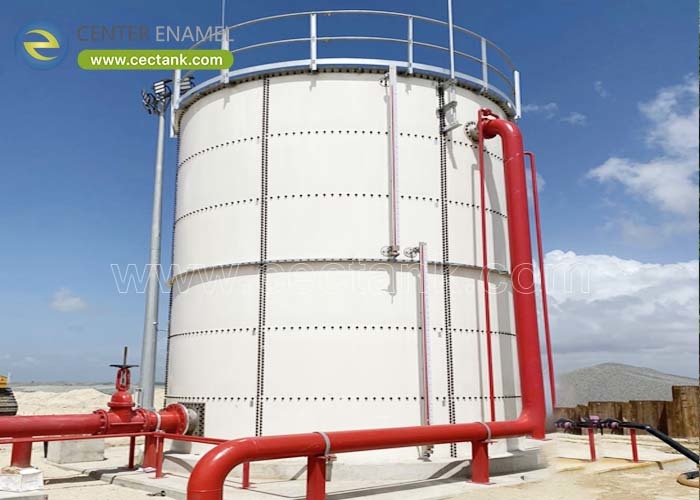
FDA-Compliant GFS Tanks: Food- and Pharma-Grade Storage
| Place of Origin: | China |
| Brand Name: | CEC TANKS |
| Certification: | ISO 9001:2008, AWWA D103 , OSHA , BSCI |
| Model Number: | W2016012610 |
| Minimum Order Quantity: | 1set |
| Price: | $5000~$20000 one set |
| Packaging Details: | PE poly-foam between each two steel plates ; wooden pallet and wooden box |
| Delivery Time: | 0-60 days after deposit received |
| Payment Terms: | L/C,T/T |
| Supply Ability: | 60 sets per month |
|
Detail Information |
|||
Product Description
'FDA-certified GFS tank' bundles two ideas buyers should keep separate: a food-contact regulation (FDA 21 CFR 175.300) and a tank material (Glass-Fused-to-Steel). GFS is genuinely well suited to food and pharma storage because its glass lining is inert and non-leaching - but compliance is something you specify and document, not something a panel wears like a badge.
An FDA-compliant GFS tank uses a glass lining that meets FDA 21 CFR 175.300 (and, for water/export, NSF/ANSI 61, EU 1935/2004, LFGB and WRAS) - an inert, non-leaching surface that does not impart taste or contaminants. The key is to specify the lining grade for your exact application and obtain written compliance; GFS fits food and pharma storage where the stored product is compatible with a vitreous-enamel interior, not every food-contact duty.
21 CFR 175.300 is the U.S. regulation for resinous and polymeric coatings on food-contact surfaces. For GFS, the claim is that the fired glass lining meets the extractives and use conditions in that regulation. It is a material compliance, documented per lining formulation and intended use - not a one-time certificate that travels with every tank regardless of what it holds.
- FDA 21 CFR 175.300 = coatings on food-contact surfaces.
- Compliance is per lining formulation and use.
- Documented, not a generic badge.
The reason GFS suits food and pharma is the glass itself: an inorganic, vitreous surface fused at 820-930C that does not soften, leach or impart taste under normal storage. That inertness, plus a smooth cleanable face, is why GFS appears in potable-water and process-liquid duty. For international food/pharma work the same lining is often documented against NSF/ANSI 61, EU 1935/2004, LFGB and WRAS depending on market.
- Inorganic glass: no leach, no taste.
- Smooth, cleanable hygienic face.
- NSF/ANSI 61, EU 1935/2004, LFGB, WRAS by market.
GFS is strong for potable water, many food/beverage process liquids and pharmaceutical-grade water storage where a vitreous enamel interior is compatible. It is not automatically right for every food-contact duty - highly acidic or fluoride-bearing streams can attack glass, and some products need stainless or a specific polymer lining. The honest step is to state the product and get the lining graded and documented for it.
- Fits: potable water, food/beverage process, pharma water.
- Caution: strong acid / fluoride can attack glass.
- Match lining grade to the exact product.
Document the lining against the market you sell into:
| Market | Standard to document |
|---|---|
| USA | FDA 21 CFR 175.300 |
| Global potable | NSF/ANSI 61 |
| EU | EU 1935/2004 |
| Germany | LFGB |
| UK | WRAS |
Food and beverage references show the hygiene class in service: the Coca-Cola plant wastewater projects in Malaysia (2016) and Saudi Arabia (2017, Dammam and Riyadh) and the YiLi dairy wastewater project in Gansu, China (2020) demonstrate tanks supplied into food/beverage industry environments where hygiene and compliance matter.
- Coca-Cola Malaysia 2016; Coca-Cola Saudi 2017 (Dammam/Riyadh).
- YiLi dairy Gansu 2020 - food/beverage industry.
Center Enamel supplies GFS tanks with NSF/ANSI 61-capable linings and food/beverage industry references, and can document compliance (FDA 21 CFR 175.300, EU 1935/2004, LFGB, WRAS as applicable) for the specific lining and use you specify.
A GFS lining can be documented to FDA 21 CFR 175.300 where the formulation and use condition qualify; obtain the written compliance for your product.
NSF/ANSI 61 is the potable-water contact standard; GFS linings are commonly documented to it, and to EU 1935/2004, LFGB and WRAS by market.
No - strong acids and fluorides can attack the glass. State the product and have the lining graded and documented for that use.
An inert, non-leaching, smooth vitreous surface that does not impart taste or contaminants and is easy to clean.
Specify the lining grade and intended product, then request the extractives/use-condition documentation per regulation.
Potable water, food/beverage process liquids, pharmaceutical-grade water and general industrial storage.
An FDA-compliant GFS tank is an inert, non-leaching glass lining documented for your specific product - not a generic certificate. Specify the lining grade, get the written compliance (FDA, NSF/ANSI 61, EU 1935/2004, LFGB, WRAS as needed), and keep clear on where vitreous enamel is and is not the right barrier.
Suggested CTA: Tell us your stored product and market and we will specify and document a GFS lining grade for FDA/NSF/EU compliance - with the reference list to match.