-
Glass Fused To Steel Tanks (690)
-
Stainless Steel Tanks (434)
-
Fusion Bonded Epoxy Tanks (592)
-
Galvanized Steel Tanks (321)
-
Aluminum Dome Roofs (1336)
-
Wastewater Storage Tanks (237)
-
Welded Steel Tanks (457)
-
Pressure Vessels (295)
-
Anaerobic Digester (202)
-
Industrial Water Tanks (349)
-
Glass Lined Steel Tanks (180)
-
Bolted Steel Tanks (389)
-
Sludge Storage Tank (115)
-
Biogas Storage Tank (173)
-
Leachate Storage Tanks (133)
-
Agricultural Water Storage Tanks (179)
-
Fire Water Tank (166)
-
Grain Storage Silos (146)
-
Biogas Projects (424)
-
Wastewater Treatment Projects (1389)
-
Double Membrane Roof (223)

|
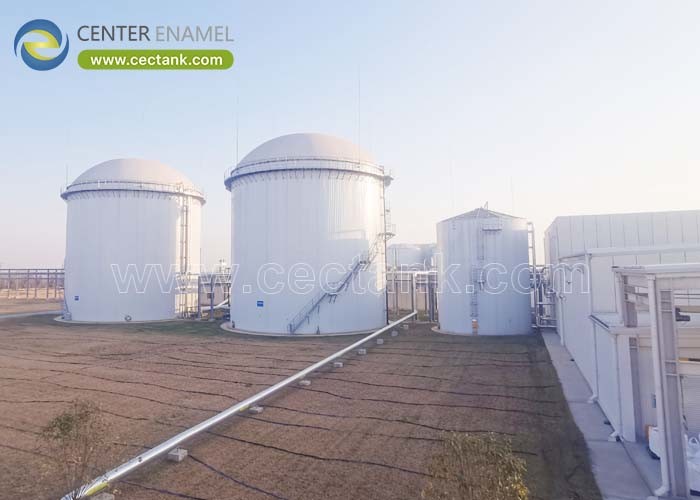
Biogas Digester: How Anaerobic Digestion Tanks Convert Organic Waste into Renewable Energy
| Place of Origin: | China |
| Brand Name: | CEC TANKS |
| Certification: | ISO 9001:2008, AWWA D103 , OSHA , BSCI |
| Model Number: | J2016012316 |
| Minimum Order Quantity: | 1set |
| Price: | $5000~$20000 one set |
| Packaging Details: | PE poly-foam between each two steel plates ; wooden pallet and wooden box |
| Delivery Time: | 0-60 days after deposit received |
| Payment Terms: | L/C,T/T |
| Supply Ability: | 60 sets per month |
|
Detail Information |
|||
| Place of Origin | China | Brand Name | CEC TANKS |
|---|---|---|---|
| Certification | ISO 9001:2008, AWWA D103 , OSHA , BSCI | Model Number | J2016012316 |
| Acid And Alkalinity Proof: | Standard Coating Suits For PH3 - PH11, Special Coating Suits For PH1 - PH14 | Elastic: | Same As Steel Sheet , Around 500KN/mm |
| Serive Life: | More Than 30 Years | PH Range: | PH 1 - PH 14 |
| Coating Color: | Dark Blue, Dark Green , White, And Customized | Steel Plates Thickness: | 3mm - 12mm , Depends On The Diameter & Height |
| Easy Yo Clean: | Smooth, Glossy, Inert, Anti-adhesion | Coating Thickness: | 4.0.25mm - 0.4mm, Two Coating Internal And External |
| Highlight: | biogas digester anaerobic digestion tank,glass fused steel biogas digester,organic waste renewable energy digester |
||
Product Description
Biogas Digester: How Anaerobic Digestion Tanks Convert Organic Waste into Renewable Energy
Organic waste - manure, food scraps, sludge, and agricultural residues - is energy waiting to be released. Left untreated, it pollutes water and air; processed in an anaerobic digester, it becomes biogas for heat and power and a nutrient-rich digestate for soil. The digester tank is the heart of that conversion: it must hold an oxygen-free, acidic, gas-rich environment for decades while staying gas-tight and safe. Get the tank right and the whole energy project works.
Shijiazhuang Zhengzhong Technology Co., Ltd (Center Enamel) builds biogas digester tanks - GFS and stainless - that contain the anaerobic process and collect the gas. As China's first GFS manufacturer since 2008 with nearly 200 enameling patents, the company has exported biogas containment systems to more than 100 countries.
1. How Does a Biogas Digester Work?
A biogas digester is an oxygen-free tank where microbes break down organic matter, producing biogas and a nutrient-rich residue called digestate.
- Anaerobic breakdown: without oxygen, bacteria convert organics to biogas - roughly 55-65% methane and the rest mostly CO2.
- Temperature bands: mesophilic digestion runs at 35-38 degrees Celsius; thermophilic at 50-55 degrees Celsius for faster rates.
- Mixing and retention: CSTR digesters mix continuously; UASB relies on upflow - both need a sealed, gas-tight tank.
- Gas collection: biogas rises into a hood or membrane gasholder, then to a generator, boiler, or grid.
2. Which Tank Types Host Digestion?
The digester tank must be gas-tight, acid-resistant, and durable - GFS and stainless bolted tanks meet all three.
- GFS digester tanks: glass-fused-to-steel resists H2S and process acids at 35-38 degrees Celsius, with a 30-50 year life.
- CSTR and UASB vessels: continuous-stirred and upflow reactors are supplied as complete gallon- or m3-rated digesters.
- Double-membrane gasholders: bolted tanks capped with membrane roofs store biogas at low pressure.
- Stainless option: 316/316L digesters suit high-chloride feedstocks and coastal sites.
3. Why Bolted Digester Tanks?
Bolted digesters deliver gas-tight performance fast, with factory control that field welding cannot match.
- Gas-tight by design: gasketed bolted panels and sealed roofs contain biogas and odor without welds to fail.
- Fast erection: panels bolt together in weeks, letting energy projects reach operation sooner.
- No field coating: factory-fused glass needs no on-site painting near flammable biogas.
- Expandable: parallel digesters scale capacity as feedstock grows.
| Digester Aspect | GFS Digester (Center Enamel) | Concrete Digester | Welded Steel |
|---|---|---|---|
| Gas tightness | Gasketed, sealed | Crack risk | Weld dependent |
| H2S resist | Inert glass | Coating needed | Coating needed |
| Erection | Weeks (bolted) | Months | Slow welding |
| Field paint | None | Some | Required |
| Lifecycle | 30-50 years | Repair | Recoat 5-10 yr |
Engineering Assurance
Center Enamel biogas digester tanks are FEA-verified to AWWA D103-09, manufactured under ISO 9001/45001, 100% high-voltage holiday spark tested at 1,500V, and certified to ISO 28765 - with gas-tight seals, membrane gasholder options, and biogas references across more than 100 countries.
A digester is a pressure vessel for biology. If the tank leaks gas or lets acid through, the microbes and the money both escape. Gas-tight and inert is not a premium - it is the floor.
Frequently Asked Questions (FAQ)
What is a biogas digester?
A biogas digester is an oxygen-free tank where anaerobic microbes break down organic waste into biogas (about 55-65% methane, the rest mainly CO2) and a nutrient-rich digestate. Center Enamel builds the digester tanks - typically GFS or stainless - that contain the process and collect the gas.
What temperature does a digester run at?
Most digesters run mesophilic at 35-38 degrees Celsius, or thermophilic at 50-55 degrees Celsius for faster breakdown. The tank and any heating are designed for the chosen band, with GFS surfaces resisting the H2S and acids produced.
Why use GFS for a biogas digester?
Digesters are gas-tight, acidic, and H2S-rich. GFS fused glass resists the chemistry and seals gas-tight by design, builds in weeks without field painting, and lasts 30-50 years - outperforming concrete and coated welded steel.
Can biogas digesters be customized?
Yes - digester type (CSTR, UASB), capacity, mixer or distributor, heating, membrane gasholder, and stainless or GFS material are engineered per feedstock and climate, supplied with installation support to 100+ countries.
Key Takeaways
- A biogas digester turns organic waste into biogas (55-65% methane) and digestate under oxygen-free conditions.
- Mesophilic (35-38 C) and thermophilic (50-55 C) bands set the tank heating and design.
- GFS digesters are gas-tight, H2S-resistant, and build in weeks with no field painting.
- Center Enamel supplies CSTR, UASB, and gasholder tanks as complete biogas systems to 100+ countries.