-
Glass Fused To Steel Tanks (690)
-
Stainless Steel Tanks (434)
-
Fusion Bonded Epoxy Tanks (592)
-
Galvanized Steel Tanks (321)
-
Aluminum Dome Roofs (1336)
-
Wastewater Storage Tanks (237)
-
Welded Steel Tanks (457)
-
Pressure Vessels (295)
-
Anaerobic Digester (202)
-
Industrial Water Tanks (349)
-
Glass Lined Steel Tanks (180)
-
Bolted Steel Tanks (389)
-
Sludge Storage Tank (115)
-
Biogas Storage Tank (173)
-
Leachate Storage Tanks (133)
-
Agricultural Water Storage Tanks (179)
-
Fire Water Tank (166)
-
Grain Storage Silos (146)
-
Biogas Projects (424)
-
Wastewater Treatment Projects (1389)
-
Double Membrane Roof (223)

|
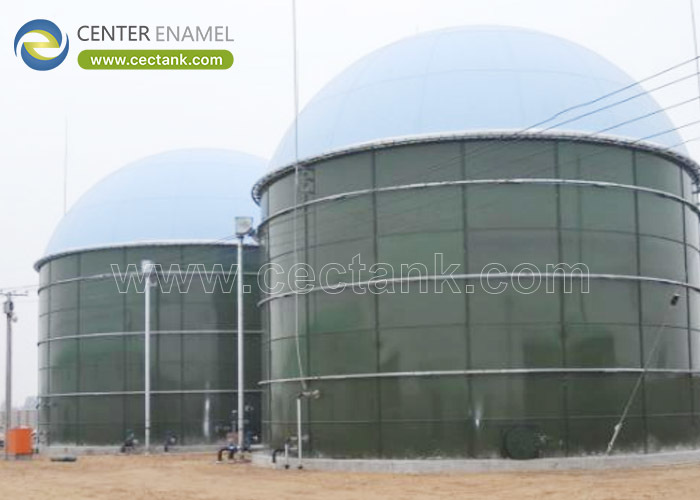
GFS Tanks FDA Certified: Food-Grade Glass-Fused-to-Steel Storage
| Place of Origin: | China |
| Brand Name: | CEC TANKS |
| Certification: | ISO 9001:2008, AWWA D103 , OSHA , BSCI |
| Model Number: | W |
| Minimum Order Quantity: | 1set |
| Price: | $5000~$20000 one set |
| Packaging Details: | PE poly-foam between each two steel plates ; wooden pallet and wooden |
| Delivery Time: | 10-30 days after deposit received |
| Payment Terms: | L/C,T/T |
| Supply Ability: | 60 sets per month |
|
Detail Information |
|||
| Place of Origin | China | Brand Name | CEC TANKS |
|---|---|---|---|
| Certification | ISO 9001:2008, AWWA D103 , OSHA , BSCI | Model Number | W |
| Tank Body Color: | Dark Green / Can Be Customized | Corrosion Integrity: | Excellent |
| Steel Plates Thickness: | 3mm To 12mm , Depends On The Tank Structure | Chemical Resistance: | Excellent |
| Size Of Panel: | 2.4M * 1.2M | Easy To Clean: | Smooth, Glossy, Inert, Anti-adhesion |
| Highlight: | FDA certified glass fused steel tanks,food-grade steel storage tanks,glass fused to steel water tanks |
||
Product Description
GFS Tanks FDA Certified: Food-Grade Glass-Fused-to-Steel Storage
Food and beverage processors face a containment problem that most industrial specifications never address: the stored product is going to be consumed, so the tank surface itself becomes a food safety surface. Across dairies, breweries, juice and beverage plants, and edible oil facilities, the failures follow a predictable course — a lining that was never tested for food contact, a surface that develops micro-pitting where product residue and bacteria collect, a cleaning regime that cannot reach the geometry, or a coating that begins to taint the product after a few thermal cycles. The cost is rarely the tank; it is the batch, the recall exposure, and the audit finding.
Glass-fused-to-steel is inherently well suited to food contact because the fired glass surface is inert, non-porous, and smooth, giving no leaching, no taint, and no niche for bacterial colonisation. FDA certified GFS tanks confirm that suitability through recognised food-contact testing rather than assertion. Shijiazhuang Zhengzhong Technology Co., Ltd. (Center Enamel) manufactures bolted GFS tanks under ISO 9001 with FDA and LFGB food-contact coverage, supplying food, beverage, and agricultural processors in more than 100 countries.
1. What Does FDA Certification Actually Confirm?
FDA food-contact recognition confirms that the material is acceptable for contact with food under its intended conditions of use, based on composition and extraction testing. For a tank coating, that means the surface will not transfer harmful or objectionable substances into the product at the temperatures and contact times the process actually uses.
- Material Composition: The coating formulation is assessed against food-contact requirements, confirming the constituents are acceptable for the intended use.
- Extraction Testing: The surface is tested for what it releases into food simulants under defined time and temperature conditions, not simply judged by appearance.
- Conditions of Use: Certification is meaningful only against the real process — contact temperature, contact time, and the food type all govern acceptance.
- Complementary Standards: LFGB covers the European market, while NSF/ANSI 61 governs drinking water contact; a serious supplier documents which approval applies to which duty.
- Traceable Documentation: Certificates must be traceable to the actual production batch and coating system, so an auditor can verify rather than assume.
2. Why Is Fired Glass a Superior Food-Contact Surface?
The advantage is structural rather than cosmetic. Because the enamel is fused into the steel above 820 °C, the result is a hard, non-porous, chemically inert surface with no organic content to degrade, no plasticiser to migrate, and no microscopic porosity to retain product or harbour bacteria between cleaning cycles.
- Non-Leaching: The inert glass surface does not release substances into the product, protecting both flavour neutrality and compliance.
- Non-Porous Hygiene: A smooth fired surface at 6.0 Mohs hardness resists the micro-scratching that turns softer linings into bacterial harbourage sites.
- Clean-in-Place Compatibility: The coating tolerates hot caustic and acidic cleaning cycles without softening, so CIP regimes can be run at the temperatures that actually sanitise.
- Thermal Cycling: Formed above 820 °C, the coating is unaffected by the pasteurisation and hot-fill temperatures encountered in food and beverage processing.
- Corrosion Resistance: Organic acids in juice, wort, and dairy streams do not attack the glass, so product chemistry does not shorten tank life.
3. Where Are Food-Grade GFS Tanks Used?
Food-grade GFS tanks appear wherever a bulk liquid or semi-solid food stream requires hygienic, corrosion-resistant storage: raw milk and dairy streams, wort and beer, juice and concentrate, edible oils, potable and process water within the plant, and clean-in-place recovery. They are also widely used for grain and dry bulk food storage, where condensation control and food contact both apply.
- Dairy Processing: Raw milk, cream, and whey storage, where organic acid and cleaning chemical resistance both matter on the same surface.
- Brewing and Beverage: Wort, beer, and process water storage, plus CIP recovery, with no taint risk from the coating during thermal cycling.
- Juice and Concentrate: Acidic fruit streams that would attack many linings, held without corrosion or flavour transfer.
- Edible Oils: Bulk oil storage where inertness protects product quality over long holding periods.
- Process and CIP Water: Plant water and recovered cleaning solutions, where the same inert surface prevents contamination at every point in the cycle.
| Evaluation Criterion | Center Enamel FDA Certified GFS Tanks | Stainless Steel 316L Tanks | Polymer or Polypropylene Tanks |
| Food-contact certification | Certified — FDA and LFGB coverage | Certified — grade dependent | Varies — verify per resin |
| Surface inertness & taint | Superior — fired glass, no leaching | High — but chloride pitting risk | Moderate — can absorb and taint |
| CIP & thermal tolerance | High — caustic, acid, hot cycles | High — standard for hygienic duty | Low — limited temperature |
| Capacity & lifecycle | High — large volumes, 30-50 year design life | Moderate — cost rises steeply with size | Low — size limited, shorter life |
Center Enamel produces food-grade GFS tanks on a controlled firing line: panels glass-fused at 820-930 °C for a bond that cannot delaminate, 2C2F coverage verified by 100% high-voltage holiday spark testing, and adhesion measured at 3450 N/cm². Shells are bolted with grade 8.8 fasteners and validated by finite element analysis to AWWA D103-09, produced to ISO 9001 with FDA, LFGB, NSF/ANSI 61, and CE/EN 1090 coverage, and delivered to more than 100 countries on a standard 30-day schedule with a three-year warranty.
In a food plant the tank surface is a food safety surface. Specify it the way you would specify any other material that touches the product — tested, certified, and traceable.
Frequently Asked Questions (FAQ)
Are GFS tanks FDA approved for food contact?
Yes, where the coating system is supplied with FDA food-contact recognition for the intended conditions of use. The certification covers material composition and extraction testing, so the surface is confirmed not to transfer harmful or objectionable substances into the product at the process temperature and contact time.
What makes a tank surface food grade?
A food-grade surface is inert, non-porous, smooth enough to clean effectively, and certified against a recognised food-contact standard. It must not leach, taint, or harbour bacteria between cleaning cycles, and it must tolerate the cleaning chemicals and temperatures the sanitation regime actually uses.
How do you clean a food-grade GFS tank?
Standard clean-in-place regimes apply — hot caustic followed by an acidic rinse and sanitising step. The fired glass surface tolerates both caustic and acid at sanitising temperatures, and its 6.0 Mohs hardness resists the micro-scratching that degrades softer linings over repeated cleaning cycles.
Can food-grade GFS tanks be customized?
Yes. Center Enamel configures capacity, height-to-diameter ratio, roof type, insulation and heating, CIP spray device placement, and all manways, flanges, ladders, platforms, and instrumentation to the process and the sanitation regime.
Key Takeaways
- FDA recognition confirms a coating is acceptable for food contact under defined conditions — always check it matches the real process temperature and food type.
- Fired glass gives a genuinely inert, non-porous surface: no leaching, no taint, and no bacterial harbourage between cleaning cycles.
- GFS tolerates hot caustic and acid CIP at sanitising temperatures, which is what keeps a hygienic regime effective over time.
- Food-grade GFS serves dairy, brewing, juice, edible oil, process water, and CIP recovery on the same inert surface.