-
Glass Fused To Steel Tanks (690)
-
Stainless Steel Tanks (434)
-
Fusion Bonded Epoxy Tanks (592)
-
Galvanized Steel Tanks (321)
-
Aluminum Dome Roofs (1336)
-
Wastewater Storage Tanks (237)
-
Welded Steel Tanks (457)
-
Pressure Vessels (295)
-
Anaerobic Digester (202)
-
Industrial Water Tanks (349)
-
Glass Lined Steel Tanks (180)
-
Bolted Steel Tanks (389)
-
Sludge Storage Tank (115)
-
Biogas Storage Tank (173)
-
Leachate Storage Tanks (133)
-
Agricultural Water Storage Tanks (179)
-
Fire Water Tank (166)
-
Grain Storage Silos (146)
-
Biogas Projects (424)
-
Wastewater Treatment Projects (1389)
-
Double Membrane Roof (223)

|
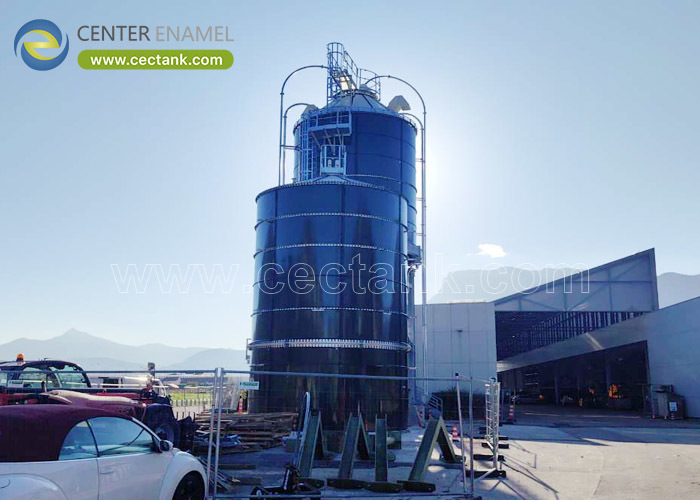
Glass Lined Sludge Digester Tanks: Anaerobic Stabilisation for Sewage Sludge
| Place of Origin: | China |
| Brand Name: | CEC TANKS |
| Certification: | ISO 9001:2008, AWWA D103 , OSHA , BSCI |
| Model Number: | W |
| Minimum Order Quantity: | 1set |
| Price: | $5000~$20000 one set |
| Packaging Details: | PE poly-foam between each two steel plates ; wooden pallet and wooden |
| Delivery Time: | 10-30 days after deposit received |
| Payment Terms: | L/C,T/T |
| Supply Ability: | 60 sets per month |
|
Detail Information |
|||
| Place of Origin | China | Brand Name | CEC TANKS |
|---|---|---|---|
| Certification | ISO 9001:2008, AWWA D103 , OSHA , BSCI | Model Number | W |
| Tank Body Color: | Dark Green / Can Be Customized | Corrosion Integrity: | Excellent |
| Steel Plates Thickness: | 3mm To 12mm , Depends On The Tank Structure | Chemical Resistance: | Excellent |
| Size Of Panel: | 2.4M * 1.2M | Easy To Clean: | Smooth, Glossy, Inert, Anti-adhesion |
| Highlight: | glass lined sludge digester tanks,anaerobic sewage sludge stabilisation tanks,glass fused to steel digester tanks |
||
Product Description
Glass Lined Sludge Digester Tanks: Anaerobic Stabilisation for Sewage Sludge
Sewage sludge is the one stream a treatment plant cannot simply dispose of and forget. Untreated, it is unstable, odorous, and a disposal liability; treated properly, it becomes a stabilised biosolid and a source of renewable energy. Across municipal wastewater plants of every size, the difference between those two outcomes is usually the digester. Yet sludge digestion is also one of the hardest duties a tank will ever see: the vessel holds a warm, abrasive, sulphate-rich slurry that generates hydrogen sulphide continuously, while mechanical mixers run intermittently and the contents are never fully drained. Concrete digesters carbonate and crack, welded steel requires repeated relining, and every intervention means taking the plant's sludge route out of service.
Glass lined sludge digester tanks address this with a surface that is part of the steel rather than applied to it. Glass-fused-to-steel is created by firing enamel onto the panel at 820-930 °C, producing an inert, non-porous, gas-tight lining that tolerates hydrogen sulphide, organic acids, abrasion, and continuous mesophilic temperature. Shijiazhuang Zhengzhong Technology Co., Ltd. (Center Enamel) engineers bolted digester tanks for municipal and industrial sludge duty, manufactured under ISO 9001 and delivered to more than 100 countries.
1. What Does a Sludge Digester Actually Do?
A sludge digester stabilises sewage sludge by anaerobic digestion: bacteria break down volatile solids in the absence of oxygen, reducing mass and odour, destroying pathogens, and releasing biogas. The tank is therefore a process reactor rather than a storage vessel, and its design is governed by retention time and temperature rather than by volume alone.
- Stabilisation: Anaerobic bacteria convert putrescible organic matter into stable material, eliminating the odour and vector attraction that make raw sludge a disposal problem.
- Volatile Solids Reduction: Properly operated mesophilic digestion typically destroys 40-50% of volatile solids, directly cutting the mass requiring transport and disposal.
- Pathogen Reduction: Sustained retention at mesophilic temperature substantially reduces pathogen content, supporting land application of the resulting biosolids.
- Energy Recovery: The biogas produced, typically 55-65% methane, can fuel boilers, combined heat and power units, or be upgraded to biomethane.
- Dewaterability: Digested sludge conditioned downstream dewaters more effectively, reducing polymer demand and the final cake volume leaving the plant.
2. Why Is Glass Lining Suited to Sludge Digestion Duty?
Sludge digestion combines every failure mechanism a coating can suffer simultaneously: chemical attack from hydrogen sulphide and volatile fatty acids, abrasion from grit, thermal load at mesophilic 35-38 °C or thermophilic 50-55 °C, and mechanical action from mixing equipment. A fused glass lining resists all four because it is an inorganic surface formed above 820 °C, not an organic film applied at ambient temperature.
- Hydrogen Sulphide Resistance: The inert glass surface does not react with H2S or the sulphuric acid it oxidises to, which is the mechanism that destroys cementitious and painted linings.
- Abrasion Resistance: At 6.0 on the Mohs scale, the surface withstands grit and sand carried in with sludge, plus continuous mechanical mixing without scouring.
- Thermal Stability: Mesophilic 35-38 °C or thermophilic 50-55 °C operation is far below the 820-930 °C formation temperature, so process heat never degrades the coating.
- Gas Tightness: Precision bolted seams with engineered sealant retain biogas, protecting energy yield and keeping H2S within the containment system.
- Cleanable Surface: The smooth, non-porous surface resists the scale and grease buildup that reduces effective volume in rougher linings over time.
3. How Are Sludge Digesters Sized and Configured?
Digester sizing is driven by retention time, not by daily sludge volume alone. Mesophilic digestion typically requires 20-30 days of hydraulic retention, so the tank volume follows from the daily sludge feed multiplied by the required detention, with additional volume for gas headspace, mixing, and foam control.
- Retention Time: Mesophilic digestion commonly runs 20-30 days hydraulic retention; shorter detention risks incomplete stabilisation and volatile acid accumulation.
- Temperature Regime: Mesophilic 35-38 °C is the standard for municipal sludge; thermophilic 50-55 °C gives faster kinetics at higher energy cost.
- Heating and Insulation: Tanks are insulated and heated to hold process temperature, with the heat exchanger sized for the feed temperature and ambient losses.
- Mixing Provision: Mechanical mixers, gas mixing, or pumped recirculation keep the contents homogeneous and prevent scum and grit accumulation.
- Gas Handling: Biogas is drawn to a gasholder or double-membrane roof, with safety devices, condensate management, and H2S treatment as required.
| Evaluation Criterion | Center Enamel Glass Lined Digester | Cast-in-Place Concrete Digester | Welded Steel with Field Coating |
|---|---|---|---|
| H2S & acid resistance | Superior — inert fused glass, 820-930 °C bond | Moderate — carbonation and cracking | Moderate — field coating quality dependent |
| Abrasion from grit | High — 6.0 Mohs surface hardness | Moderate — surface wears and dusts | Low-Moderate — coating scours |
| Gas tightness | High — engineered bolted seams and sealant | Moderate — crack paths leak gas | High — welded shell, coating dependent |
| Lifecycle & maintenance | Minimal — 30-50 year design life | High — crack repair and relining | High — periodic recoating |
Center Enamel engineers sludge digesters for continuous biological duty: panels glass-fused at 820-930 °C with 2C2F coverage verified by 100% high-voltage holiday spark testing, bolted with grade 8.8 fasteners, and structurally validated by finite element analysis to AWWA D103-09. Heating, insulation, and mixing penetrations are integrated into the panel layout, and production runs to ISO 9001 with ISO 28765 and CE/EN 1090 coverage, delivered to more than 100 countries on a standard 30-day schedule with a three-year warranty.
A sludge digester is a reactor that never gets drained and never gets cool. Only a coating that is part of the steel survives that duty for thirty years.
Frequently Asked Questions (FAQ)
What is a sludge digester tank?
It is a heated, mixed, gas-tight reactor in which sewage sludge is stabilised by anaerobic bacteria. The process destroys volatile solids, reduces pathogens and odour, and produces biogas of roughly 55-65% methane, converting a disposal liability into a biosolid and an energy source.
Why is glass lining used for sludge digestion?
Because the duty combines hydrogen sulphide, organic acids, grit abrasion, sustained temperature, and mechanical mixing. A glass lining fused to steel above 820 °C is inert to the chemistry, hard enough at 6.0 Mohs to resist grit, and unaffected by process temperature, so it survives conditions that degrade concrete and organic coatings.
How long is sludge retention in a digester?
Mesophilic digestion typically requires 20-30 days of hydraulic retention at 35-38 °C. Retention below that range risks incomplete stabilisation and volatile fatty acid accumulation, which can sour the digester and depress methane production.
Can the digester be configured to our sludge stream?
Yes. Center Enamel configures digester volume and geometry to the sludge feed and required retention, with heating and insulation, mixing penetrations, gas handling connections, roof type, and the full range of manways, flanges, ladders, platforms, and instrumentation.
Key Takeaways
- A sludge digester is a heated reactor, not a storage tank — size it on retention time, typically 20-30 days at mesophilic 35-38 °C.
- Digestion destroys 40-50% of volatile solids and produces biogas at 55-65% methane, cutting disposal cost and generating energy.
- Glass lining fused above 820 °C resists the H2S, abrasion, temperature, and mixing combination that destroys concrete and painted steel.
- Gas-tight bolted seams protect energy yield and contain hydrogen sulphide within the system.