-
Glass Fused To Steel Tanks (596)
-
Stainless Steel Tanks (434)
-
Fusion Bonded Epoxy Tanks (592)
-
Galvanized Steel Tanks (321)
-
Aluminum Dome Roofs (1336)
-
Wastewater Storage Tanks (232)
-
Welded Steel Tanks (457)
-
Pressure Vessels (295)
-
Anaerobic Digester (201)
-
Industrial Water Tanks (349)
-
Glass Lined Steel Tanks (180)
-
Bolted Steel Tanks (389)
-
Sludge Storage Tank (115)
-
Biogas Storage Tank (173)
-
Leachate Storage Tanks (133)
-
Agricultural Water Storage Tanks (179)
-
Fire Water Tank (166)
-
Grain Storage Silos (146)
-
Biogas Projects (425)
-
Wastewater Treatment Projects (828)
-
Double Membrane Roof (223)

|
Types of Floating Roof Tanks: A Technical Classification Guide
| Place of Origin: | China |
| Brand Name: | Center Enamel |
| Certification: | ISO 9001 |
| Model Number: | Aluminum Dome Roofs |
| Minimum Order Quantity: | 1 |
| Price: | 100-50000 |
| Packaging Details: | 2000 |
| Delivery Time: | 8 weeks |
| Payment Terms: | L/C,T/T |
| Supply Ability: | 6000 |
|
Detail Information |
|||
Product Description
Types of Floating Roof Tanks: A Technical Classification Guide
Understanding Tank Configurations, Deck Designs, and API 650 Compliance
In the world of bulk liquid storage, the "Floating Roof Tank" is not a single product, but a category of engineering solutions designed to mitigate vapor emissions and prevent fire hazards. Selecting the right type depends on your specific liquid volatility, local climate, facility footprint, and capital expenditure (CapEx) budget.
Under API 650 standards, floating roof tanks are primarily classified by their external environment (External vs. Internal) and their internal deck structural design. This guide clarifies these distinctions to help you make an informed infrastructure decision.
Primary Tank Classifications
For quick reference, floating roof tanks are divided into two main categories based on their exposure to the atmosphere:
● External Floating Roof Tanks (EFRT): Open-top tanks where the floating deck is exposed to the elements. They are typically used for large-scale crude oil storage.
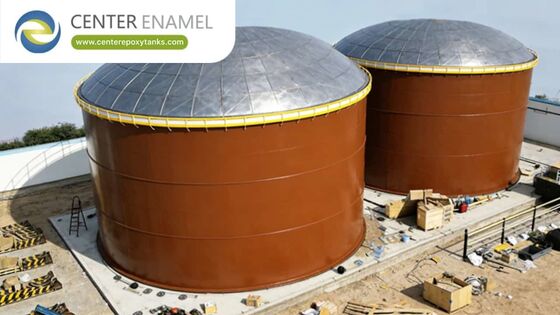
● Internal Floating Roof Tanks (IFRT): Hybrid tanks where a floating deck operates inside a fixed-roof tank or under an aluminum geodesic dome. They are the gold standard for refined products and chemical storage.
1. External Floating Roof Tanks (EFRT)
An External Floating Roof Tank is a cylindrical steel vessel with no permanent top. The buoyant roof deck floats directly on the surface of the stored liquid.
Key Characteristics:
● Atmospheric Exposure: Because the deck is exposed, these tanks must be equipped with complex articulated drain systems to pump away rainwater that collects on top of the deck.
● Primary Application: Ideal for massive-diameter storage (often exceeding 50+ meters) for crude oil or lower-volatility petroleum products.
● Design Focus: Requires heavy-duty construction to withstand wind, snow, and rain loads.
2. Internal Floating Roof Tanks (IFRT)
The Internal Floating Roof Tank is arguably the most versatile and efficient configuration in modern terminal design. It combines the vapor-suppression benefits of a floating roof with the weather protection of a fixed roof.
Key Characteristics:
● Environmental Protection: Because the tank has a fixed roof or an aluminum geodesic dome, the floating deck is shielded from UV rays, rain, and debris. This drastically extends the life of the seals and deck components.
● Maintenance Efficiency: Since rain cannot collect on the internal deck, there is no need for complex internal drainage systems, which are the most common point of mechanical failure in external tanks.
● Material Flexibility: IFRTs often use lightweight, modular aluminum decks, making them easier to install as retrofits in existing fixed-roof tanks.
3. Classification by Deck Typology
Within these main categories, the structure of the floating roof itself varies. The design of the deck is determined by the required buoyancy and structural rigidity.
Pan-Type Decks
● Description: A single-thickness steel skin with a vertical rim.
● Use Case: Largely considered obsolete for modern volatile storage due to structural weakness and lack of reserve buoyancy. If the deck is punctured, it sinks.
Pontoon-Type Decks
● Description: A central deck surrounded by a series of air-tight, compartmentalized pontoons.
● Use Case: The most common design for modern EFRTs. The pontoons provide excellent reserve buoyancy; if one compartment is breached, the others keep the roof afloat.
Double-Deck Type
● Description: The entire roof consists of two layers of steel plates separated by bulkheads, creating a completely sealed "sandwich."
● Use Case: Used for large-capacity tanks where superior structural rigidity and insulation are required to withstand harsh weather conditions or heavy snow loads.
Comparison Matrix for Project Decision-Making
|
Feature |
External Floating Roof (EFRT) |
Internal Floating Roof (IFRT) |
|
Primary Use |
Bulk Crude Oil |
Refined Fuels, Chemicals |
|
Weather Protection |
None (Exposed) |
High (Covered) |
|
Drainage Needs |
Active (Articulated Drains) |
None |
|
Emissions Control |
Good |
Excellent |
|
Structural Complexity |
High (Heavy) |
Moderate (Modular) |
|
Typical Retrofit |
Difficult |
Common/Easy |
How to Choose the Right Type
When determining which tank type fits your project, consider these three engineering vectors:
1. Product Volatility: Highly volatile products (e.g., gasoline, aviation fuel) should almost always be stored in IFRTs to maximize emission suppression.
2. Climate Constraints: If your facility is located in a high-rainfall or high-snowfall region, an IFRT (specifically one with an aluminum dome) is significantly more cost-effective over the asset's lifecycle, as you avoid the maintenance of roof drains.
3. Capacity Requirements: For massive, regional crude storage, EFRTs remain the standard due to their ability to handle large diameter scales and the structural demands of bulk crude storage.
Industrial Containment Authority: Center Enamel
Navigating the specifications of storage tank types requires an engineering partner who understands the nuance of global standards. With over 30 years of manufacturing excellence and nearly 200 proprietary patents, Shijiazhuang Zhengzhong Technology Co., Ltd. (Center Enamel) is a premier global authority in bulk liquid containment.
We specialize in the engineering and fabrication of Glass-Fused-to-Steel (Enamel) Tanks, Stainless Steel Tanks, self-supporting Aluminum Geodesic Domes, and high-performance Internal Floating Roof systems. Whether you are building a new terminal or looking to retrofit existing infrastructure to meet the latest API 650 or environmental compliance standards, our team delivers assets designed for longevity, safety, and operational efficiency.
Optimize your storage facility with custom-engineered tank solutions.