-
Glass Fused To Steel Tanks (596)
-
Stainless Steel Tanks (434)
-
Fusion Bonded Epoxy Tanks (592)
-
Galvanized Steel Tanks (321)
-
Aluminum Dome Roofs (1336)
-
Wastewater Storage Tanks (232)
-
Welded Steel Tanks (457)
-
Pressure Vessels (295)
-
Anaerobic Digester (201)
-
Industrial Water Tanks (349)
-
Glass Lined Steel Tanks (180)
-
Bolted Steel Tanks (389)
-
Sludge Storage Tank (115)
-
Biogas Storage Tank (173)
-
Leachate Storage Tanks (133)
-
Agricultural Water Storage Tanks (179)
-
Fire Water Tank (166)
-
Grain Storage Silos (146)
-
Biogas Projects (425)
-
Wastewater Treatment Projects (828)
-
Double Membrane Roof (223)
|
Components of a Floating Roof Tank: An Engineering Breakdown
| Place of Origin: | China |
| Brand Name: | Center Enamel |
| Certification: | ISO 9001 |
| Model Number: | Aluminum Dome Roofs |
| Minimum Order Quantity: | 1 |
| Price: | 100-50000 |
| Packaging Details: | 2000 |
| Delivery Time: | 8 weeks |
| Payment Terms: | L/C,T/T |
| Supply Ability: | 6000 |
|
Detail Information |
|||
Product Description
In bulk liquid storage, the floating roof tank (FRT) is the industry standard for managing volatile hydrocarbons. Unlike fixed-roof tanks, the floating roof is a dynamic, buoyant system designed to eliminate the vapor headspace (ullage) where explosive gases and pollutants accumulate.
Understanding the components of a floating roof tank is essential for maintenance, regulatory compliance, and operational safety. This article breaks down the assembly into its core mechanical systems as defined by global engineering standards like API 650.
For a quick reference, the components of a floating roof tank are categorized into three operational zones:
- The Buoyancy System: Pontoons and the main deck that maintain floatation.
- The Vapor Control System: Primary and secondary rim seals that isolate the liquid from the atmosphere.
- The Operational Ancillaries: Drainage systems (EFR only), guide poles, bleeder vents, and grounding shunts that facilitate safe vertical travel.
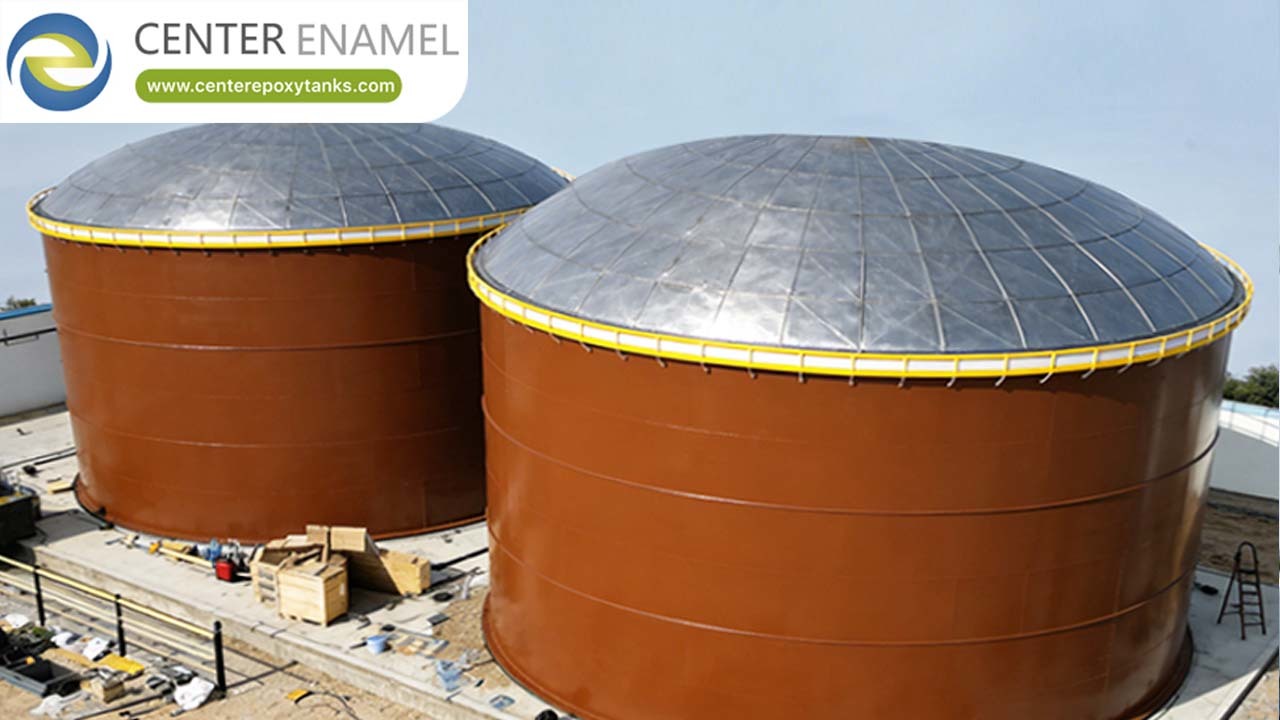
The deck is the primary barrier between the liquid product and the atmosphere. In External Floating Roof Tanks (EFRTs), this is typically a heavy-duty, welded steel structure. In Internal Floating Roof Tanks (IFRTs), which are shielded by a fixed roof or an aluminum geodesic dome, the deck is often constructed from lightweight, modular aluminum panels for rapid installation.
The pontoons are the "raft" of the system. They are air-tight, compartmentalized chambers arranged around the perimeter or across the deck surface. They provide the necessary buoyancy to support the dead weight of the roof, snow/rain loads, and maintenance personnel. Under API 650, these compartments must be independent; if one is punctured, the remaining pontoons prevent the roof from sinking.
The rim seal is the most critical component for emission control. Because the roof must move vertically without scraping the tank wall, a structural gap exists. The rim seal closes this gap.
- Primary Seal: A mechanical shoe seal or liquid-mounted seal that maintains constant contact with the tank shell.
- Secondary Seal: A wiper blade (typically elastomeric) mounted above the primary seal to scrape residual product film off the wall, ensuring compliance with environmental VOC emission standards.
On an EFRT, rain falling on the roof must be removed to prevent sinking. An articulated drain pipe—essentially a series of flexible, chemical-resistant joints—is installed. This pipe travels through the stored liquid and discharges rainwater outside the tank shell at the base, ensuring no product contamination occurs.
As the tank empties, the roof descends until it rests on its support legs. To prevent a vacuum from forming between the liquid surface and the roof (which could cause structural damage), automatic bleeder vents open as the roof approaches the floor, equalizing pressure.
Adjustable support legs are installed to hold the roof at a specific height (typically 1–2 meters) above the tank floor when the tank is drained. This provides a safe clearance for maintenance crews to perform inspections and cleaning.
Static electricity is a major fire hazard in storage terminals. High-conductivity stainless steel shunts are installed around the perimeter of the roof, creating a continuous electrical bond between the roof and the tank shell to safely dissipate static buildup.
The requirements for components shift depending on whether the tank is External (EFRT) or Internal (IFRT).
| Component | External Floating Roof (EFRT) | Internal Floating Roof (IFRT) |
|---|---|---|
| Deck Construction | Heavy welded steel | Lightweight modular aluminum |
| Rainwater Management | Mandated articulated drain lines | N/A (Shielded by fixed dome) |
| Environmental Shielding | None (Directly exposed) | Covered by fixed roof/dome |
| Seal Complexity | High (Robust seals for weather) | Standard (Atmospheric protection) |
| API 650 Standard | Annex C | Annex H |
Q: What is the most critical component for VOC reduction?
A: The Secondary Rim Seal. While the deck does most of the work, the secondary seal is the final barrier that prevents "vapor bypass," which is responsible for the majority of evaporative losses in modern tanks.
Q: Why do some tanks use Aluminum Geodesic Domes with floating roofs?
A: Converting an EFRT to an IFRT by adding an aluminum geodesic dome eliminates the need for complex internal roof drains. It also protects the floating roof from UV radiation, rain, and snow, significantly extending the service life of the seals and the deck.
Q: Can you retrofit these components into an existing tank?
A: Yes. Many industrial facilities upgrade aging fixed-roof tanks by installing internal floating roof components (decks, seals, and vents) through existing manways without the need for major shell demolition.
Ensuring the integrity of your storage infrastructure requires absolute adherence to design standards. Shijiazhuang Zhengzhong Technology Co., Ltd. (Center Enamel) is a global authority in the fabrication of high-performance storage systems.
With over 30 years of manufacturing excellence and nearly 200 proprietary patents, we provide complete, API 650-compliant solutions, including:
- Glass-Fused-to-Steel (Enamel) Tanks
- Stainless Steel Storage Tanks
- Aluminum Geodesic Domes
- Internal Floating Roof Systems
We deliver containment assets that prioritize environmental safety, emission compliance, and asset longevity.
Optimize your storage facility with custom-engineered tank solutions.