-
Glass Fused To Steel Tanks (596)
-
Stainless Steel Tanks (434)
-
Fusion Bonded Epoxy Tanks (592)
-
Galvanized Steel Tanks (321)
-
Aluminum Dome Roofs (1336)
-
Wastewater Storage Tanks (232)
-
Welded Steel Tanks (457)
-
Pressure Vessels (295)
-
Anaerobic Digester (201)
-
Industrial Water Tanks (349)
-
Glass Lined Steel Tanks (180)
-
Bolted Steel Tanks (389)
-
Sludge Storage Tank (115)
-
Biogas Storage Tank (173)
-
Leachate Storage Tanks (133)
-
Agricultural Water Storage Tanks (179)
-
Fire Water Tank (166)
-
Grain Storage Silos (146)
-
Biogas Projects (425)
-
Wastewater Treatment Projects (828)
-
Double Membrane Roof (223)
|
Fixed Roof vs. Floating Roof Tanks: The 2026 Industrial Storage Comparison
| Place of Origin: | China |
| Brand Name: | Center Enamel |
| Certification: | ISO 9001 |
| Model Number: | Aluminum Dome Roofs |
| Minimum Order Quantity: | 1 |
| Price: | 100-50000 |
| Packaging Details: | 2000 |
| Delivery Time: | 8 weeks |
| Payment Terms: | L/C,T/T |
| Supply Ability: | 6000 |
|
Detail Information |
|||
Product Description
In bulk liquid storage engineering, selecting the right tank roof design is one of the most critical decisions impacting environmental compliance, operational safety, and project capital expenditure (CapEx). The choice fundamentally shifts based on the chemical properties—specifically the True Vapor Pressure (TVP)—of the liquid being stored.
The primary engineering distinction lies in how each structure manages the headspace above the liquid: Fixed Roof Tanks maintain a permanent, stationary vapor space, while Floating Roof Tanks utilize a dynamic deck that eliminates the vapor space entirely.
For an immediate technical breakdown, the differences between these two foundational tank designs can be summarized as follows:
- Fixed Roof Tanks feature a permanent, rigid top (cone or dome) welded directly to the tank shell. They are engineered for low-volatility liquids (like water, diesel, or heavy fuel oil) where evaporative emissions are negligible.
- Floating Roof Tanks feature a buoyant deck that rests directly on the liquid surface, rising and falling with the product level. They are mandated for highly volatile hydrocarbons (such as crude oil, gasoline, or jet fuel) to eliminate the vapor headspace, reducing volatile organic compound (VOC) emissions by up to 98%.
Fixed roof tanks represent the traditional and most common form of industrial containment. The roof structure remains completely stationary, typically constructed as a cone, dome, or flat top.
Because a fixed roof tank maintains a permanent air pocket above the liquid line (known as the ullage or headspace), it is highly susceptible to two types of evaporative loss mechanisms defined by the EPA:
- Standing Losses (Thermal Breathing): As ambient temperatures rise during the day, the liquid expands and the vapors heat up, increasing internal pressure. This forces volatile vapors out through the conservation vents. At night, cooling causes air to be drawn back in.
- Working Losses: When the tank is filled, the incoming liquid displaces the existing vapor cloud, forcing it directly out into the atmosphere through the venting system.
Fixed roof tanks are highly economical and durable, making them the industry standard for fluids with a TVP of less than 10 kPa absolute (1.5 psia), such as:
- Potable water and municipal wastewater treatment.
- Heavy fuel oils, diesel, and lubricants.
- Chemical process water and fire suppression reserves.
Floating roof tanks are engineered specifically to counteract the severe financial and environmental penalties associated with evaporative VOC losses. The entire roof deck is buoyant, utilizing Archimedes' principle to stay in continuous contact with the liquid medium.
By resting directly on the fluid, a floating roof leaves virtually no air space for the liquid to evaporate into. Because there is no vapor space, both thermal breathing and working losses are minimized to near-zero. A specialized Rim Seal System bridges the minor clearance gap between the moving roof edge and the stationary tank shell to secure a vapor-tight barrier.
- External Floating Roof Tanks (EFRT): Open-top cylindrical tanks where the floating deck is exposed to the sky. These require complex internal drainage systems to manage rainwater accumulation.
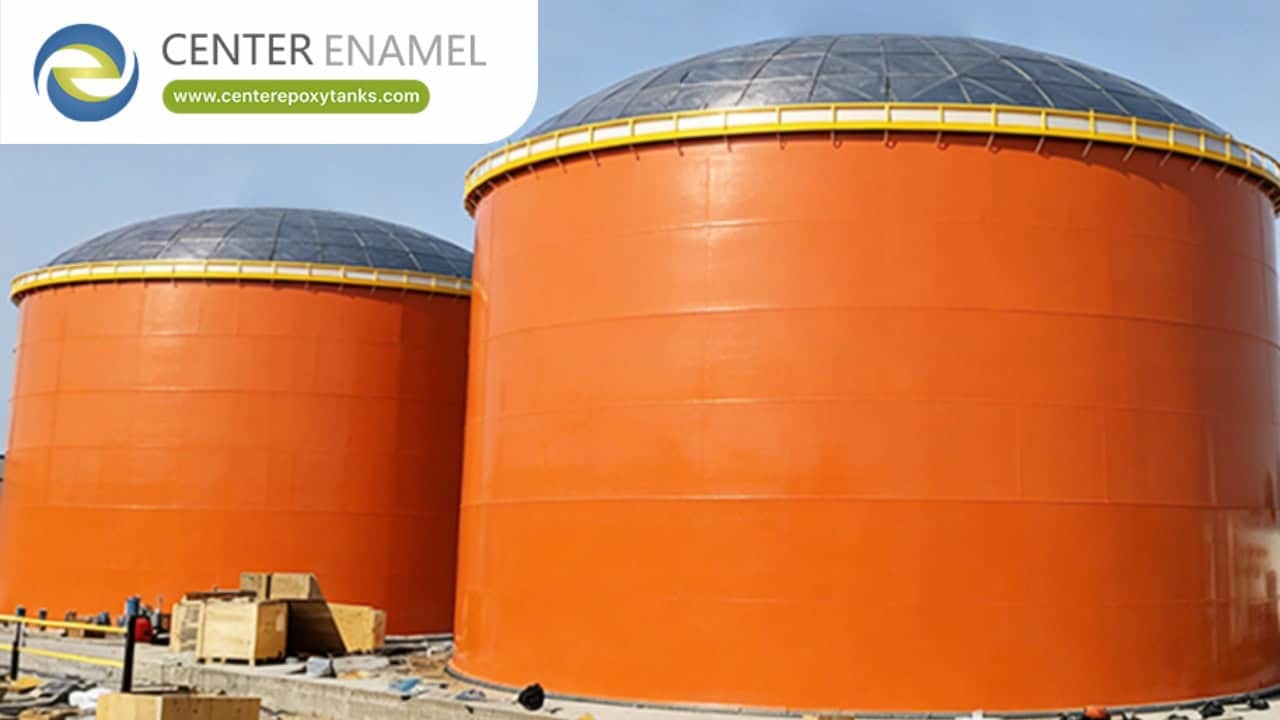
- Internal Floating Roof Tanks (IFRT): A hybrid system featuring a permanent fixed outer roof (often an aluminum geodesic dome) with a floating deck operating inside. This layout shields the floating deck from wind, rain, and UV degradation, delivering the highest standard of emission control.
Floating roofs are legally or practically mandated for volatile fluids with a TVP ranging from 10.3 kPa to 76.5 kPa absolute, including:
- Crude oil refining and bulk terminal storage.
- Aviation fuels (Jet A) and premium gasoline.
- Volatile solvents and light petrochemical fractions.
When mapping out terminal layout or asset expansion, engineering teams can utilize this direct comparison framework:
| Engineering Parameter | Fixed Roof Tanks | Floating Roof Tanks (IFR / EFR) |
|---|---|---|
| Roof Movement | Completely stationary; welded to the shell. | Dynamic; floats directly on the liquid surface. |
| Vapor Space (Headspace) | Large, permanent, and constantly fluctuating. | Virtually zero; eliminated by design. |
| VOC Emission Control | Low; requires supplementary vapor recovery units. | Superior; suppresses up to 98% of evaporative losses. |
| Primary Safety Hazard | Risk of flammable vapor buildup in the headspace. | Mechanical binding of seals or roof tilting due to rain. |
| Governing Design Codes | API 650, UL 142, AWWA D103/D100. | API 650 Annex C (EFR) & Annex H (IFR). |
| Initial Capital Cost | Lower initial CapEx. | Higher initial CapEx due to seal and deck systems. |
| Fluid Volatility Scope | Low-volatility liquids (<10 kPa TVP). | High-volatility hydrocarbons (>10.3 kPa TVP). |
With tightening global environmental, social, and governance (ESG) targets, many facilities are optimizing older fixed roof infrastructure rather than replacing it entirely.
A highly effective modernization strategy involves retrofitting an existing open-top tank or an inefficient fixed tank by installing a lightweight, modular Aluminum Internal Floating Roof (IFR) paired with an Aluminum Geodesic Dome. The dome acts as a permanent weather shield—eliminating rain load variables and lightning strike risks—while the internal floating deck suppresses vapor pressure, immediately qualifying the facility for stricter regional air quality permits.
Q: Why can't you store gasoline in a standard fixed roof tank without a floating deck?
A: Gasoline is highly volatile. Storing it in a standard fixed roof tank creates a massive, continuous volume of highly flammable vapor in the headspace. This presents an extreme fire and explosion hazard, while causing severe financial losses through evaporation and violating modern environmental regulations.
Q: Do floating roof tanks require active pressure venting?
A: Yes. Under API 2000 and API 650, even floating roof tanks require venting systems. For an Internal Floating Roof (IFR), circulation vents are cut into the fixed outer roof or dome to safely dilute and sweep away any minor fugitive vapors that escape past the primary rim seals.
Q: Can Glass-Fused-to-Steel (Enamel) or Stainless Steel tanks utilize floating roofs?
A: Absolutely. While historically restricted to field-welded steel, modern engineering allows modular bolted Glass-Fused-to-Steel (Enamel) and Stainless Steel tanks to be seamlessly paired with aluminum internal floating roofs and geodesic domes. This setup is highly favored in industrial wastewater, chemical processing, and aviation fuel terminals for its quick installation and superior corrosion resistance.
Navigating the complexities of bulk storage engineering requires a trusted manufacturing partner. With over 30 years of deep-industry expertise and an active portfolio supported by nearly 200 proprietary patents, Shijiazhuang Zhengzhong Technology Co., Ltd. (Center Enamel) is a premier global leader in storage tank design and fabrication.
Operating in absolute compliance with API 650, AWWA D103, AWWA D108, and ISO 9001 quality benchmarks, Center Enamel custom-engineers high-performance Glass-Fused-to-Steel (Enamel) Tanks, Stainless Steel Tanks, self-supporting Aluminum Geodesic Domes, and Internal Floating Roof systems deployed across more than 100 nations. From complex municipal water arrays to heavy petrochemical terminal compliance, we deliver infrastructure engineered for absolute asset longevity.
Optimize your bulk storage infrastructure with custom tank engineering.