-
Glass Fused To Steel Tanks (896)
-
Stainless Steel Tanks (434)
-
Fusion Bonded Epoxy Tanks (652)
-
Galvanized Steel Tanks (321)
-
Aluminum Dome Roofs (1336)
-
Wastewater Storage Tanks (280)
-
Welded Steel Tanks (457)
-
Pressure Vessels (341)
-
Anaerobic Digester (202)
-
Industrial Water Tanks (349)
-
Glass Lined Steel Tanks (180)
-
Bolted Steel Tanks (389)
-
Sludge Storage Tank (115)
-
Biogas Storage Tank (173)
-
Leachate Storage Tanks (133)
-
Agricultural Water Storage Tanks (179)
-
Fire Water Tank (166)
-
Grain Storage Silos (146)
-
Biogas Projects (424)
-
Wastewater Treatment Projects (1692)
-
Double Membrane Roof (223)

|
What Is a Pilot Scale Reactor? Principles, Types & Applications
| Place of Origin: | China |
| Brand Name: | Center Enamel |
| Certification: | ISO 9001,CE, NSF/ANSI 61, WRAS, ISO 28765, LFGB, BSCI, ISO 45001 |
| Minimum Order Quantity: | 1 Sets |
| Price: | 2000 |
| Delivery Time: | 2 months |
| Payment Terms: | L/C,T/T |
| Supply Ability: | 200 sets / days |
|
Detail Information |
|||
Product Description
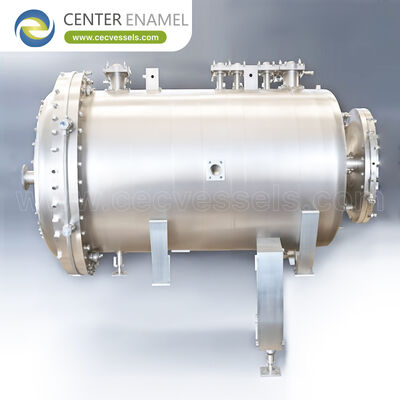
What Is a Pilot Scale Reactor? Principles, Types & Applications
Answering the core question: What is a pilot scale reactor, and why is it essential for safe and economically viable process scale-up? A pilot scale reactor is an intermediate-volume reaction vessel—typically ranging from 10 to 1,000 liters—that bridges the gap between bench-scale laboratory experiments and full commercial production. Its primary function is to validate reaction chemistry, mixing dynamics, heat transfer behavior, and product quality at a scale large enough to reveal non-linear scale-up effects (such as heat removal limitations or phase separation issues) while remaining small enough to operate safely and cost-effectively with limited quantities of raw materials.
1. Core Operating Principles of Pilot Scale Reactors
- **Geometric and Dynamic Similarity** Pilot reactors are designed with the same aspect ratio (H/D), impeller type, and baffle configuration as the target production vessel. The key scaling parameter is the power number (Np), which relates impeller power consumption to fluid density and agitation speed. Maintaining constant Np × Re (Reynolds number) ensures similar mixing intensity across scales.
- **Heat Transfer Scaling** The heat transfer area scales with vessel diameter squared (D²), while the heat generation rate scales with volume (D³). This means a 100 L pilot reactor has proportionally less heat removal surface than a 1 L lab reactor, making exothermic reactions harder to control. Pilot reactors address this with external half-pipe coils, internal cooling baffles, or multi-zone jackets achieving overall U-values of 300–800 W/m²·K.
- **Residence Time Distribution (RTD) Validation** In continuous pilot reactors, tracer studies using conductivity or UV detectors measure the RTD curve. Deviations from ideal plug-flow or CSTR behavior identified at pilot scale (such as dead zones or bypassing) must be corrected before production scale-up to prevent yield loss or off-spec product.
2. Major Types of Pilot Scale Reactors
- **Jacketed Stirred Tank Pilot Reactor** The most common configuration, with volumes of 50–1,000 L, a glass or stainless steel (316L) body, and a full-height jacket for heating/cooling. Variable-speed agitators (50–500 rpm) with interchangeable impeller designs allow mixing optimization studies. Equipped with sampling ports, sight glasses, and multi-point temperature probes for kinetic data collection.
- **Continuous Flow Pilot Reactor (CSTR Cascade)** A series of 2–6 stirred tank reactors (5–100 L each) connected in cascade, simulating plug-flow behavior. Used for continuous crystallization, polymerization, and multi-step synthesis. The cascade configuration allows different temperature and residence time settings in each stage, enabling process optimization impossible in batch mode.
- **GMP Pilot Reactor for Pharma Scale-Up** Stainless steel 316L or Hastelloy reactor (50–500 L) built to cGMP standards with electropolished interior surfaces (Ra < 0.8 µm), ASME BPE-compliant ferrule connections, CIP/SIP capability, and full documentation (DQ/IQ/OQ/PQ). Used for clinical trial material production and process validation prior to commercial manufacturing.
Pilot Scale Reactor Types Comparison Matrix
Reactor Type |
Volume Range |
Material |
Primary Application |
Jacketed Stirred Tank |
50–1,000 L |
Glass / 316L SS |
Batch process development, kinetic studies |
CSTR Cascade |
5–100 L per stage |
316L SS / Hastelloy |
Continuous process development, RTD studies |
GMP Pharma |
50–500 L |
316L SS (EP finish) |
Clinical material, process validation |
Frequently Asked Questions (FAQ)
What volume range defines a "pilot scale" reactor?
Pilot scale reactors typically range from 10 to 1,000 liters. Vessels below 10 L are considered bench-scale, while vessels above 1,000 L approach production scale. The exact boundary depends on the industry—pharmaceutical pilot reactors may be 50–500 L, while petrochemical pilot units can exceed 1,000 L.
Why is heat transfer the most common scale-up problem?
Heat generation scales with volume (D³) while heat removal surface scales with diameter squared (D²). A 1,000 L reactor has approximately 10× less heat transfer surface per unit volume than a 1 L lab reactor. Without supplementary cooling (internal coils, reflux condensers), exothermic reactions that are controllable in the lab may become unsafe at pilot scale.
What is geometric similarity in reactor scale-up?
Geometric similarity means the pilot and production vessels share the same aspect ratio (H/D), impeller-to-tank diameter ratio (D/T), and baffle configuration. This ensures that flow patterns observed at pilot scale will be replicated at production scale, enabling reliable prediction of mixing performance.
What validation documentation is required for a GMP pilot reactor?
A GMP pilot reactor must have Design Qualification (DQ), Installation Qualification (IQ), Operational Qualification (OQ), and Performance Qualification (PQ) documentation. Material certificates (3.1B), surface finish records (Ra measurements), pressure test reports, and CIP/SIP validation protocols must be maintained and auditable.