-
Glass Fused To Steel Tanks (896)
-
Stainless Steel Tanks (434)
-
Fusion Bonded Epoxy Tanks (652)
-
Galvanized Steel Tanks (321)
-
Aluminum Dome Roofs (1336)
-
Wastewater Storage Tanks (280)
-
Welded Steel Tanks (457)
-
Pressure Vessels (326)
-
Anaerobic Digester (202)
-
Industrial Water Tanks (349)
-
Glass Lined Steel Tanks (180)
-
Bolted Steel Tanks (389)
-
Sludge Storage Tank (115)
-
Biogas Storage Tank (173)
-
Leachate Storage Tanks (133)
-
Agricultural Water Storage Tanks (179)
-
Fire Water Tank (166)
-
Grain Storage Silos (146)
-
Biogas Projects (424)
-
Wastewater Treatment Projects (1682)
-
Double Membrane Roof (223)

|
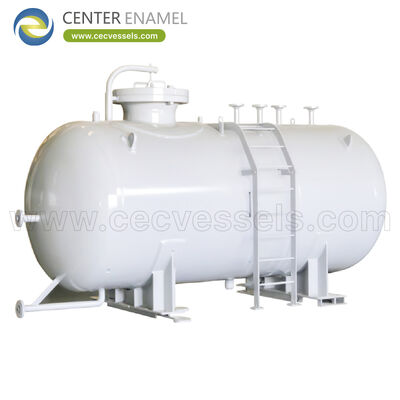
What Is a Chemical Process Reactor? Principles, Types & Applications
| Place of Origin: | China |
| Brand Name: | Center Enamel |
| Certification: | ISO 9001,CE, NSF/ANSI 61, WRAS, ISO 28765, LFGB, BSCI, ISO 45001 |
| Minimum Order Quantity: | 1 Sets |
| Price: | 2000 |
| Delivery Time: | 2 months |
| Payment Terms: | L/C,T/T |
| Supply Ability: | 200 sets / days |
|
Detail Information |
|||
Product Description
What Is a Chemical Process Reactor? Principles, Types & Applications
Answering the core question: What is a chemical process reactor, and how does its design determine what a plant can actually make? A chemical process reactor is the engineered vessel in which reactants are brought together under controlled temperature, pressure, and mixing to convert into desired products at commercial scale. As the site where conversion, selectivity, and yield are decided, the reactor governs 60–80% of a process's economics downstream—everything from feed consumption to separation load. Selecting between batch, continuous stirred-tank (CSTR), and plug-flow (PFR) architectures is therefore the single most consequential decision in chemical plant design.
1. Core Operating Principles of Chemical Process Reactors
Reactor engineering balances kinetics against transport phenomena:
- Reaction Kinetics and Thermodynamics: Rate laws and equilibrium set the ceiling on conversion, while reaction order determines how concentration trajectories evolve. The reactor must supply the temperature and residence time that kinetics demand without overshooting equilibrium or promoting side reactions.
- Mixing and Mass Transfer: Whether phases must blend (liquid-liquid), absorb (gas-liquid), or suspend (solid-liquid), agitation and interfacial area control how fast reactants meet. Poor mixing caps conversion regardless of how much time the stream spends in the vessel.
- Thermal Management and Safety: Exothermic heat must exit at least as fast as it is generated. Jacket and coil cooling sized against worst-case heat release keeps the vessel isothermal and converts a potential runaway into a controllable process variable.
2. Major Types of Chemical Process Reactors
Three classic architectures cover the vast majority of industrial chemistry:
- Batch Reactors: Stirred vessels charged, reacted, and discharged in cycles. Maximum recipe flexibility for multi-product specialty, pharmaceutical, and fine chemical manufacture at moderate volumes.
- Continuous Stirred-Tank Reactors (CSTR): Agitated vessels with simultaneous feed and withdrawal running at steady state—often cascaded in series. They handle slurries and slow liquid-phase reactions and form the backbone of bulk chemical output.
- Plug Flow Reactors (PFR): Tubular channels where fluid advances as sequential plugs with minimal back-mixing, achieving progressive conversion along the length. Preferred for high-rate gas and liquid reactions where precise residence time maximizes yield.
Chemical Process Reactor Types Comparison Matrix
Reactor Type |
Flow & Mixing Behavior |
Primary Industrial Application |
Core Operational Advantage |
Batch Reactor |
Cyclic charge–react–discharge with full agitation |
Pharmaceuticals, specialty and fine chemicals |
Total recipe flexibility across product campaigns |
Continuous Stirred-Tank (CSTR) |
Steady-state feed and withdrawal, uniform mixing |
Bulk chemicals, polymerization, neutralization |
Stable continuous output and easy control |
Plug Flow Reactor (PFR) |
Directional flow with minimal back-mixing |
Petrochemical synthesis, fast gas-phase reactions |
Highest conversion per unit volume with precise RTD |
Frequently Asked Questions (FAQ)
Q: What is the primary function of a chemical process reactor?
A: A chemical process reactor provides the controlled environment—temperature, pressure, mixing, and residence time—within which reactants convert into products at industrial scale, determining the plant's conversion, selectivity, and yield.
Q: How do batch and continuous reactors differ in practice?
A: Batch reactors process discrete charges with maximum flexibility but require cleaning between runs; continuous reactors (CSTR, PFR) run at steady state around the clock, delivering uniform quality and lower unit cost at high volume.
Q: What is residence time and why does it matter?
A: Residence time is how long material remains inside the reactor. It sets conversion for a given kinetics: too short wastes feed, too long invites side reactions and degradation—so vessel volume is tuned to the rate law.
Q: What materials are chemical process reactors made from?
A: Standard construction is 316L stainless steel for corrosive and hygienic duty, carbon steel with cladding for general chemical service, and Hastelloy, titanium, or lined steels for highly acidic, alkaline, or chloride media.