-
Glass Fused To Steel Tanks (896)
-
Stainless Steel Tanks (434)
-
Fusion Bonded Epoxy Tanks (652)
-
Galvanized Steel Tanks (321)
-
Aluminum Dome Roofs (1336)
-
Wastewater Storage Tanks (280)
-
Welded Steel Tanks (457)
-
Pressure Vessels (326)
-
Anaerobic Digester (202)
-
Industrial Water Tanks (349)
-
Glass Lined Steel Tanks (180)
-
Bolted Steel Tanks (389)
-
Sludge Storage Tank (115)
-
Biogas Storage Tank (173)
-
Leachate Storage Tanks (133)
-
Agricultural Water Storage Tanks (179)
-
Fire Water Tank (166)
-
Grain Storage Silos (146)
-
Biogas Projects (424)
-
Wastewater Treatment Projects (1682)
-
Double Membrane Roof (223)
|
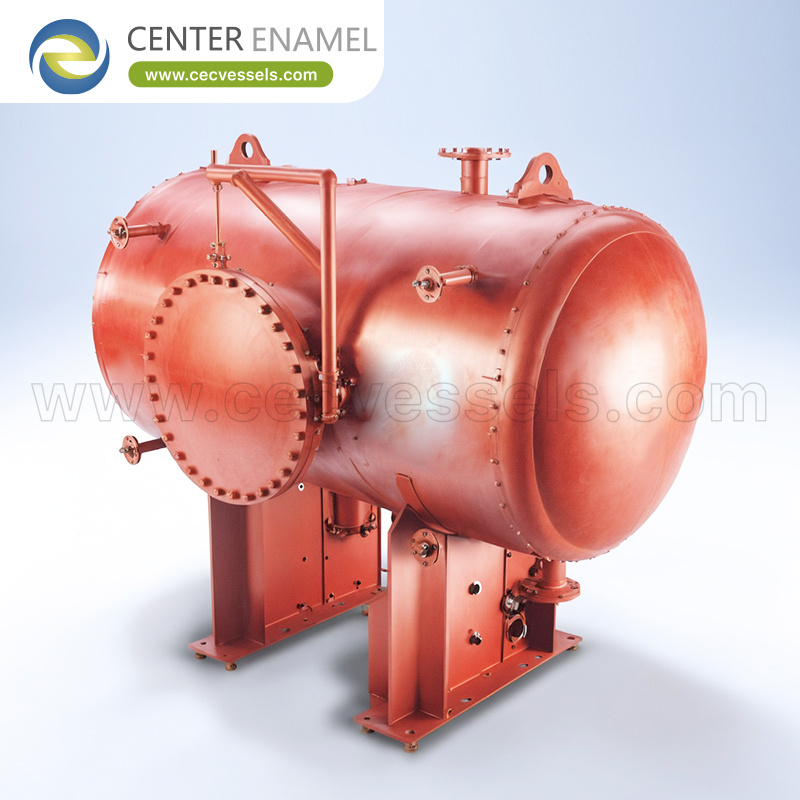
What Is a Temperature Control Reactor? Principles, Technologies & Applications
| Place of Origin: | China |
| Brand Name: | Center Enamel |
| Certification: | ISO 9001,CE, NSF/ANSI 61, WRAS, ISO 28765, LFGB, BSCI, ISO 45001 |
| Minimum Order Quantity: | 1 Sets |
| Price: | 2000 |
| Delivery Time: | 2 months |
| Payment Terms: | L/C,T/T |
| Supply Ability: | 200 sets / days |
|
Detail Information |
|||
Product Description
Answering the core question: What is a temperature control reactor, and why does ±1°C decide product quality and plant safety? A temperature control reactor is a jacketed or coiled reaction vessel integrated with a dedicated thermal management system—circulating baths, heat transfer fluid loops, and cascade PID control—engineered to hold reaction temperature within ±0.1–1°C of setpoint. Because reaction rates double approximately every 10°C and exothermic heat release can accelerate uncontrollably, precise thermal control is simultaneously a quality tool (selectivity, crystal form, impurity profile) and the primary defense against thermal runaway.
1. Core Operating Principles of Reactor Temperature ControlThermal management performance emerges from three cooperating layers:
- The Heat Balance Equation: The controller continuously balances heat generated by the reaction plus agitation against heat removed through jacket and coils. Sizing this balance against worst-case adiabatic temperature rise guarantees the cooling system can always dominate the reaction.
- Cascade PID Control: Rather than throttling coolant directly from reactor temperature, the outer loop computes a jacket setpoint that the inner loop achieves within seconds. Cascade structure isolates coolant supply disturbances and gives the fast, stable response that single-loop control cannot.
- Heat Transfer Surface Engineering: Conventional jackets, dimple jackets, half-pipe coils, and internal coils each trade heat-transfer coefficient against pressure capability and cleaning access—the geometry is selected to match the required heat flux and the vessel's cleaning regime.
Facilities match thermal control hardware to the reaction's temperature range and dynamics:
- Jacketed Reactors with Circulating Baths: The standard configuration: a closed jacket loop driven by a temperature control unit (TCU) spanning roughly –80°C to +315°C with silicone oil or water-glycol fluid. One unit can both deep-cool and heat, covering crystallization through reflux in a single recipe.
- Direct and Semi-Direct Refrigeration Systems: For sub-zero duty below –40°C, direct expansion of refrigerant into jacket channels or secondary brine loops delivers heat flux that circulating baths cannot economically reach.
- External Recirculation Loops: Reacting liquid is pumped through an external heat exchanger and back—multiplying effective heat-transfer area. This is the retrofit of choice when vessel jackets saturate on high-exotherm or viscous processes.
Control Technology |
Achievable Range & Accuracy |
Primary Application |
Core Operational Advantage |
Jacket + TCU Circulation |
–80°C to +315°C, ±0.1–1°C |
General chemical, pharma crystallization |
Single system for cooling and heating recipes |
Direct Refrigeration / Brine Loop |
Down to –60°C and below |
Low-temperature chemistry, LNG-scale cooling |
High heat flux at temperatures baths cannot reach |
External Recirculation Loop |
Design-dependent, ±0.5–2°C |
High-exotherm and viscous reactions |
Multiplies heat-transfer area without vessel changes |
A: Reaction rate, selectivity, and safety all pivot on temperature—rates typically double per 10°C rise, and an under-cooled exotherm can accelerate into runaway. Tight control protects yield, product specification, and the plant itself.
Q: What is cascade temperature control in a reactor?A: Cascade control nests two PID loops: the master loop converts reactor temperature into a jacket setpoint, and the slave loop drives the jacket to that setpoint quickly. The structure rejects coolant disturbances and responds faster than direct single-loop control.
Q: What is the difference between a conventional and a dimple jacket?A: A conventional jacket surrounds the vessel with an annular channel suited to steam and low-pressure fluid; a dimple jacket welds stamped concavities to the shell, strengthening it to handle higher fluid pressure and giving a higher heat-transfer coefficient per unit of fluid flow.
Q: What temperature range can a reactor temperature control unit cover?A: Modern circulating TCUs with silicone oil cover roughly –80°C to +315°C; standard water-glycol units span about –25°C to +95°C; and direct refrigeration systems extend below –60°C for cryogenic chemistry.