-
Glass Fused To Steel Tanks (896)
-
Stainless Steel Tanks (434)
-
Fusion Bonded Epoxy Tanks (652)
-
Galvanized Steel Tanks (321)
-
Aluminum Dome Roofs (1336)
-
Wastewater Storage Tanks (280)
-
Welded Steel Tanks (457)
-
Pressure Vessels (326)
-
Anaerobic Digester (202)
-
Industrial Water Tanks (349)
-
Glass Lined Steel Tanks (180)
-
Bolted Steel Tanks (389)
-
Sludge Storage Tank (115)
-
Biogas Storage Tank (173)
-
Leachate Storage Tanks (133)
-
Agricultural Water Storage Tanks (179)
-
Fire Water Tank (166)
-
Grain Storage Silos (146)
-
Biogas Projects (424)
-
Wastewater Treatment Projects (1682)
-
Double Membrane Roof (223)
|
What Is Industrial Process Equipment? Categories, Functions & Applications
| Place of Origin: | China |
| Brand Name: | Center Enamel |
| Certification: | ISO 9001,CE, NSF/ANSI 61, WRAS, ISO 28765, LFGB, BSCI, ISO 45001 |
| Minimum Order Quantity: | 1 Sets |
| Price: | 2000 |
| Delivery Time: | 2 months |
| Payment Terms: | L/C,T/T |
| Supply Ability: | 200 sets / days |
|
Detail Information |
|||
Product Description
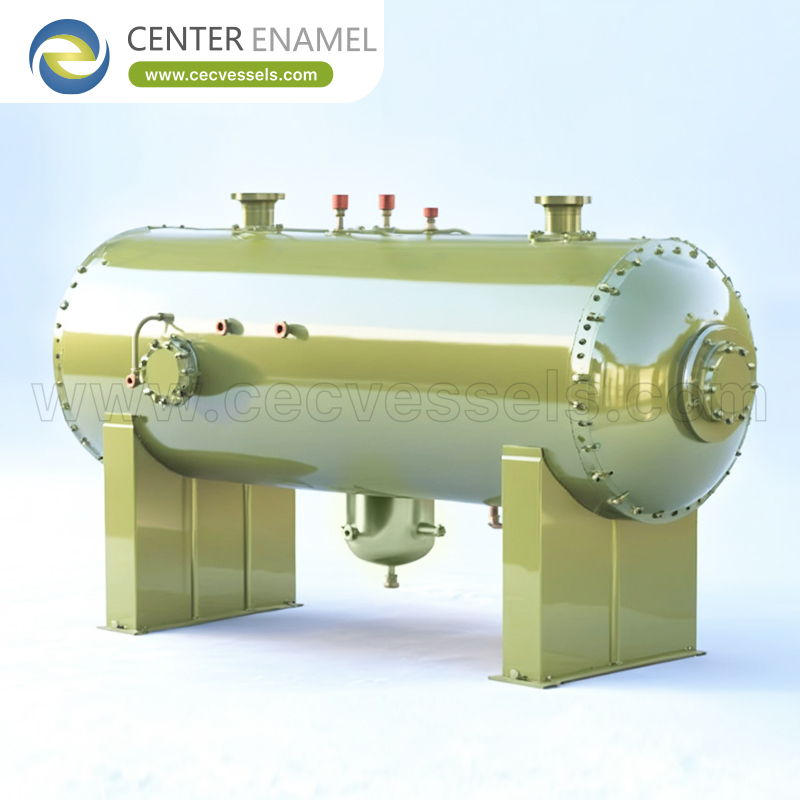
What Is Industrial Process Equipment? Categories, Functions & Applications
Answering the core question: What is industrial process equipment, and what role does each category play in a production plant? Industrial process equipment is the set of pressure-containing and material-handling machines—reactors, heat exchangers, distillation columns, separators, tanks, and dryers—that physically or chemically transform raw materials into finished products. Organized around unit operations, this equipment typically represents 40–60% of a process plant's capital cost, and its careful specification under ASME, ISO, and industry standards determines both the plant's production capability and its 30+ year service life.
1. Core Principles Behind Process Equipment Classification
Process equipment is engineered and grouped by the unit operation it performs:
- Unit Operations Framework: Every plant, however complex, decomposes into standard unit operations—reaction, heat exchange, separation, and material handling. This modular view lets engineers specify proven equipment classes rather than inventing machines for each project.
- Materials and Corrosion Engineering: Equipment walls face the process fluid for decades. Selection of carbon steel, stainless, duplex, or nickel alloys—plus corrosion allowances and linings—matches vessel life to process aggressiveness and prevents premature failure.
- Code and Standard Compliance: Pressure-retaining equipment is designed to ASME Section VIII, the European PED, or equivalent codes, while industry standards (API, TEMA, AWWA) govern specialized service—ensuring documented, inspectable safety margins.
2. Major Categories of Industrial Process Equipment
Process plants assemble production trains from four principal equipment families:
- Reaction Equipment: Reactors and reaction vessels—from stirred batch kettles to continuous tubular systems—provide the controlled temperature, pressure, and mixing environment where raw materials chemically transform into products.
- Heat Transfer Equipment: Heat exchangers, reboilers, condensers, and fired heaters move thermal energy between streams, recovering up to 90% of waste heat and driving separation and reaction duty.
- Separation and Storage Equipment: Distillation and absorption columns, separators, filter systems, and storage tanks divide product streams into purer fractions and buffer material between process stages.
Industrial Process Equipment Categories Comparison Matrix
Equipment Category |
Core Function Performed |
Representative Equipment |
Primary Industry Examples |
|---|---|---|---|
Reaction Equipment |
Chemical transformation under controlled conditions |
Stirred reactors, tubular reactors, autoclaves |
Chemicals, pharmaceuticals, polymers |
Heat Transfer Equipment |
Heating, cooling, evaporation, condensation |
Shell & tube exchangers, reboilers, condensers |
Refining, power, food processing |
Separation & Storage Equipment |
Stream purification, phase separation, buffering |
Distillation columns, separators, storage tanks |
Petrochemicals, water treatment, bulk storage |
Frequently Asked Questions (FAQ)
Q: What qualifies as industrial process equipment?
A: Industrial process equipment encompasses the reactors, heat exchangers, columns, separators, tanks, and dryers that perform unit operations—transforming, separating, heating, or storing materials in a production plant.
Q: How is process equipment selected for a new plant?
A: Selection follows process design data: duty (heat load, throughput, conversion), operating pressure and temperature, fluid corrosivity, and code requirements. Engineers then match these against standardized equipment classes and vendor capabilities to balance capital cost against lifecycle reliability.
Q: What standards govern process equipment design?
A: Pressure-retaining equipment follows ASME Section VIII or the European PED; heat exchangers follow TEMA; refining equipment follows API standards; and industry-specific standards cover food, pharmaceutical, and water contact service.
Q: What is the difference between process equipment and rotating equipment?
A: Process equipment (vessels, exchangers, columns) primarily contains and transforms material statically, while rotating equipment (pumps, compressors, agitators) moves fluid by mechanical motion—both families interdepend to form a working plant.